When Art Meets Design: Signac, Havard, and a Shared Vision
Miguel Fernández ·
Listen to this article~3 min
Explore the surprising link between Paul Signac's anarchist-inspired paintings and Henry Havard's bourgeois design guides. Discover how shared scientific theories bridged two opposing worlds.
Let's talk about a fascinating moment in art history where two seemingly opposite worlds collided. On one side, you had Paul Signac, a Neo-Impressionist painter whose work was steeped in anarchist ideology. On the other, Henry Havard, an interior design authority championing the new consumer society. You wouldn't think they'd have much in common, right? But that's where it gets interesting.
### The Paintings and the Principles
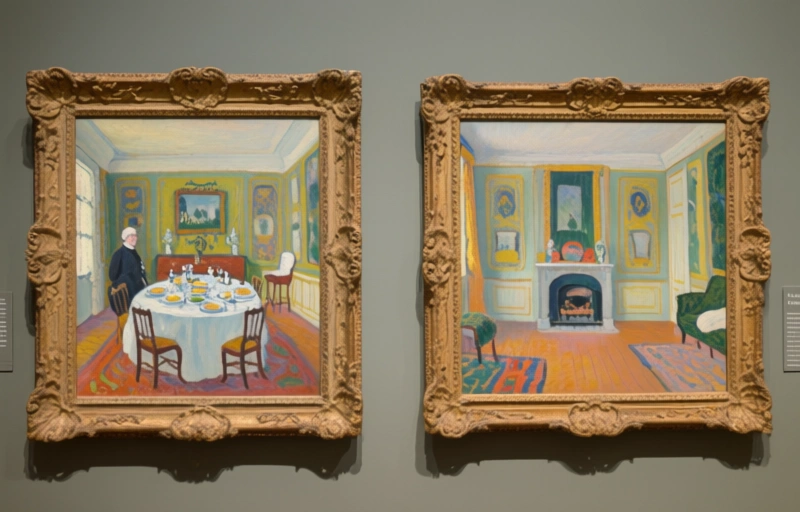
Signac created two incredible paintings of bourgeois interiors: *Salle à manger* (1886–1887) and *Un Dimanche* (1888–1890). At the same time, Havard was publishing his influential design books, *L’Art dans la maison* (1884) and *La Décoration* (1892). These works became the bibles for creating the perfect home. Signac was critiquing the bourgeois lifestyle through his art, while Havard was literally telling that same class how to furnish their living rooms. It's a classic clash of rebellion versus establishment.
Yet, when you look closer, a surprising thread connects them. Both men, despite their divergent end goals, were drawing from the same well of scientific and theoretical ideas. They shared a deep, almost unshakeable faith in progress through science. This common ground shaped how they saw color, line, and space.
### The Science of Space and Color
This shared foundation is most visible in their approach to a room's elements. It wasn't just about picking a nice chair or a pretty vase. Both Signac in his compositions and Havard in his advice focused intently on:
- The precise choice and arrangement of furniture
- The psychological application of color
- The strategic use of lines to guide the eye and influence mood
They believed you could engineer an environment, whether on canvas or in a 12-foot by 15-foot parlor. Havard's guides provided rules for creating harmony and status. Signac's paintings used those same visual principles—but often to subtly question the very world they depicted. The similarities in their visual language are, frankly, striking. It shows how a single set of ideas can be bent to serve completely different masters.
As one observer noted, "A shared confidence in progress through science linked these divergent ideologies." That's the real kicker. It reminds us that tools are neutral; it's the intent behind them that matters.
### Why This Still Matters Today
So why should we care about this 19th-century crossover? Because it's a perfect case study in how art and design are never created in a vacuum. They're in constant dialogue, borrowing and reshaping ideas from each other. The next time you walk into a beautifully designed room or stand before a captivating painting, think about the invisible rules at play. You might just spot the ghost of a shared theory, connecting the creator's hand to the culture they lived in. It's a connection that makes both the art and the space around us infinitely more interesting.