When Art Meets Design: Signac, Havard, and Shared Science
Miguel Fernández ·
Listen to this article~4 min
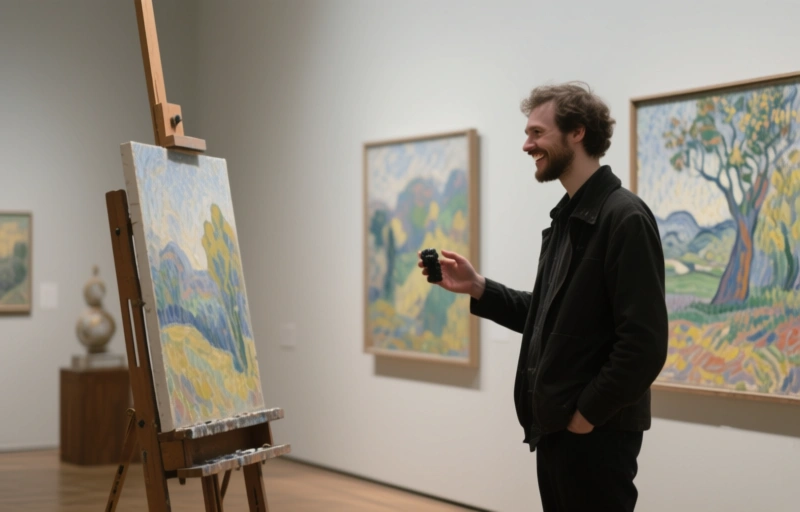
Explore the surprising link between Neo-Impressionist Paul Signac's anarchist art and Henry Havard's bourgeois design guides. Discover how shared scientific principles bridged their opposing worlds.
Let's talk about something fascinating. It's about how two seemingly opposite worlds—art and interior design—found common ground in late 19th-century France. We're looking at Paul Signac's paintings and Henry Havard's design books. On the surface, they couldn't be more different.
Signac was a Neo-Impressionist, you know, part of that pointillist crew. His artistic theories were steeped in anarchist ideology. He was questioning the very structure of society through his brushstrokes. Then you have Henry Havard. He was writing the rulebooks for bourgeois living, literally. His works like *L'Art dans la maison* (1884) and *La Décoration* (1892) were guides for the emerging consumer class.
One was an artistic rebel. The other was a decorum authority. Yet, here's the twist that makes you lean in.
### The Unlikely Common Ground
They both turned to the same source for inspiration: science. Seriously. In an age buzzing with new discoveries, both the anarchist painter and the establishment decorator believed science held the key to progress. This shared faith created a bridge between their divergent ideologies.
You can see this science-first approach in the details. In Signac's paintings of bourgeois interiors, like *Salle à manger* (1886–1887) and *Un Dimanche* (1888–1890), it's not just about capturing a scene. It's a calculated study. The arrangement of furniture, the application of color—it's all deliberate.
Havard's advice on furnishing a home followed a similar, almost clinical logic. He didn't just say 'put a sofa here.' He prescribed. The choice of lines, the psychology of color palettes, the spatial arrangement. It was about creating a specific effect, a controlled environment.
Think about it like this: both were trying to engineer an experience, one on canvas and the other in a living room. They used their tools—paint and fabric—to influence perception and emotion. That's a powerful connection.
### A Shared Visual Language
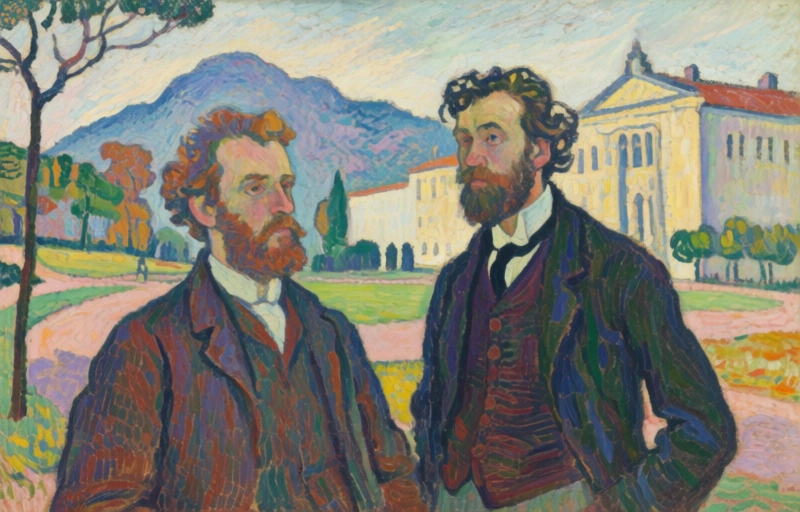
The similarities are striking when you break it down. Both Signac and Havard were obsessed with a few key principles:
- **Color Theory:** They weren't just picking pretty colors. They were applying scientific color theory to evoke specific moods and psychological responses.
- **Line and Form:** The use of lines—whether in the brushwork of a painting or the silhouette of a chair—wasn't accidental. It was about guiding the eye and creating harmony (or deliberate tension).
- **Compositional Balance:** Every element had its place. A vase in a painting, a side table in a room—their placement was calculated for visual and emotional impact.
It makes you wonder, doesn't it? How often do we separate 'high art' from 'commercial design'? This story shows they were drinking from the same well of ideas. The late 1800s were a time of immense change. Industry was booming, consumer culture was born, and political ideologies were clashing.
Yet, in the middle of all that noise, a painter and a decorator found a shared language in scientific principles. It's a reminder that inspiration and innovation often come from the intersection of different fields. The quest for a rational, almost scientific approach to beauty linked an anarchist's vision with a decorator's manual.
That's a connection worth remembering the next time you look at a painting or rearrange your own furniture. You might just be participating in a conversation that's over a century old.