When Art Meets Design: Signac, Havard & Shared Ideals
Miguel Fernández ·
Listen to this article~4 min
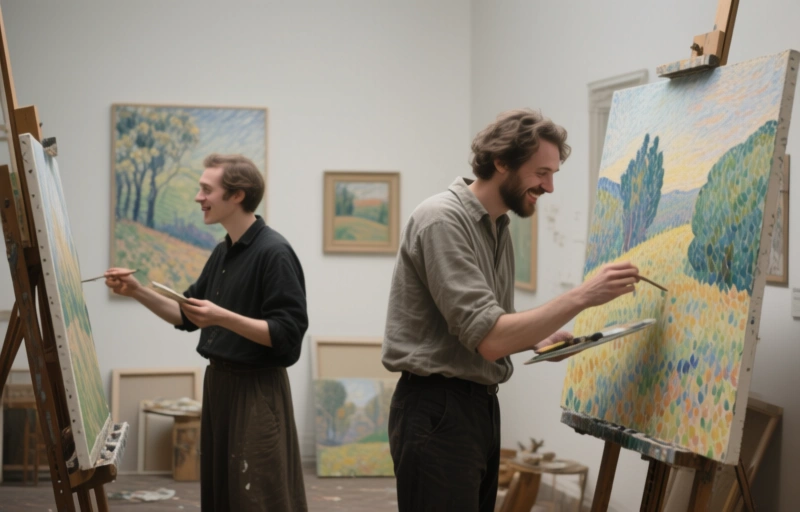
Explore how anarchist painter Paul Signac and bourgeois design authority Henry Havard used the same scientific principles of color and form, bridging ideological divides in late 19th century France.
Let's talk about something fascinating that connects two seemingly different worlds. It's about how art and interior design, from opposite ends of the ideological spectrum, ended up speaking the same visual language. We're looking at Paul Signac's paintings and Henry Havard's design books from late 19th century France.
Signac was a Neo-Impressionist painter with strong anarchist beliefs. He wasn't just making pretty pictures; his art was a political statement. Havard, on the other hand, wrote the rulebooks for bourgeois interior design. He was all about creating beautiful homes for the emerging consumer class.
You'd think they'd have nothing in common, right? One wanted to tear down the system, the other was helping decorate its living rooms. But here's where it gets interesting.
### The Unexpected Common Ground
Both men were obsessed with the science of perception. They believed color and line could directly influence psychology and emotion. Signac used this to challenge viewers' perceptions of society. Havard used it to create harmonious, status-affirming spaces.
Yet they were reading the same scientific theories. They were applying similar principles about how humans see and feel. In Signac's paintings *Salle à manger* (1886–1887) and *Un Dimanche* (1888–1890), you see careful arrangements of furniture and calculated color schemes.
Flip through Havard's books like *L'Art dans la maison* (1884) or *La Décoration* (1892), and you'll find similar advice. It's all about placement, proportion, and psychological impact.
### Science as the Bridge
What connected an anarchist painter and a design authority? A shared faith in progress through science. In that era, new discoveries about optics, color theory, and psychology were revolutionizing how people thought about visual experience.
Both believed these scientific principles could create better human experiences. For Signac, that meant a better society. For Havard, that meant a better home. Their methods overlapped in surprising ways:
- **Color Application**: Both emphasized systematic, theory-based use of color rather than mere decoration
- **Line and Form**: They paid meticulous attention to how lines directed the eye and created mood
- **Furniture Arrangement**: Objects weren't placed randomly but according to principles of balance and flow
- **Psychological Intent**: Every choice aimed to produce a specific emotional or intellectual response
It makes you think about how often opposing ideologies share common tools. They just point those tools in different directions.
### Why This Matters for Creatives Today
Here's what we can take from this historical connection. First, great ideas often come from cross-pollination between fields that seem unrelated. Second, having a solid theoretical foundation—whether in color science or composition—gives your work depth and consistency.
Most importantly, it shows that even when people disagree fundamentally about society's goals, they can agree on what makes something visually compelling. That shared human response to beauty and order is pretty powerful.
As one observer noted about their work: "A shared confidence in progress through science linked divergent ideologies." They believed in rational improvement, even if they envisioned completely different endpoints.
So next time you're working on a creative project, remember Signac and Havard. Remember that good principles transcend categories. Whether you're making art or designing a space, understanding the why behind your choices matters more than which camp you supposedly belong to.
The tension between their worldviews created something valuable: a reminder that common ground exists in unexpected places. And that sometimes, the tools for revolution and the tools for decoration come from the same toolbox.