When Art and Design Collide: Signac's Anarchist Interiors
Miguel Fernández ·
Listen to this article~4 min
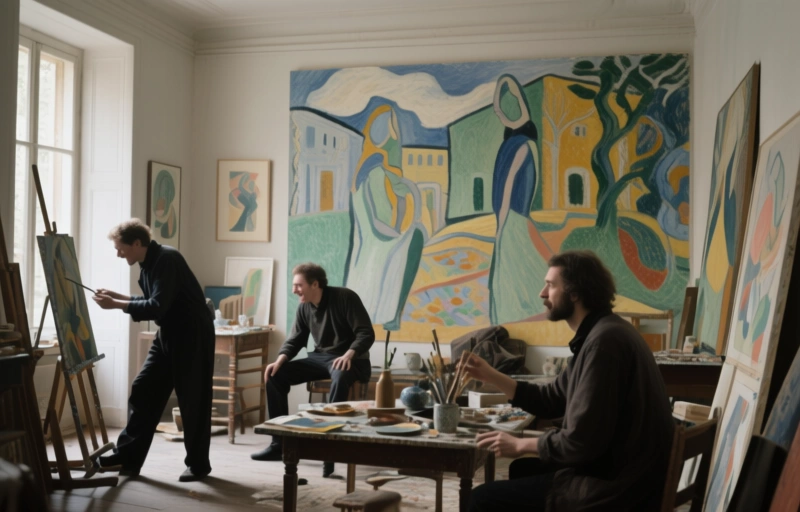
Explore how Paul Signac's anarchist paintings and Henry Havard's bourgeois design guides shared a surprising scientific foundation in color theory and psychology.
Let's talk about something that might seem like a contradiction at first. Picture this: a radical anarchist artist painting beautiful, serene bourgeois living rooms. That's exactly what Paul Signac did in the late 1880s with his paintings *Salle à manger* (1886–1887) and *Un Dimanche* (1888–1890).
At the same time, a guy named Henry Havard was writing the rulebooks for interior design. I'm talking about his influential works, *L'Art dans la maison* (1884) and *La Décoration* (1892). These were the go-to guides for anyone wanting to style their home properly.
### The Ideological Divide
Here's where it gets fascinating. Signac wasn't just painting pretty pictures. His entire artistic theory was soaked in anarchist ideology. He believed in tearing down old structures, both in society and in art. Havard, on the other hand, was writing for the new consumer class. His books were manuals for the emerging bourgeoisie, telling them how to spend their money to show off their status.
You'd think these two worlds would never touch, right? Anarchist art and consumerist design guides seem like oil and water. But they did more than touch—they shared a secret language.
### A Shared Scientific Foundation
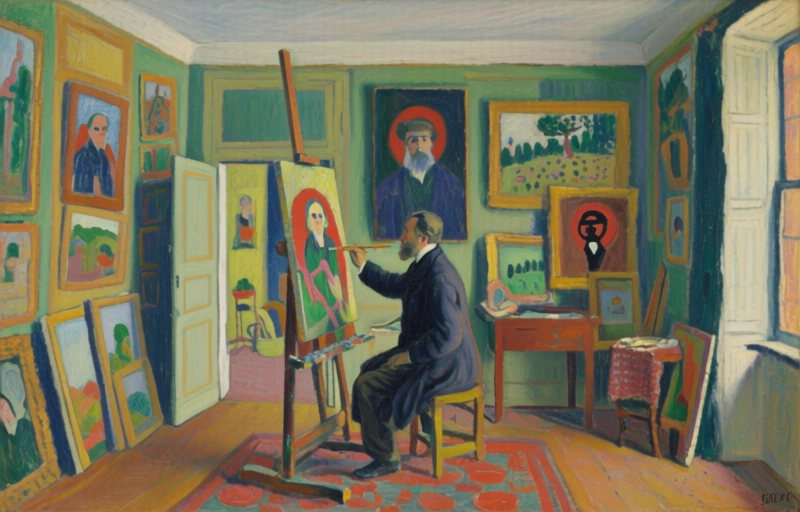
Believe it or not, both Signac and Havard were drawing from the same well of scientific thought. They were both obsessed with color theory, line, and psychology. Signac used precise dots of color (pointillism) based on optical science. Havard gave advice on furniture placement and wall colors based on the same principles.
In both the paintings and the design manuals, you can see this scientific approach play out:
- The careful arrangement of furniture to guide the eye
- The strategic use of color to create specific moods
- The belief that lines and shapes could influence emotion
It's like they were both using different dialects of the same visual language. Signac was speaking it to critique bourgeois life from within. Havard was speaking it to help people buy into that life more effectively.
### The Psychology of Space
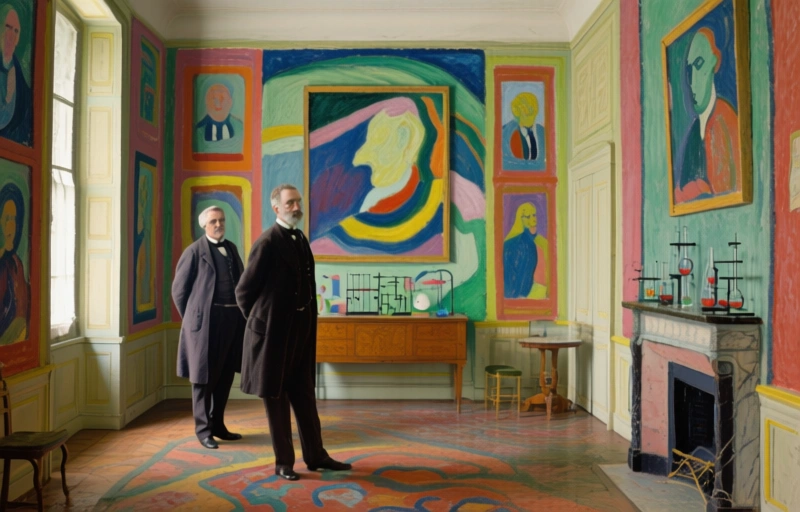
This is where things get really interesting. Both men believed you could psychologically influence people through their environment. Signac's paintings aren't just records of rooms—they're carefully constructed experiences. The placement of every chair, the angle of every table leg, the specific hue of every cushion—it's all intentional.
Havard was doing the same thing, just with actual rooms instead of paintings. His advice wasn't just about what looked good. It was about what *felt* right, what created harmony, what put people at ease (or deliberately didn't).
As one art historian noted, "The shared confidence in progress through science linked these divergent ideologies in unexpected ways."
### Why This Matters Today
So what can we learn from this strange pairing? First, that even opposing ideologies can find common ground in methodology. Second, that the spaces we create—whether on canvas or in our homes—are never neutral. They're always saying something, always trying to influence us.
Think about your own living space. Every choice you've made—the color of your walls, the arrangement of your furniture, the art on your walls—it's all communicating something. Maybe you're not an anarchist painter or a design guru, but you're participating in the same conversation Signac and Havard were having over a century ago.
The next time you rearrange your furniture or choose a new paint color, remember: you're not just decorating. You're engaging with a tradition that connects radical art, consumer culture, and the science of human perception. And that's a pretty cool legacy to be part of.