Van Doesburg's Hungarian Connection: Avant-Garde Networks in the 1920s
Miguel Fernández ·
Listen to this article~4 min
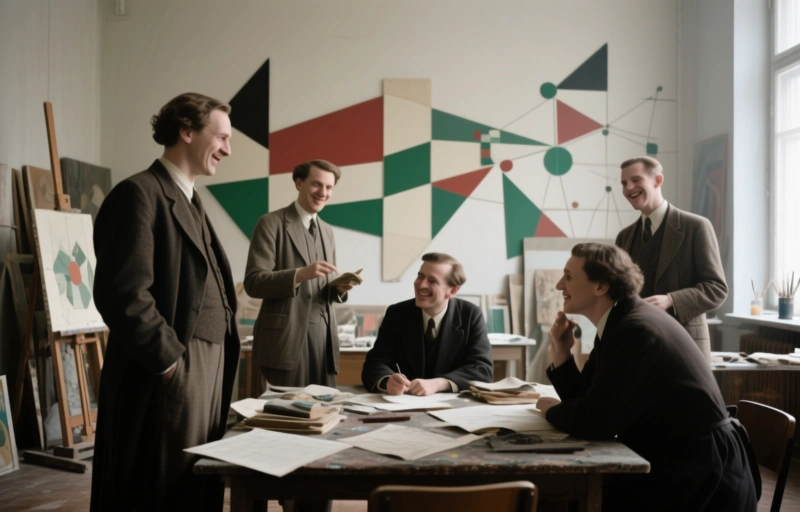
Explore the vital connection between Dutch artist Theo van Doesburg (De Stijl) and Hungarian avant-garde figures like Lajos Kassák in the 1920s. Discover how their correspondence and magazine exchanges built a trans-European art network.
Let's talk about art history, but not the stuffy, textbook kind. I want to tell you a story about connection. It's about how a few radical thinkers in the 1920s, separated by hundreds of miles, built a creative bridge that changed modern art. This is the story of Theo van Doesburg and his pivotal link to the Hungarian avant-garde.
### Who Was Theo van Doesburg?
If you're into modern art, you've probably heard of De Stijl. It was more than just a magazine; it was a movement. And at its heart was Theo van Doesburg. He wasn't just an artist; he was a connector, an editor, and a force of nature. He believed art should be a universal language, breaking down old forms to build something new and pure. Think of him as the ultimate networker of the European avant-garde scene.
### The Hungarian Counterpart: The 'Ma' Circle
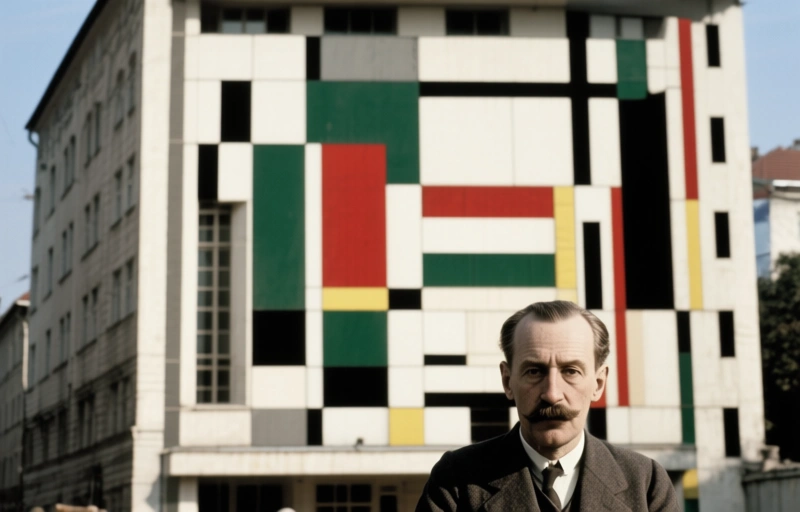
Now, shift your focus east, to Budapest. There, a similar fire was burning. A group of artists rallied around a periodical called *Ma*, which simply means 'Today.' Their leader was Lajos Kassák, a poet and painter with a vision just as bold as van Doesburg's. His crew included future legends like László Moholy-Nagy, who'd later shape the Bauhaus, and artists like Sándor Bortnyik and László Péri.
They were asking the same big questions about form, function, and a new world order through art. But they were doing it in a different country, with a different language. So, how did these two groups find each other?
### Building the Bridge: The Role of Periodicals
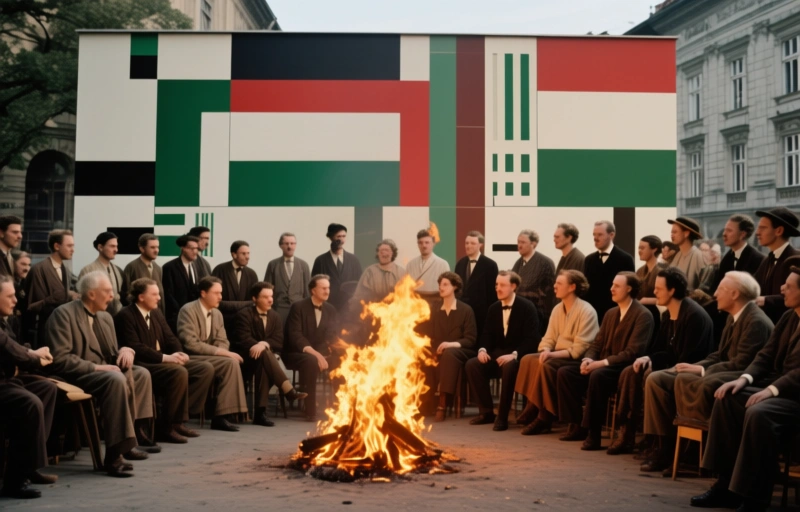
This is where it gets interesting. In an age before the internet, these thin, printed magazines were the social media of the avant-garde. *De Stijl* and *Ma* weren't just publications; they were lifelines.
- They exchanged copies, sharing ideas across borders.
- They published each other's manifestos and artworks.
- They created a tangible network, proving that their radical ideas weren't isolated but part of a continent-wide conversation.
Van Doesburg and Kassák started a correspondence. They weren't just pen pals; they were co-conspirators in shaping a new aesthetic. Through letters and published works, they debated, supported, and critiqued each other's visions for a total art.
### What the Archives Tell Us
This story isn't just speculation. It's written in letters, postcards, and drafts held in archives at the Kassák Museum in Budapest and the Netherlands Institute for Art History. These documents show a relationship that was both professional and deeply personal. They reveal the practical challenges—shipping artwork, translating texts, navigating post-war politics—and the shared excitement of creating something truly new.
One thing becomes clear: this wasn't a one-way street. The influence flowed both ways. The geometric rigor of De Stijl met the dynamic, sometimes more politically charged energy of the Hungarian avant-garde. It was a creative fusion that enriched both movements.
### Why This Connection Still Matters
You might wonder why a nearly 100-year-old art network matters today. Well, it's a powerful reminder that innovation rarely happens in a vacuum. Great ideas need conversation, debate, and sometimes, a friend in another country who just *gets it*.
For artists and thinkers, it underscores the importance of putting your work out there and building your own network. For all of us, it's a lesson in how small connections can have oversized impacts, weaving threads that shape entire cultural landscapes. The dialogue between van Doesburg and the *Ma* artists helped lay groundwork for concepts that would define 20th-century design and architecture. Their story is proof that the most powerful networks are built on shared passion, not just proximity.