Van Doesburg & The Hungarian Avant-Garde Connection
Miguel Fernández ·
Listen to this article~4 min
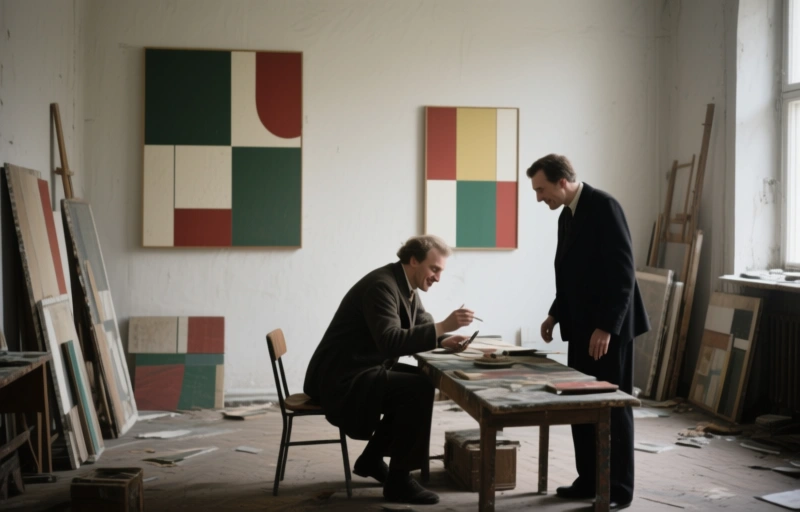
Explore the hidden network between Dutch artist Theo van Doesburg (De Stijl) and Hungary's avant-garde circle (Ma journal) in the 1920s. Discover how their collaboration shaped European modernism.
Let's talk about a fascinating, almost hidden, chapter in art history. It's the story of how ideas jumped borders in the 1920s, connecting creative rebels across Europe. At the heart of it was Theo van Doesburg, the Dutch dynamo behind the legendary *De Stijl* movement. On the other side were the brilliant minds of the Hungarian avant-garde, publishing their radical visions in the journal *Ma* (Today). This wasn't just about art styles. It was about building a network, a shared language of modernism during a time of immense change. We're going to dig into how these connections were forged and why they still matter.
### The Key Players in a Continental Dialogue
Think of Theo van Doesburg as a central hub. He wasn't just an artist; he was a connector, an editor, and a tireless promoter of a new visual language based on abstraction, geometry, and primary colors. Through his journal *De Stijl*, he was shouting these ideas from the rooftops. Meanwhile, in Budapest, a group of artists was doing something remarkably similar. Led by Lajos Kassák, the *Ma* group included future giants like László Moholy-Nagy, who would later shape the Bauhaus, along with Sándor Bortnyik and László Péri. They were exploring constructivism, new typography, and a socially engaged art. For a few key years in the early 1920s, their paths converged.
So, how did a Dutch artist and a circle of Hungarians even find each other? It was a world before the internet, but the avant-garde had its own networks—letters, journals, and the movement of artists themselves. Van Doesburg was famously itinerant, giving lectures and seeking collaborators. The research, drawing from archives in Budapest and The Hague, shows a web of correspondence and mutual promotion. They weren't working in isolation. They were reading each other's publications, debating ideas, and seeing their work as part of a single, international front against traditional art.
### What Their Collaboration Looked Like
This connection wasn't abstract. It had real, tangible outcomes. Van Doesburg published the work and writings of the Hungarian artists in *De Stijl*, giving them a crucial platform in Western Europe. In return, the ideas flowing from the *Ma* group, particularly their blend of art and social theory, influenced the broader conversation. They shared a belief that art should be active in building a new world. This exchange helped solidify a shared aesthetic and ideological foundation for modernism. It's a classic case of cross-pollination, where different perspectives made the whole movement stronger.
- **Published Exchanges:** Van Doesburg featured Hungarian artists in *De Stijl* issues.
- **Theoretical Debates:** They engaged in written discussions about abstraction, form, and the role of the artist.
- **Network Building:** This contact opened doors for Hungarians like Moholy-Nagy to later join institutions like the Bauhaus.
Looking back, this micro-history shows us that great art movements are rarely born in a vacuum. They're the product of conversation, sometimes across hundreds of miles. The link between Van Doesburg and the *Ma* group is a perfect example of the avant-garde's international spirit. It reminds us that creativity thrives on connection, on the brave act of reaching out to like-minded souls, even if they speak a different language. Their legacy isn't just in the paintings or sculptures left behind, but in the model they provided: a collaborative, borderless pursuit of the new.
> "The avant-garde was a conversation, not a monologue. These artists were writing letters, sharing journals, and building a new visual language together, continent-wide."
In the end, studying these networks does more than fill a page in an art history book. It shows us the human infrastructure behind the '-isms.' It was about friendship, rivalry, support, and the sheer excitement of discovering someone else on the same radical wavelength. That's a story that feels just as relevant today.