Van Doesburg & The Hungarian Avant-Garde Connection
Miguel Fernández ·
Listen to this article~3 min
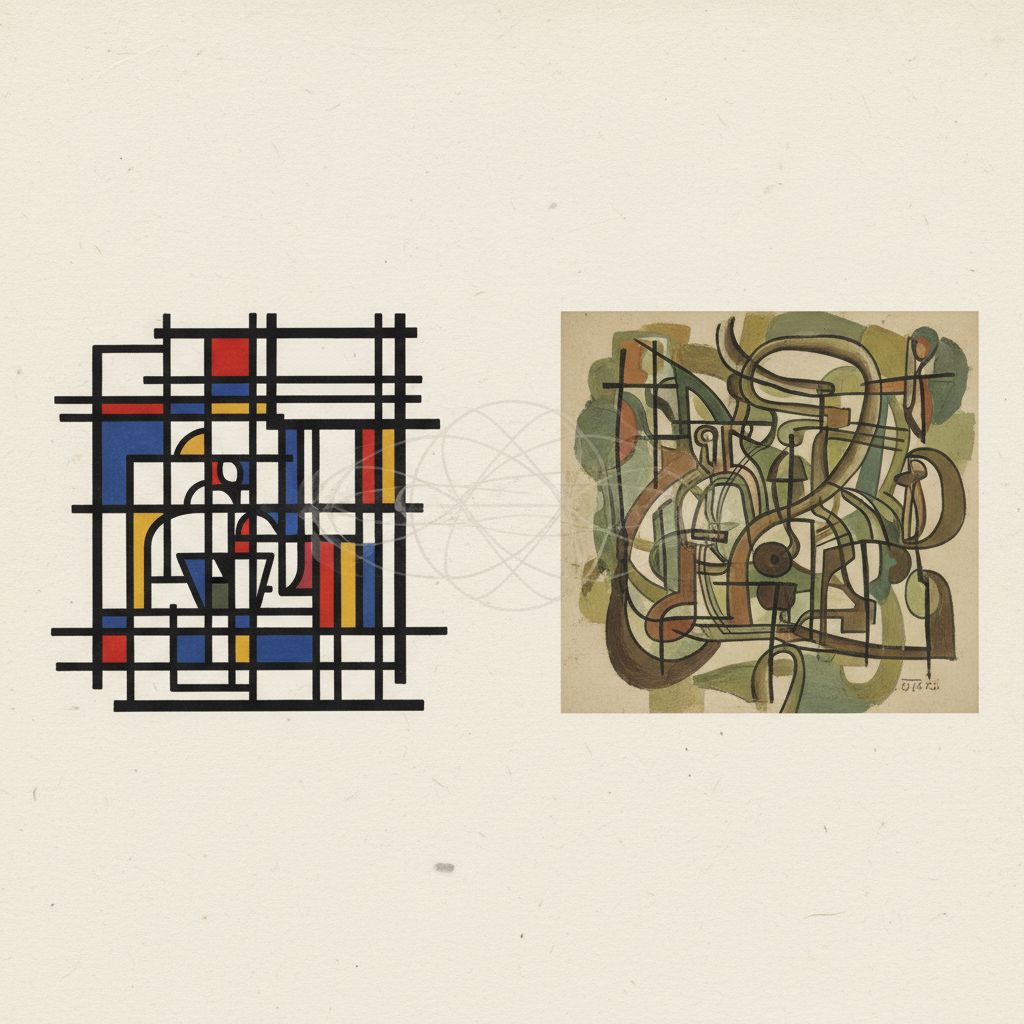
Explore the 1920s connection between Dutch artist Theo van Doesburg (De Stijl) and Hungary's avant-garde circle around the journal Ma, including Kassák and Moholy-Nagy. Discover how their exchange shaped modern art.
Let's talk about a fascinating, often overlooked moment in art history. It's the story of how ideas traveled across Europe in the 1920s, connecting creative minds who were reshaping what art could be. This isn't just about famous movements; it's about the personal letters, the shared publications, and the quiet collaborations that built an international network.
At the center of our story is Theo van Doesburg. You might know him as the driving force behind *De Stijl* (The Style), that Dutch movement famous for its bold primary colors and stark geometry. But van Doesburg wasn't just an artist; he was a connector, an editor, a one-man cultural hub. And in the early 1920s, his gaze turned east, towards Budapest.
### The Budapest Circle: A Hub of Radical Thought
Over in Hungary, a group of fierce innovators was buzzing around their own periodical, called *Ma* (Today). Led by Lajos Kassák, this wasn't a casual art club. These were thinkers and makers determined to break from tradition, to fuse art with a new, modern spirit. The group included future giants like László Moholy-Nagy, who'd later light up the Bauhaus, and artists like Sándor Bortnyik and László Péri.
What's so compelling is how these two groups—*De Stijl* in the Netherlands and *Ma* in Hungary—started talking. It wasn't a formal alliance. It was more like a conversation between pen pals who shared a secret language of abstraction and utopian ideals. They exchanged magazines, critiqued each other's work, and debated the future in print.
### Piecing Together the Past from Letters and Archives
So, how do we know all this? The story is literally tucked away in boxes. Researchers have dug through the personal archives—the Kassák estate in Budapest's Kassák Museum and van Doesburg's papers at the Netherlands Institute for Art History in The Hague. These aren't just dry documents; they're snapshots of a dynamic relationship.
- **Personal Correspondence:** Letters show van Doesburg and Kassák discussing everything from layout design to philosophical principles.
- **Published Exchanges:** Articles and reproductions of artwork appeared in each other's journals, cross-pollinating ideas.
- **Shared Networks:** This connection helped weave Hungarian artists into the wider tapestry of European Constructivism and abstract art.
This micro-history shows us that big art movements don't just appear. They're built through countless small acts of communication between people who dared to think differently. The contact between van Doesburg and the *Ma* group was a vital thread in that fabric.
It reminds us that innovation rarely happens in isolation. Even the most radical ideas need a community, a network of peers to challenge, support, and spread them. The 1920s avant-garde was a perfect example of this—a continent-wide conversation conducted in manifestos, postcards, and radically designed pages.
In the end, this story is more than a historical footnote. It's a lesson in creative connection. It shows how a Dutch artist and a circle of Hungarian innovators, separated by hundreds of miles, helped each other define the visual language of modernity. Their dialogue proves that the most powerful ideas are those shared across borders.