Van Doesburg and the Hungarian Avant-Garde Connection
Miguel Fernández ·
Listen to this article~3 min
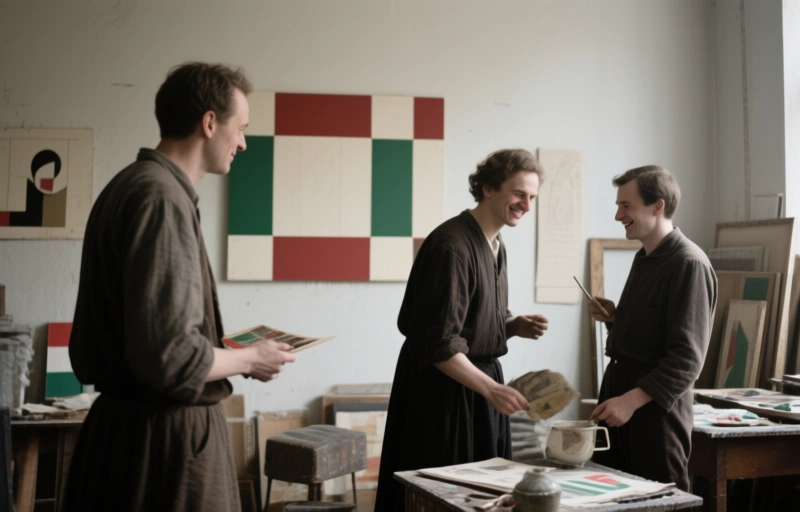
Explore the micro-history of Theo van Doesburg's connection with Hungarian avant-garde artists in the 1920s. A story of cross-border collaboration that shaped modern art.
The early 1920s were a wild time for art in Europe. You had all these creators bouncing ideas off each other, crossing borders, and building networks that would shape modern art forever. One of the most fascinating threads from that era is the connection between Theo van Doesburg, the Dutch artist who ran the magazine *De Stijl*, and a group of Hungarian avant-garde artists tied to the journal *Ma* (which means "Today").
This isn't just a dry history lesson. It's a story about real people sharing ideas, arguing, and making art that still matters today. Let's break it down.
### Who Were These Guys?
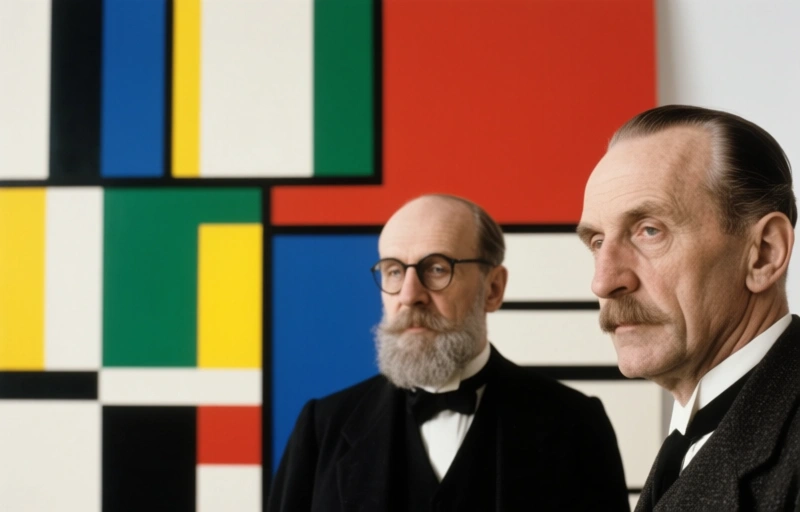
Theo van Doesburg wasn't just an artist—he was a connector. He edited *De Stijl*, which pushed for a stripped-down, geometric style that focused on primary colors and straight lines. Think Mondrian, but with more energy and less isolation.
On the other side, you had the Hungarian crew: Lajos Kassák, Sándor Bortnyik, László Moholy-Nagy, and László Péri, among others. They were publishing *Ma*, a magazine that mixed activism with art. These Hungarians were hungry for something new. They wanted to break away from tradition and build a modern visual language.
### What We Found in the Archives
We dug into the archives—literally. The Kassák Museum in Budapest holds the Hungarian side of the story. The RKD in The Hague has Van Doesburg's papers. What we found shows how these two groups influenced each other.
- **Letters and postcards** flew back and forth between Budapest and the Netherlands.
- **Artworks** were exchanged, critiqued, and sometimes rejected.
- **Ideas about color, form, and politics** got mixed up in ways that surprised everyone.
It wasn't always smooth. Van Doesburg was opinionated. The Hungarians had their own vision. But that friction is what made the connection so powerful.
### Why This Matters Now
You might think this is just art history trivia. But here's the thing: the way these artists collaborated across borders is a blueprint for how creative communities work today. They didn't have email or social media. They had letters, magazines, and sheer determination.
> "Art is not a mirror held up to reality, but a hammer with which to shape it." — Bertolt Brecht (and these artists lived that)
This micro-history shows that the avant-garde wasn't a solo act. It was a network. Van Doesburg and the Hungarians were part of a bigger puzzle that included artists from Russia, Germany, France, and beyond.
### The Takeaway
If you're an art professional in the US, this story should remind you that great art doesn't happen in a vacuum. It comes from conversation, conflict, and collaboration. The next time you see a minimalist painting or a bold geometric design, think about the Hungarians and the Dutchman who helped make it possible.
And if you ever get a chance to visit the Kassák Museum in Budapest or the RKD in The Hague, do it. The archives are open, and the stories are waiting.