Van Doesburg & the Hungarian Avant-Garde: A 1920s Connection
Miguel Fernández ·
Listen to this article~4 min
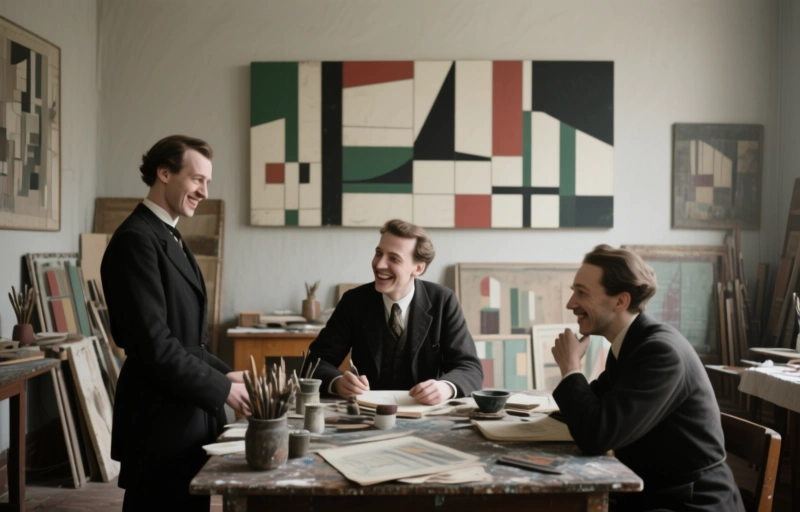
Explore how Theo van Doesburg connected with Hungarian avant-garde artists in the 1920s, creating international networks that shaped European modern art through publications like De Stijl and Ma.
Let's talk about something that doesn't get enough attention in art history circles—the fascinating connections between artists across borders in the 1920s. Specifically, how a Dutch artist named Theo van Doesburg linked up with Hungarian avant-garde creators during that wild, experimental decade.
You know Van Doesburg, right? He was the driving force behind *De Stijl* (The Style), that influential Dutch art journal. Well, turns out his influence stretched way beyond the Netherlands.
### The Hungarian Connection
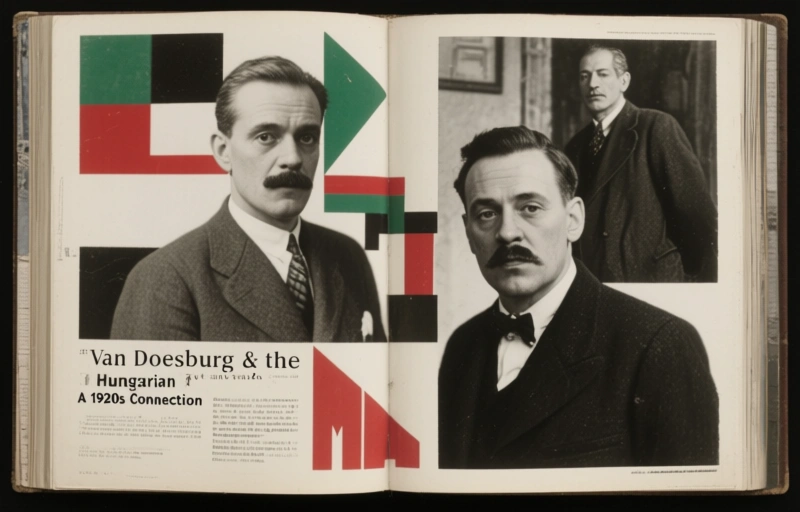
During the first half of the 1920s, Van Doesburg formed connections with Hungarian artists associated with their own radical publication called *Ma* (Today). We're talking about major figures like Lajos Kassák, Sándor Bortnyik, and even László Moholy-Nagy before he became famous at the Bauhaus.
What's really interesting is how these connections happened. It wasn't just casual correspondence—this was serious networking that shaped the entire European avant-garde scene. These artists were exchanging ideas, sharing techniques, and basically creating an international creative community before "globalization" was even a word.
### The Research Behind the Story
Now, here's where it gets really cool. Researchers have dug through archives at the Kassák Museum in Budapest and the RKD – Netherlands Institute for Art History in The Hague. They've uncovered letters, sketches, and documents that show just how deep these connections went.
Think about it—this was before email, before cheap international calls. These artists were communicating through:
- Handwritten letters that took weeks to arrive
- Shared publications sent across borders
- Occasional meetings when travel was possible
- Artistic exchanges through their respective journals
### Why This Matters Today
You might wonder why we should care about art connections from a century ago. Well, it shows us something important about creativity—it doesn't happen in isolation. Even in the 1920s, artists understood they needed to connect with like-minded creators across Europe to push boundaries and develop new ideas.
As one researcher noted, "These networks weren't just social—they were essential for artistic survival and innovation in a rapidly changing world."
### The Bigger Picture
What Van Doesburg and the Hungarian artists created was more than just personal friendships. They were building what we'd now call an international creative network. Through *De Stijl* and *Ma*, they shared:
- New approaches to abstraction
- Experimental typography and design
- Radical ideas about art's role in society
- Cross-cultural perspectives on modernism
This exchange helped shape the entire European avant-garde movement. Hungarian artists brought fresh perspectives to Dutch circles, while Van Doesburg's ideas influenced developments in Budapest and beyond.
### What We Can Learn
Looking back at these connections gives us a different view of art history. Instead of seeing movements as isolated national phenomena, we see them as interconnected conversations. The Hungarian avant-garde wasn't developing in a vacuum—it was part of a larger European dialogue.
And Van Doesburg? He wasn't just a Dutch artist. He was a connector, a bridge between different creative communities. His work with Hungarian artists shows how avant-garde movements thrived on cross-pollination.
So next time you look at art from the 1920s, remember—those bold, experimental works didn't appear out of nowhere. They were the result of conversations that crossed borders, languages, and cultures. Artists like Van Doesburg and his Hungarian counterparts were building the creative networks that would define modern art for decades to come.
It makes you think about our own creative connections today, doesn't it? How we build communities, share ideas, and push boundaries together. Some things never change—artists will always find ways to connect and create, no matter what borders stand between them.