Van Doesburg & The Hungarian Avant-Garde: A 1920s Connection
Miguel Fernández ·
Listen to this article~4 min
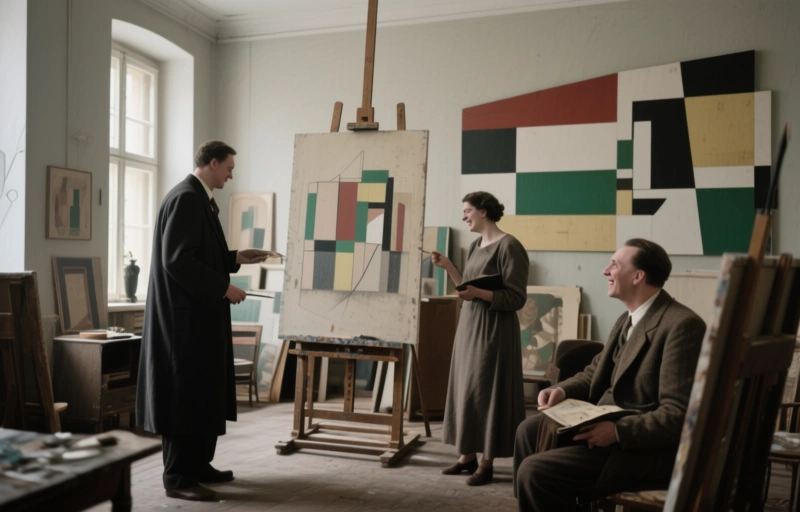
Explore the 1920s connection between Dutch artist Theo van Doesburg (De Stijl) and Hungary's avant-garde circle around the journal Ma, including Kassák and Moholy-Nagy. Discover how archival letters reveal a vital European art network.
Let's talk about a fascinating, often overlooked moment in art history. It's the story of how ideas traveled across Europe in the 1920s, connecting creative minds who were all trying to break the mold. This isn't just about famous names; it's about the networks, the letters, and the shared vision that fueled a revolution in art.
At the heart of this story is Theo van Doesburg. You might know him as the driving force behind *De Stijl* (The Style), that Dutch movement obsessed with straight lines, primary colors, and pure abstraction. He wasn't just a painter; he was a connector, an editor, a one-man hub for the avant-garde.
### The Budapest Connection
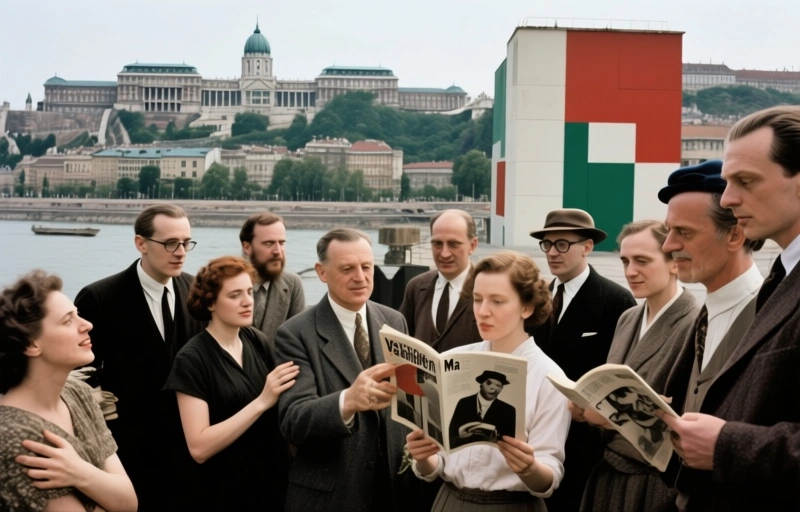
Across the continent, in Budapest, a similar energy was buzzing. A group of artists rallied around their own radical journal called *Ma* (Today). Led by Lajos Kassák, this crew included future giants like László Moholy-Nagy, who'd later light up the Bauhaus, along with Sándor Bortnyik and László Péri. They were hungry for new ideas, looking beyond their borders.
So what happened when these two worlds—*De Stijl* from the Netherlands and *Ma* from Hungary—started talking? That's the micro-history we're diving into. It's about the first half of the 1920s, a time of rebuilding and radical rethinking after the Great War.
### Tracing the Network Through Archives
The real magic of this story comes from the paper trail. Historians have pieced it together by digging into archives held in two key places: the Kassák Museum in Budapest and the RKD – Netherlands Institute for Art History in The Hague. These aren't just dusty old papers; they're maps of a conversation.
- **Letters and Publications:** Van Doesburg and Kassák exchanged writings, ideas, and probably a fair bit of gossip about the art world.
- **Shared Concepts:** The dialogue wasn't just polite hellos. They debated core ideas about abstraction, the role of the artist in society, and how to build a truly international modern movement.
- **A Web of Influence:** This connection wasn't an isolated event. It was one thread in a vast, intricate web linking avant-garde groups across Europe, from Berlin to Paris and beyond.
Think of it like this: before the internet, this was how viral ideas spread. A journal published in Amsterdam would find its way to a studio in Budapest, sparking a new series of works or a fiery editorial response. It was slower, but no less powerful.
### Why This History Matters Today
You might wonder why a nearly 100-year-old artistic pen-pal relationship matters. Well, it shows us that innovation rarely happens in a vacuum. The big 'isms' of modern art—Constructivism, Neo-Plasticism—were built on these cross-border conversations.
For the Hungarian artists, connecting with a figure like Van Doesburg was a lifeline to the wider European scene. It validated their work and injected new energy into their local projects. For Van Doesburg, it expanded the reach and influence of *De Stijl*'s philosophy, proving its relevance far beyond the Dutch borders.
In the end, this story reminds us that art movements are living things. They breathe through communication, collaboration, and sometimes friendly rivalry. The connection between Theo van Doesburg and the *Ma* group is a perfect, human-scale example of how the avant-garde truly worked—not as a series of isolated geniuses, but as a noisy, argumentative, and brilliantly interconnected community.