Van Doesburg & the Hungarian Avant-Garde: A 1920s Connection
Miguel Fernández ·
Listen to this article~3 min
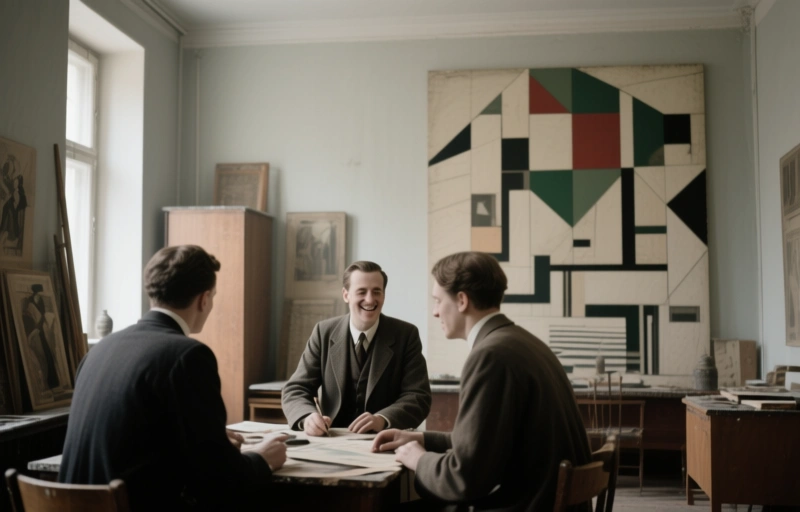
Explore the 1920s connection between Dutch artist Theo van Doesburg (De Stijl) and Hungarian avant-garde artists like Lajos Kassák and László Moholy-Nagy (Ma journal), revealing key pan-European artistic networks.
Let's talk about something that doesn't get enough attention in art history circles—the fascinating connections between different avant-garde movements in 1920s Europe. Specifically, the bridge built between Dutch artist Theo van Doesburg and a whole crew of Hungarian innovators. It's a story about ideas traveling faster than people, about journals crossing borders, and about how art movements don't develop in isolation.
### The Key Players in This Cross-Cultural Exchange
On one side, you had Theo van Doesburg. He wasn't just a painter—he was the driving force behind *De Stijl* (The Style), that influential Dutch journal that championed pure abstraction and universal harmony. Think Mondrian's grids and primary colors. Van Doesburg was the editor, the networker, the guy who made things happen.
Across Europe, in Budapest, another group was buzzing with radical energy. They gathered around the journal *Ma* (Today), led by the formidable Lajos Kassák. His circle included future giants like László Moholy-Nagy (who'd later teach at the Bauhaus), Sándor Bortnyik, and László Péri. They were hungry for new ideas and international connections.
### How Did These Two Worlds Connect?
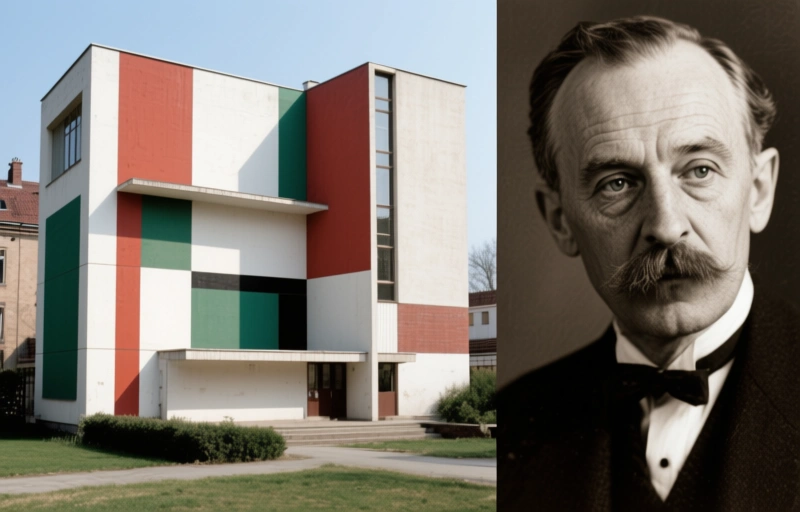
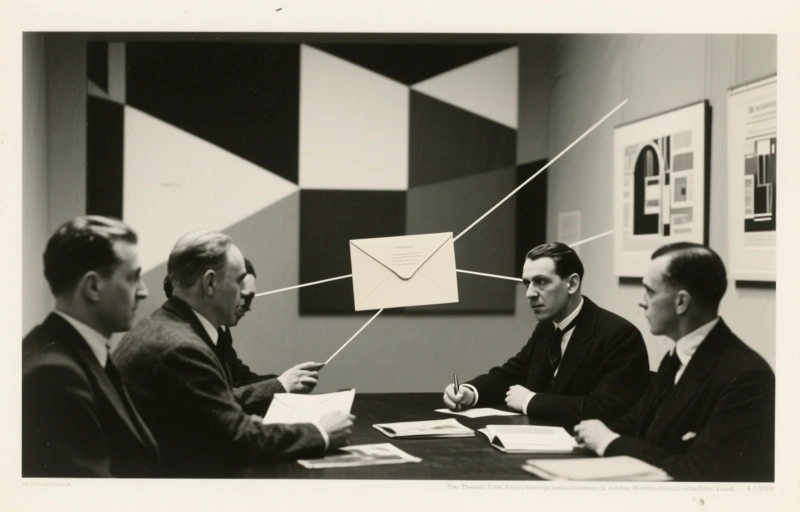
This wasn't about a single meeting or exhibition. The connection happened through the mail, through exchanged publications, and through shared networks. In the early 1920s, van Doesburg was actively building what we'd now call a pan-European avant-garde network. He saw kindred spirits in the *Ma* group.
Archival letters and documents tell the real story. Researchers digging through the Kassák Museum in Budapest and the Netherlands Institute for Art History in The Hague have pieced together this micro-history. It shows how these artists shared:
- Theories on constructivism and geometric abstraction
- Beliefs in art's role in building a new society
- Practical concerns about publishing and distributing radical work
### Why This Connection Matters for Art Professionals
For anyone working with avant-garde art today, understanding these networks is crucial. It changes how we view individual artists. Moholy-Nagy didn't emerge from a vacuum—his time with the *Ma* group and his contact with van Doesburg's ideas were formative. These exchanges shaped the visual language of modernism that still influences design, architecture, and art.
As one scholar noted, "The avant-garde was less a series of isolated movements and more a conversation across borders." The van Doesburg-Kassák connection is a perfect example of that conversation in action.
### The Legacy of a 1920s Artistic Dialogue
What's remarkable is how these relationships, forged a century ago, still matter. The ideas traded between Amsterdam and Budapest—about space, form, and art's social purpose—rippled outward. They influenced the Bauhaus, shaped modernist typography, and informed how we think about visual communication.
For contemporary art professionals, there's a lesson here about the power of networks. In an age before instant messaging, these artists created a web of influence through sheer will and shared vision. They remind us that innovation often happens at the intersections, in the spaces between cultures and disciplines. Their story isn't just history—it's a blueprint for creative collaboration that still feels relevant today.