Van Doesburg & Hungary's Avant-Garde: A 1920s Art Network
Miguel Fernández ·
Listen to this article~4 min
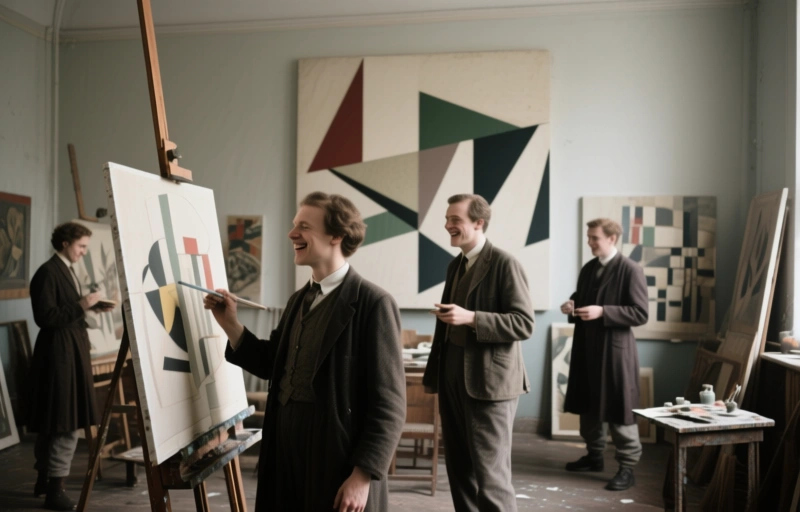
Explore the 1920s artistic network between Dutch pioneer Theo van Doesburg (De Stijl) and Hungary's avant-garde circle around Lajos Kassák and the journal Ma, including Moholy-Nagy.
Ever wonder how radical art ideas traveled across Europe before the internet? In the 1920s, it happened through letters, journals, and the determined efforts of artists like Theo van Doesburg. He wasn't just a Dutch painter; he was a connector, the driving force behind the influential journal *De Stijl* (The Style). And his reach extended far beyond the Netherlands.
This story is about a fascinating, often overlooked, artistic bridge. It connects van Doesburg to a fiery group of Hungarian avant-garde artists centered around their own groundbreaking publication, *Ma* (Today). We're talking about figures who would shape modern art: Lajos Kassák, Sándor Bortnyik, and a young László Moholy-Nagy, who'd later revolutionize the Bauhaus.
### The Key Players in a Continental Dialogue
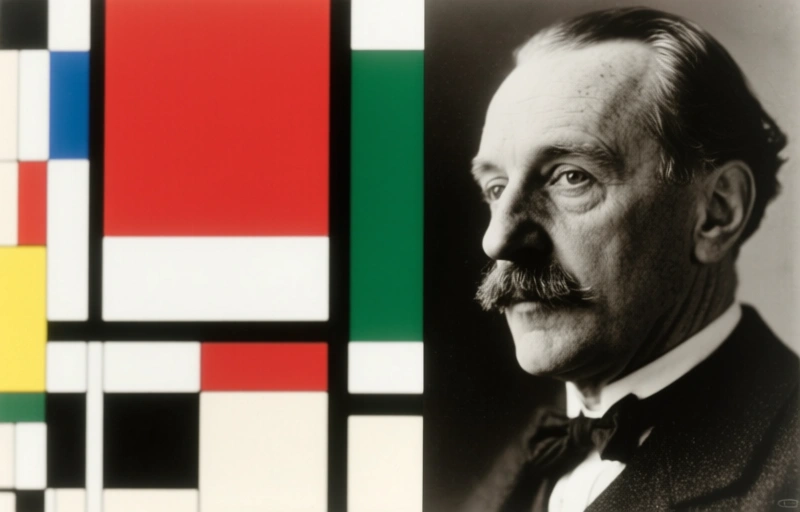
On one side, you had Theo van Doesburg. He was a true evangelist for De Stijl's principles of abstraction, primary colors, and geometric form. He didn't just create art; he tirelessly promoted its philosophy. On the other side, in post-war Budapest, was Lajos Kassák. He was a poet, painter, and the formidable editor of *Ma*, a hub for Hungary's most progressive minds.
Their circles included artists hungry for new ideas beyond their national borders:
- **Lajos Kassák**: The charismatic leader and publisher.
- **Sándor Bortnyik**: A painter deeply influenced by modernism.
- **László Moholy-Nagy**: A visionary exploring light, space, and new media.
- **László Péri**: A constructivist sculptor.
These weren't just random pen pals. This was a deliberate network. They exchanged publications, debated ideas in letters, and saw each other as allies in a shared fight against traditional art. It was a slow, postal-service version of an international forum.
### How We Know What We Know: Digging in the Archives
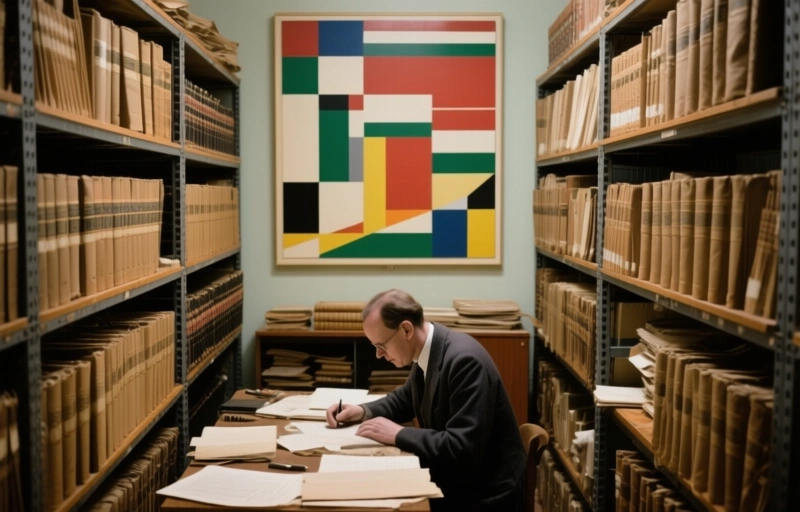
The evidence of this vibrant exchange comes from deep archival work. Researchers have sifted through personal estates—the Kassák archives in Budapest's Kassák Museum and the van Doesburg papers at the RKD in The Hague. These aren't just dry documents; they're snapshots of a conversation.
We're talking about handwritten letters discussing aesthetics, drafts of articles, and even sketches sent across borders. This primary material lets us trace not just *that* they communicated, but *what* they talked about. It reveals the substance of the connection.
As one scholar noted, studying these letters is like "listening in on a private meeting of the 20th century's artistic minds."
### Why This Little-Known Network Matters
You might ask, why focus on this specific link? It matters because it changes how we see art history. We often study movements in isolation: De Stijl here, Constructivism there. But stories like this show they were in constant, messy dialogue.
For the Hungarian artists, contact with van Doesburg was a lifeline to the wider European avant-garde, especially after the political turmoil in Hungary. For van Doesburg, it was proof that his ideas had resonance, that De Stijl was part of a larger, international wave. This micro-history shows that innovation rarely happens in a vacuum. It's fueled by these exchanges, these networks of mutual inspiration that stretch across miles and languages.
It reminds us that behind every major art movement, there are people writing letters, mailing journals, and building a community. The story of van Doesburg and the *Ma* group is a perfect, human-scale example of how modern art was truly built—one connection at a time.