Van Doesburg & Hungary's Avant-Garde: A 1920s Art Network
Miguel Fernández ·
Listen to this article~4 min
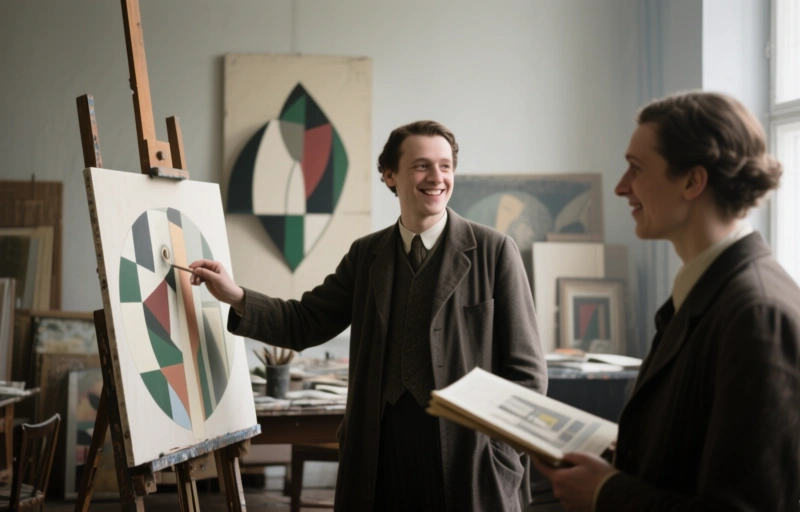
Explore the 1920s network connecting Dutch avant-garde leader Theo van Doesburg with radical Hungarian artists like Lajos Kassák and László Moholy-Nagy, revealing how transnational art communities were built.
Let's talk about art history, but not the dry, textbook kind. I want to take you back to the 1920s, to a Europe buzzing with creative energy after the First World War. It was a time when artists weren't just painting in their studios—they were writing letters, publishing magazines, and building networks across borders. Today, we're diving into one of those fascinating connections: the link between Dutch artist Theo van Doesburg and a fiery group of Hungarian avant-gardists.
### The Key Players in a Transnational Dialogue
On one side, you had Theo van Doesburg. He wasn't just a painter; he was the driving force behind *De Stijl* (The Style), that famous Dutch movement obsessed with geometric abstraction and primary colors. Think Mondrian. Van Doesburg was the editor, the networker, the guy who made things happen. He believed art should be universal, a new visual language for a modern world.
On the other side, over in Budapest and later in exile, was a group centered around the journal *Ma* (Today). Led by the formidable Lajos Kassák, this crew included future giants like László Moholy-Nagy, who'd later teach at the Bauhaus, and artists like Sándor Bortnyik and László Péri. They were radical, politically engaged, and hungry for international connection.
### How Did These Worlds Collide?
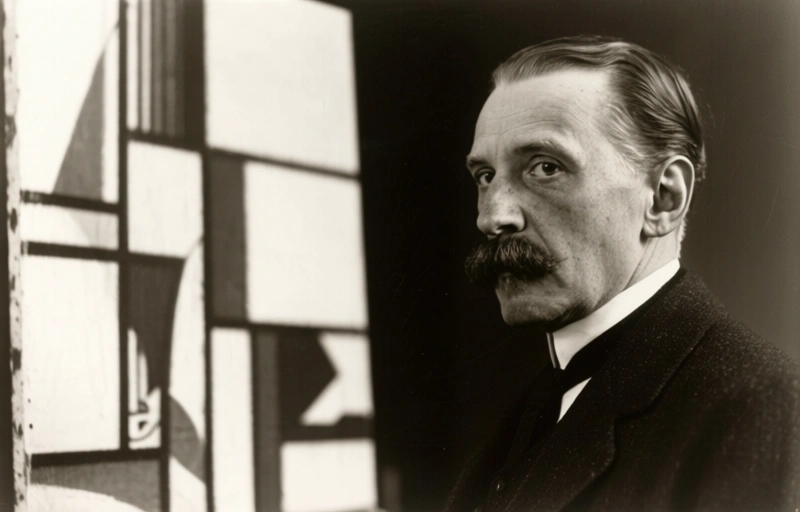
So, how did a Dutch artist connect with Hungarians in the early 1920s? It wasn't through Instagram, that's for sure. It happened through the mail, through published journals, and through a shared belief in a new, international art. After the war and the fall of the Hungarian Soviet Republic in 1919, many of these artists were in exile, scattered across Berlin and Vienna. They were looking for allies.
Van Doesburg, always scouting for kindred spirits, took notice. He saw *Ma* as a sister publication to his own *De Stijl*. What followed was a flurry of correspondence, exchanges of publications, and mutual promotion. They weren't just pen pals; they were actively building what we'd now call a professional network. They featured each other's work, debated ideas in print, and created a web of influence that stretched from the Netherlands to Central Europe.
This connection mattered because it shows the avant-garde wasn't a series of isolated national movements. It was a conversation. Here’s what that network exchange involved:
- Publishing each other's manifestos and essays in their respective journals
- Sharing exhibition opportunities and critical reviews
- Debating the role of art in society and the future of abstraction
- Providing moral and professional support in politically turbulent times
### Why This Little-Known History Still Resonates
You might wonder why this niche art history matters. Well, it's a powerful reminder that innovation rarely happens in a vacuum. These artists, working in a pre-digital age, went to incredible lengths to find their tribe. They built a community across language barriers and political borders. Their story is about the sheer force of shared ideas.
Looking at letters and documents from the Kassák Museum in Budapest and the RKD in The Hague, we get a raw, human look at this process. We see the excitement of discovering a like-minded artist hundreds of miles away. We see the practical struggles of getting journals printed and distributed. It was grassroots internationalism, fueled by passion and the printed page.
In the end, this micro-history of the Van Doesburg-Hungarian link gives us a blueprint. It shows how creative communities form and sustain themselves. For anyone in a creative field today, it's oddly familiar—the need to connect, collaborate, and push boundaries together, no matter where you are. That drive hasn't changed a bit.