Van Doesburg & Hungary's Avant-Garde: A 1920s Art Network
Miguel Fernández ·
Listen to this article~4 min
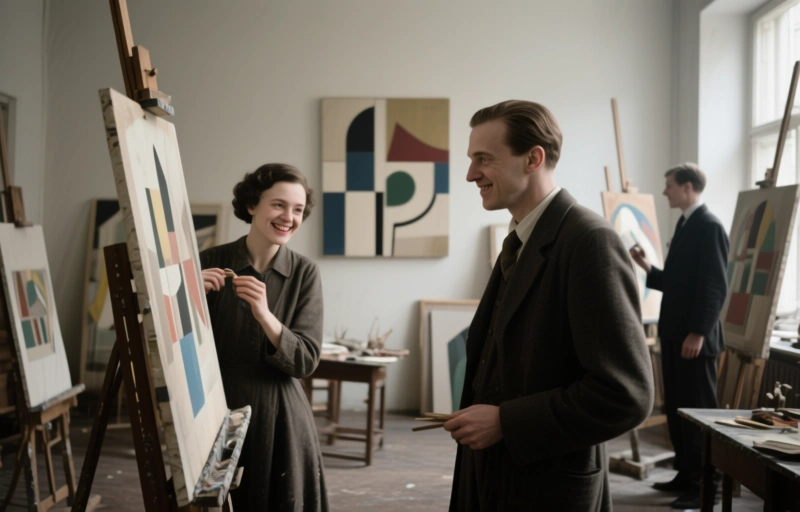
Explore the 1920s artistic network between Dutch pioneer Theo van Doesburg (De Stijl) and Hungary's avant-garde circle around Lajos Kassák and the magazine Ma, revealing how European modernism was built through collaboration.
Let's talk about art history, but not the dry, textbook kind. I want to take you back to the 1920s, a time when creative minds across Europe were buzzing with new ideas. They weren't just working in isolation. They were connecting, writing letters, and building networks that would shape modern art. Today, we're zooming in on a fascinating micro-history: the contact between Dutch artist Theo van Doesburg and a group of radical Hungarian creators.
### The Key Players in This Artistic Exchange
On one side, you had Theo van Doesburg. He wasn't just a painter; he was the driving force behind *De Stijl* (The Style), a hugely influential Dutch art magazine. Think of him as a hub, a connector for avant-garde thought. On the other side, a vibrant scene was erupting in Hungary, centered around the periodical *Ma* (Today). This group included powerhouse figures like Lajos Kassák, the editor and a central node himself, along with artists Sándor Bortnyik, László Moholy-Nagy, and László Péri.
What's so compelling about this story? It's a perfect case study of how ideas travel. This wasn't about one artist influencing another in a straight line. It was a web of mutual inspiration, criticism, and shared ambition that stretched from the Netherlands to Hungary. They were all asking the same big questions about form, function, and the role of art in a new, modern world.
### Piecing Together the Story from Archives
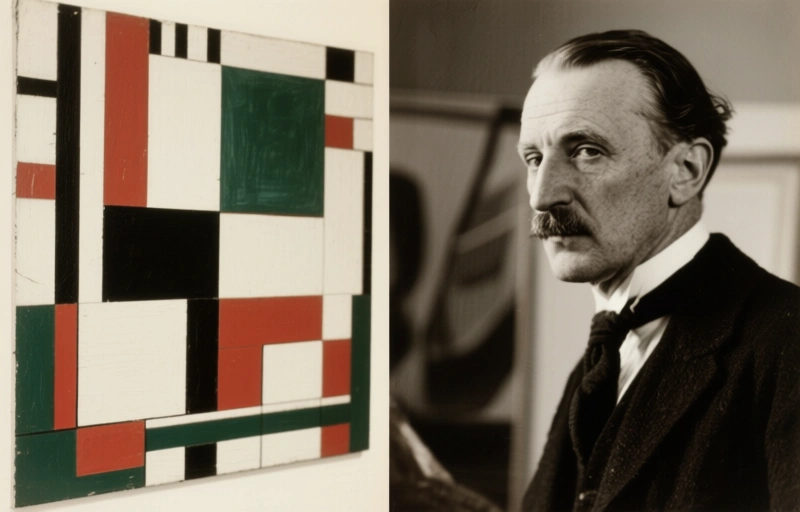
So, how do we know about these connections? A lot of this story comes from digging through old letters and documents. Researchers have pored over the archives of the Kassák estate in Budapest's Kassák Museum and the Van Doesburg papers at the RKD in The Hague. It's in these personal notes, drafts, and publications that the real dialogue comes to life.
You can almost picture the scene: letters crossing borders, sketches being shared, and the latest issue of *Ma* or *De Stijl* arriving in the mail, packed with provocative ideas. This was their social media, their way of building an international community. The research shows it wasn't just polite correspondence. It was a serious, sustained engagement.
- **Shared Visions:** Both groups were obsessed with abstraction, geometric form, and a break from pure representation.
- **The Power of Print:** The magazines *De Stijl* and *Ma* were their primary platforms, more important than any single gallery show.
- **A Two-Way Street:** Influence flowed in both directions. Hungarian artists contributed to Dutch discussions, and Van Doesburg's ideas resonated deeply in Budapest.
This network was a lifeline, especially for artists like Moholy-Nagy and Péri, who would later leave Hungary and spread these ideas at the Bauhaus and beyond. The connections forged in the early 1920s had long-lasting ripples.
### Why This Little History Matters Today
You might wonder why we should care about a specific artistic friendship from a century ago. Well, it shows us that innovation rarely happens in a vacuum. Great movements are built on conversations. The Hungarian avant-garde, through its link to Van Doesburg, plugged directly into a wider European circuit of thought.
It reminds us that behind every big '-ism'—Constructivism, Neo-plasticism—there are people writing letters, arguing over coffee, and supporting each other's work. This micro-history gives us a human-scale look at the machinery of the avant-garde. It wasn't just manifestos and finished paintings; it was a messy, collaborative, and deeply human process of creation and connection that helped define the art of the 20th century.