Van Doesburg & Hungary's Avant-Garde: A 1920s Art Network
Miguel Fernández ·
Listen to this article~3 min
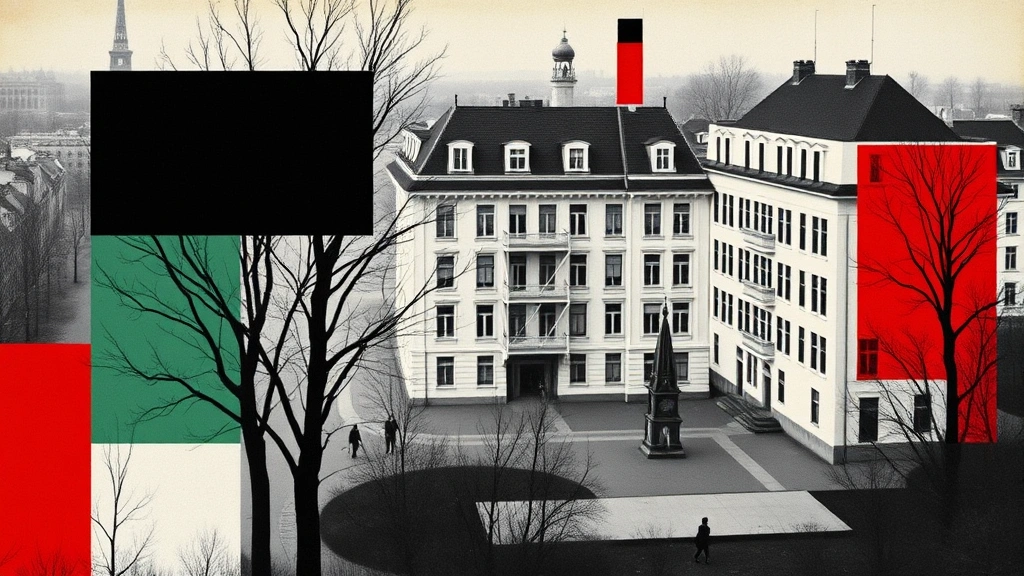
Explore the pivotal 1920s connection between Dutch artist Theo van Doesburg and Hungary's avant-garde circle around the journal 'Ma,' revealing how trans-European networks shaped modernist art.
Let's talk about something that doesn't get enough attention—the hidden conversations between artists that changed everything. In the early 1920s, while most of Europe was still catching its breath after the Great War, a quiet revolution was happening in studios and editorial offices. It wasn't about big public declarations. It was about letters, shared publications, and ideas crossing borders when people couldn't.
At the heart of this story is Theo van Doesburg. You might know him as that Dutch force of nature behind *De Stijl* (The Style). He wasn't just an artist; he was a connector, an editor who understood that art movements needed to talk to each other to stay vital.
### The Budapest Connection
Across Europe, in Budapest, a group of radical thinkers was publishing their own journal called *Ma* (Today). Led by Lajos Kassák, this crew included future giants like László Moholy-Nagy, who'd later light up the Bauhaus, along with Sándor Bortnyik and László Péri. They were hungry for connection beyond Hungary's borders. They wanted to be part of the international conversation on what modern art could be.
That's where van Doesburg came in. He saw kindred spirits. Through his work with *De Stijl*, he started building bridges. We're talking about exchanged letters, shared theories on abstraction, and a mutual belief that art should break from the past. It was a meeting of minds, not in a café, but on the pages of avant-garde magazines and through the postal service.
### Why This Network Mattered
This wasn't just polite pen-pal stuff. This connection had real impact. Think about it:
- It gave Hungarian artists a direct line into Western European avant-garde circles at a time when travel was difficult.
- It influenced the visual language of *Ma*, pushing it further toward the geometric abstraction and pure form that *De Stijl* championed.
- It helped solidify the idea of an international avant-garde—a network, not just isolated national movements.
As one scholar put it, looking at letters from the Kassák Museum and the RKD in The Hague, "These exchanges were the lifeblood of modernism. They turned local experiments into a shared language."
### The Lasting Legacy
What's fascinating is how these connections rippled out. Moholy-Nagy's path to the Bauhaus? Influenced by these networks. The spread of Constructivist ideas across Europe? Fueled by these very conversations between Dutch and Hungarian artists.
We often study art movements as if they existed in a vacuum. But the truth is messier and more interesting. The avant-garde of the 1920s was built on relationships, on artists reaching out across distances to say, "We see what you're doing. Let's build this together."
The story of van Doesburg and the *Ma* group reminds us that art history isn't just about finished paintings on a wall. It's about the conversations that happened in the margins, the letters that got lost in the mail, and the shared belief that a new world needed a new visual language. They were building that language, one connection at a time.