Van Doesburg & Hungary's Avant-Garde: A 1920s Art Network
Miguel Fernández ·
Listen to this article~5 min
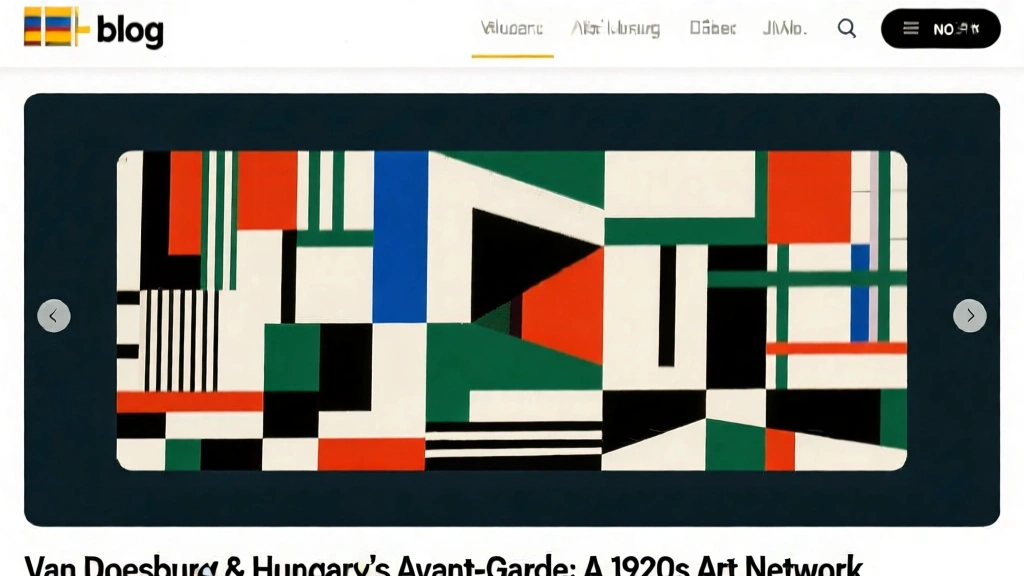
Explore the hidden network between Dutch artist Theo van Doesburg and Hungary's avant-garde in the 1920s. Discover how letters and ideas shaped modern art across postwar Europe through archival research.
Let's talk about something that doesn't get enough attention in art history circles. The quiet, behind-the-scenes connections that fueled the creative explosions of the 20th century. I'm thinking specifically about the fascinating link between Dutch artist Theo van Doesburg and a whole crew of Hungarian innovators in the early 1920s.
It's a story about letters, ideas, and magazines traveling across a Europe still recovering from war. Van Doesburg was the driving force behind *De Stijl* (The Style), that famous Dutch movement obsessed with geometric abstraction and primary colors. Meanwhile, over in Budapest, artists were buzzing around their own radical publication called *Ma* (Today).
### The Key Players in This Transnational Story
So who were these Hungarian artists connecting with van Doesburg? We're talking about some major figures who would later shape modern art and design. Lajos Kassák was the central organizer, the editor of *Ma*. Then you had talents like Sándor Bortnyik and László Péri pushing boundaries in painting and sculpture.
Perhaps the most famous name in the bunch was László Moholy-Nagy, who would go on to teach at the Bauhaus and influence generations of artists. These weren't isolated figures working in a vacuum. They were actively seeking dialogue with other European avant-gardes, and van Doesburg became a crucial contact point.
### How Archival Research Reveals Hidden Connections
What's really compelling about this story is how we know it. This isn't just speculation. Researchers have dug through personal archives on two continents—the Kassák Museum in Budapest and the Netherlands Institute for Art History in The Hague. They've found letters, drafts, and notes that show a real conversation happening.
Think about the logistics for a moment. This was the 1920s. No email, no instant messaging. Correspondence traveled by post across borders that had just been redrawn by World War I. Yet these artists made the effort to share ideas, critique each other's work, and discuss the big questions about art's role in society.
### What They Were Actually Talking About
The content of these exchanges matters. They weren't just exchanging pleasantries. These discussions touched on core avant-garde principles:
- The rejection of traditional representational art
- The embrace of abstraction and geometric forms
- The belief that art could transform society
- The role of magazines in creating international communities
Van Doesburg was particularly interested in spreading the *De Stijl* philosophy, while the Hungarian artists were developing their own distinct approaches. What emerged wasn't simple imitation, but a genuine cross-pollination of ideas.
As one researcher noted about these networks, "The real work of avant-garde movements often happened not in manifestos, but in the quiet exchange of letters between artists who felt isolated in their own countries."
### Why This Micro-History Matters Today
You might wonder why we should care about these specific connections from a century ago. Here's the thing—it shows us how creative movements actually work. They're not monolithic styles emerging from single locations. They're messy, networked, and international from the start.
Understanding these connections helps us see the 1920s European avant-garde not as separate national movements, but as a continent-wide conversation. The Hungarians weren't just followers of Western European trends. They were active participants shaping what modern art would become.
This story also reminds us about the importance of archival work. Without researchers sifting through old letters and documents, these connections might remain hidden. We'd have a much poorer understanding of how ideas actually traveled between artists in that turbulent postwar period.
### The Lasting Impact of These Exchanges
Those conversations in the early 1920s had ripple effects that lasted decades. Moholy-Nagy would carry forward ideas about abstraction and design when he joined the Bauhaus. Other Hungarian artists influenced by these international connections would spread modernist ideas throughout Central Europe.
Van Doesburg's engagement with the *Ma* group wasn't an isolated incident either. He was building what we'd now call a network—connecting artists across national boundaries to create something bigger than any single movement. In many ways, these early 20th century artists were pioneers of the kind of global artistic dialogue we take for granted today.
So next time you see a geometric abstract painting or read about modernist design principles, remember that behind those styles were real human connections. Artists writing letters, sharing magazines, and building communities across borders. That's how artistic revolutions actually happen—not in grand declarations, but in countless small conversations between curious minds.