Van Doesburg and the Hungarian Avant-Garde
Miguel Fernández ·
Listen to this article~6 min
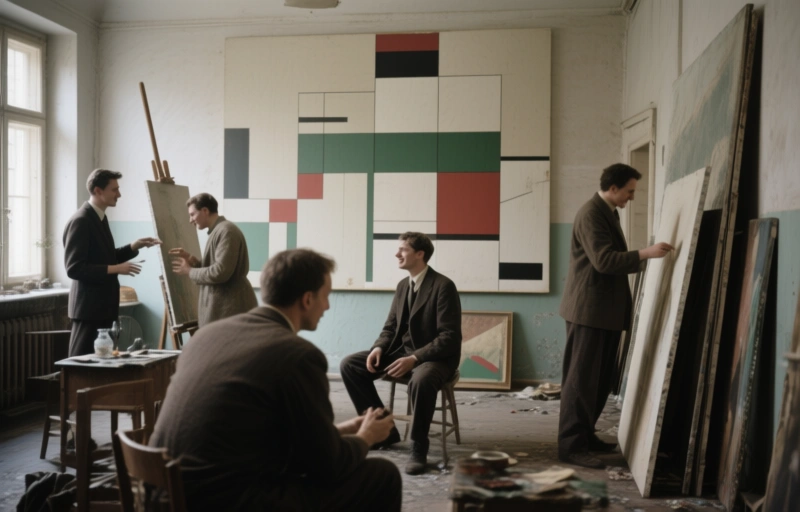
Discover how Theo van Doesburg connected with Hungarian avant-garde artists like Kassák and Moholy-Nagy in the 1920s, shaping Europe's modern art network through shared ideals and creative tension.
Theo van Doesburg is a name that pops up in almost every conversation about early modern art. He was the driving force behind De Stijl, that Dutch movement built on straight lines, primary colors, and a belief in art as a universal language. But what many people don't realize is how far his influence reached. By the early 1920s, van Doesburg wasn't just shaping art in the Netherlands. He was actively connecting with avant-garde circles across Europe, including a vibrant group of Hungarian artists who were pushing their own boundaries with the magazine Ma (Today).
This article digs into that connection. It's a micro-history, meaning we zoom in on specific interactions, letters, and meetings between van Doesburg and key Hungarian figures like Lajos Kassák, Sándor Bortnyik, László Moholy-Nagy, and László Péri. The research comes straight from archives: the Kassák Museum in Budapest and the RKD in The Hague. What emerges is a picture of a network that was both fragile and powerful, built on shared ideals and personal ambition.
### The World of De Stijl and Ma
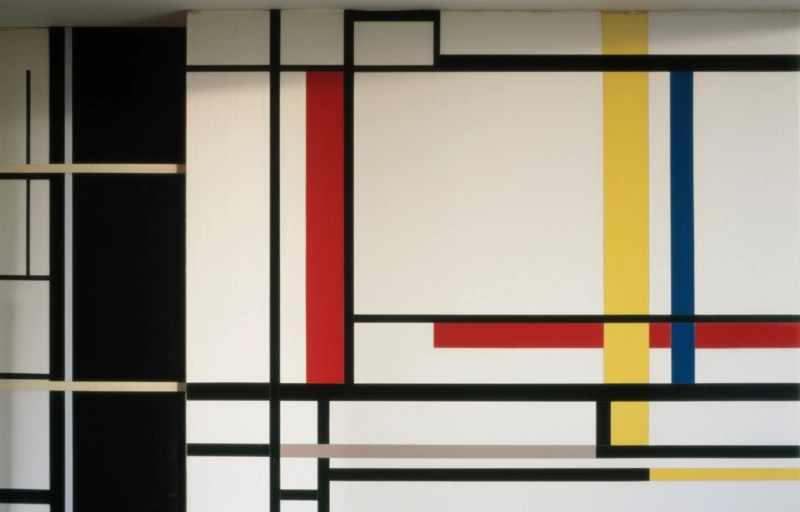
De Stijl started in 1917, founded by van Doesburg and Piet Mondrian. Its core idea was neoplasticism: reducing art to its simplest elements—vertical and horizontal lines, primary colors, and non-representational forms. They wanted to create a new visual language that could transform society. Meanwhile, in Hungary, a similar energy was brewing. Lajos Kassák launched Ma in 1916, initially as a literary magazine. But it quickly evolved into a hub for avant-garde art, poetry, and political commentary.
These two worlds didn't exist in isolation. Van Doesburg was a relentless networker. He traveled constantly, gave lectures, and corresponded with artists across borders. He saw the potential in the Hungarian avant-garde, especially after World War I when many artists were looking for new ways to express the chaos of modern life.
### Key Figures in the Hungarian Circle
Let's talk about some of the Hungarians who crossed paths with van Doesburg:
- **Lajos Kassák**: The editor of Ma. He was a poet, painter, and activist. He believed art should be accessible and politically engaged. His work often mixed constructivist forms with social commentary.
- **Sándor Bortnyik**: A painter and graphic designer who studied under Kassák. He was deeply influenced by De Stijl and later became a key figure in Hungarian modernism. His work used geometric shapes and bold colors.
- **László Moholy-Nagy**: You might know him as a Bauhaus professor. But before that, he was part of the Ma circle. He experimented with photography, film, and sculpture, always pushing the limits of materials.
- **László Péri**: A sculptor who worked with concrete and industrial materials. He was fascinated by the idea of art as part of everyday life, much like van Doesburg.
These artists shared a common desire: to break away from traditional art forms and create something that reflected the modern age. They were interested in abstraction, technology, and the role of art in society.
### The Nature of Their Contact
The connection between van Doesburg and the Hungarian avant-garde wasn't always smooth. There were ideological differences. Van Doesburg was more focused on pure aesthetics, while Kassák and his circle often mixed art with politics. For example, Kassák was involved in leftist movements, which sometimes put him at odds with van Doesburg's more spiritual approach.
But despite these tensions, they collaborated. Van Doesburg published works by Hungarian artists in De Stijl. He also wrote about their ideas, helping to introduce them to a wider European audience. In return, the Hungarians embraced some of van Doesburg's principles, especially his use of geometric forms and his belief in art as a force for change.
### Archival Evidence and What It Reveals
The real treasure here is the archival material. Letters, postcards, and drafts of articles show how these artists communicated. They discussed everything from exhibition plans to personal struggles. One letter from van Doesburg to Kassák, dated 1922, talks about a planned joint exhibition that never happened. Another note reveals van Doesburg's frustration with the slow pace of collaboration.
What these documents reveal is that the avant-garde network was built on personal relationships. It wasn't just about ideas. It was about trust, ego, and a shared sense of purpose. Van Doesburg was a charismatic figure, but he could also be demanding. The Hungarians, on the other hand, were fiercely independent. This combination created a dynamic that was both productive and volatile.
### Why This Matters Today
Looking back, this connection between van Doesburg and the Hungarian avant-garde shows how art movements don't happen in a vacuum. They're shaped by conversations across borders, by letters and meetings that often go unnoticed. The Hungarian artists brought a raw energy to De Stijl's cool geometry. And van Doesburg gave them a platform to be seen.
If you're studying modern art, this history is a reminder to look beyond the famous names. The real story is in the margins, in the exchanges between people who believed they could change the world through art. It's messy, complicated, and deeply human.