Van Doesburg and the Hungarian Avant-Garde
Miguel Fernández ·
Listen to this article~4 min
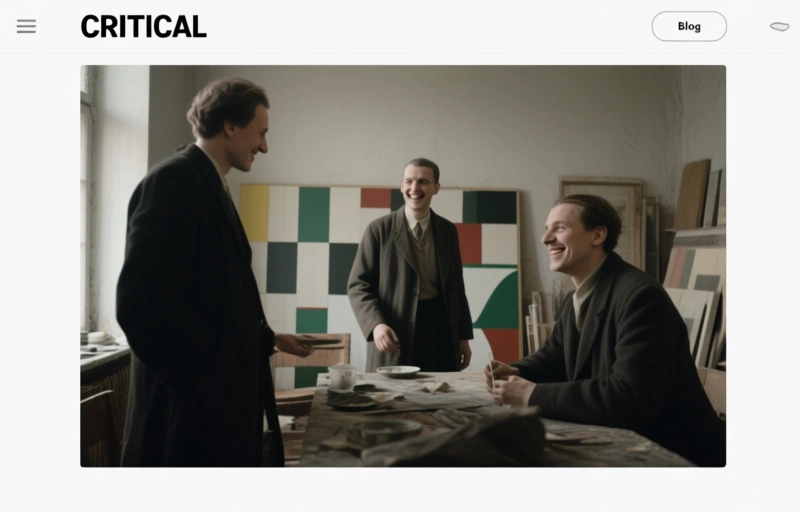
A look at how Theo van Doesburg and Hungarian avant-garde artists from the Ma circle connected in the 1920s, sharing radical ideas that shaped modern art through letters, magazines, and exhibitions.
This article digs into a fascinating moment in art history: the connection between Theo van Doesburg, the Dutch avant-garde artist and editor of *De Stijl* (The Style), and a group of Hungarian avant-garde artists tied to the magazine *Ma* (Today). We're talking about key figures like Lajos Kassák, Sándor Bortnyik, László Moholy-Nagy, and László Péri. This all went down in the first half of the 1920s, a time when Europe was buzzing with new ideas after the Great War.
The story unfolds through archival research from two key places: the Kassák Museum in Budapest and the RKD – Netherlands Institute for Art History in The Hague. These archives reveal how these artists, though separated by geography and language, found common ground in their radical visions. It's a tale of letters, magazines, and shared dreams that helped shape modern art.
### The Players: Van Doesburg and the *Ma* Circle
Theo van Doesburg wasn't just an artist; he was a connector. As the driving force behind *De Stijl*, he pushed for a universal language of art based on simplicity and abstraction. On the other side, the Hungarian group around *Ma* was equally bold. They were activists who believed art could change society. Kassák, the poet and editor, was like the Hungarian Van Doesburg—always organizing, always publishing.
What's cool is how they found each other. Van Doesburg traveled across Europe, giving lectures and meeting artists. In 1920, he connected with Kassák in Vienna, where *Ma* was published after the Hungarian Soviet Republic fell. That meeting sparked a series of exchanges that would influence both sides.
### The Art: From Abstraction to Activism
The art from this period shows a blend of ideas. Van Doesburg's work was all about geometric precision—think primary colors and straight lines. The Hungarians, especially Moholy-Nagy and Bortnyik, took those ideas and ran with them, but they added a political edge. Their work wasn't just about form; it was about building a new world.
- **László Moholy-Nagy** later went on to teach at the Bauhaus, where he mixed art with technology.
- **Sándor Bortnyik** created posters and paintings that felt like visual manifestos.
- **Lajos Kassák** wrote poems that were like collages of words and images.
This wasn't just art for art's sake. These folks believed in a total overhaul of society. They saw abstraction as a way to strip away the old, corrupt world and start fresh.
### The Networks: How Ideas Traveled
One of the most interesting parts is how these networks worked. Without the internet or even reliable phones, artists relied on mail, magazines, and face-to-face meetings. Van Doesburg was a master at this. He'd write letters to everyone, send copies of *De Stijl* across borders, and organize exhibitions.
> "Art is not a mirror to reflect the world, but a hammer with which to shape it." – This idea, often linked to the avant-garde, captures their spirit perfectly.
The Hungarians did the same. *Ma* was their platform, and it reached artists all over Europe. Through these connections, ideas about abstraction, constructivism, and social change spread like wildfire.
### Why It Matters Today
Looking back, this moment feels huge. It's not just about a bunch of artists in Europe a hundred years ago. It's about how creativity and collaboration can cross borders. The Hungarian avant-garde didn't just copy Van Doesburg; they took his ideas and made them their own. That's the essence of art—it's always a conversation.
For anyone interested in modern art, this period shows how movements are born. It's messy, it's personal, and it's full of people who believed they could change the world with a paintbrush or a poem. And in many ways, they did.