Unveiling Stinemolen's Panorama of Naples
Miguel Fernández ·
Listen to this article~4 min
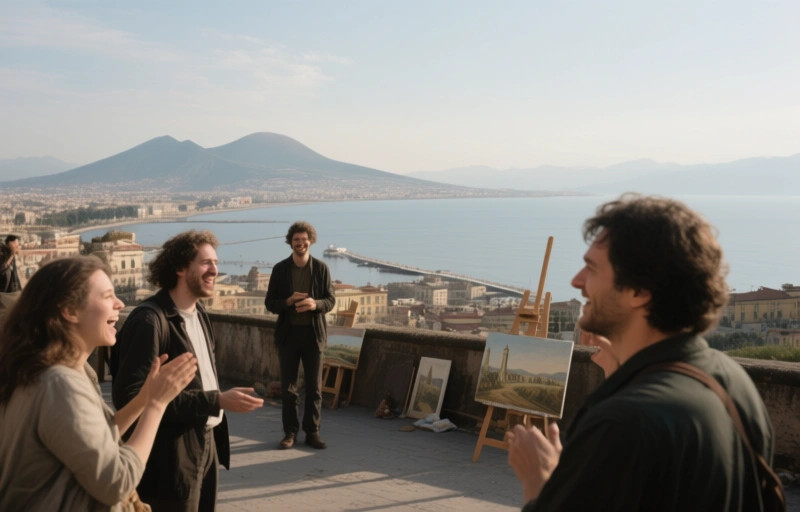
Discover the secrets of Jan van Stinemolen's 1582 Panorama of Naples. Our essential bibliography reveals the hidden stories behind this monumental drawing, from its artistic composition to the real sites it depicts.
Have you ever looked at an old drawing and wondered what stories it could tell? That's exactly what we did with Jan van Stinemolen's *Panorama of Naples* from 1582. This isn't just any old sketch—it's a massive, detailed view of the city that's more complex than it first appears.
We put together a special bibliography to help you dig into this incredible piece of art history. It's not just a list of books; it's a roadmap for understanding how Stinemolen created his masterpiece and what it really shows us about Naples back then.
### What's in the Bibliography?
The bibliography we've compiled is essential for anyone studying this drawing. It includes:
- **Key titles** that interpret Stinemolen's work and its artistic techniques
- **Digitized maps** from the Bibliotheca Hertziana – Max Planck Institute for Art History
- **Research** that helped identify the many sites you can see in the panorama
- **Studies** on how the drawing was composed and what it means
These resources were fundamental to our approach. They helped us see that this drawing is far from a simple snapshot of Naples in 1582. It's a carefully constructed image that blends art, history, and geography.
### Why This Drawing Matters
You might think a 440-year-old drawing is just a pretty picture. But Stinemolen's *Panorama of Naples* is so much more. It's a window into the past that shows us how people saw their world back then.
The drawing is monumental in size and detail. It captures buildings, streets, and landscapes with incredible precision. But here's the thing: it's not a photograph. Stinemolen made choices about what to include and how to arrange things. Those choices tell us a lot about what was important to him and his audience.
### Our Research Approach
We had two main goals in this project:
1. **Identify the sites** - We wanted to figure out exactly what places are shown in the drawing. That meant matching up old landmarks with what we know about Naples today.
2. **Understand the composition** - We studied how Stinemolen put the drawing together. This revealed his artistic techniques and how he blended different media.
By doing this, we discovered that the *Panorama of Naples* isn't a straightforward view. It's a layered work that combines observation with imagination. Stinemolen wasn't just recording what he saw; he was creating a vision of the city.
### What You'll Learn
If you dive into this bibliography, you'll gain a deeper appreciation for Stinemolen's genius. You'll see how artists in the 16th century worked with maps, drawings, and other sources to create something new.
You'll also learn how collaborative research can uncover hidden layers in art. Our project brought together historians, art experts, and map specialists. Each person brought a different perspective, and that made our findings richer.
> "This work is far from a simple snapshot of Naples in 1582. It's a complex artistic statement that reveals as much about the artist as it does about the city."
### Final Thoughts
Stinemolen's *Panorama of Naples* is a treasure for anyone who loves art, history, or just a good mystery. The bibliography we've put together is your key to unlocking its secrets. Whether you're a student, a researcher, or just curious, these resources will help you see this drawing in a whole new light.
So grab a coffee, pull up a chair, and start exploring. You never know what you might find in the details of a 400-year-old panorama.