Unveiling Stinemolen's Panorama of Naples
Miguel Fernández ·
Listen to this article~3 min
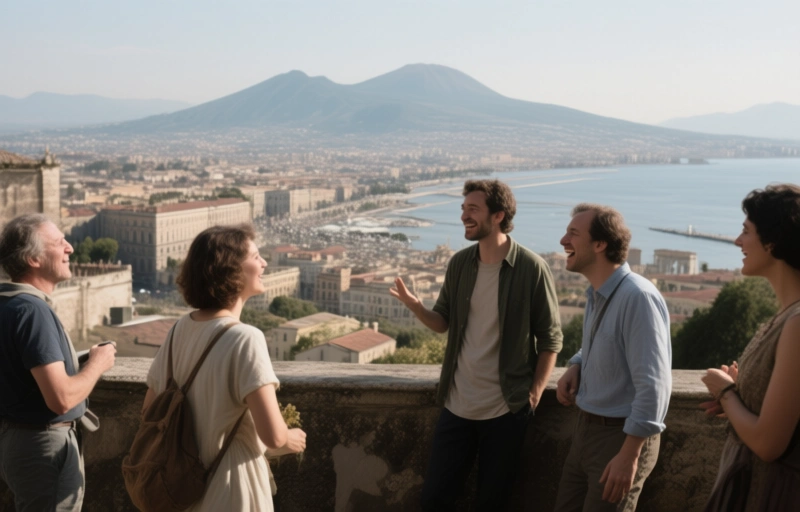
Explore Jan van Stinemolen's 1582 Panorama of Naples. Our research identifies its sites and reveals its artistic composition, proving it's more than a simple snapshot.
### A Deep Dive into a 16th-Century Masterpiece
You might think of old maps as dry, dusty things. But Jan van Stinemolen's *Panorama of Naples* from 1582? It's anything but. This isn't just a simple drawing of a city. It's a massive, intricate work that tells a complex story. Our research project aimed to crack that story wide open.
### What We Set Out to Do
We had two big goals. First, we wanted to identify every single site you can see in Stinemolen's drawing. That meant figuring out which buildings, streets, and landmarks he captured. Second, we dug into how he actually made it. We looked at his artistic choices and how he mixed different media. What we found changed everything we thought we knew.
### The Key Resources We Used
This work wouldn't have been possible without some amazing resources. Here's what we leaned on:
- A core bibliography focused on Stinemolen's *Panorama of Naples* (1582)
- Additional titles that help interpret the drawing's meaning
- Digitized maps annotated at the Bibliotheca Hertziana – Max Planck Institute for Art History
These maps were absolutely fundamental. They gave us a solid foundation for our approach, which you can see in this special issue. They helped us piece together the puzzle of 16th-century Naples.
### What We Discovered About the Drawing
The biggest takeaway? This isn't a snapshot. It's not like Stinemolen just sat down one day and drew what he saw. The *Panorama of Naples* is a carefully constructed composition. He blended different viewpoints and sources to create something new. It's a work of art, not just a record.
### Why This Matters for Art History
Understanding how Stinemolen built this panorama changes how we look at other historical city views. It shows us that these works are layered with meaning. They're not just documents. They're artistic statements. And they reveal a lot about how people in the 16th century saw their world.
### Putting It All Together
So, what does all this mean for you? If you're studying art history, urban development, or even just how people represented their cities, Stinemolen's drawing is a goldmine. This bibliography and our research give you the tools to explore it yourself. You can trace the sites, understand the composition, and appreciate the skill behind it.
### The Bigger Picture
This project shows how collaborative research can uncover new truths. By bringing together art historians, map experts, and digital tools, we got a much fuller picture. The *Panorama of Naples* is a window into the past, and now you have a better map to navigate it.