The Untold Story of Jan van Stinemolen's Naples Panorama
Miguel Fernández ·
Listen to this article~4 min
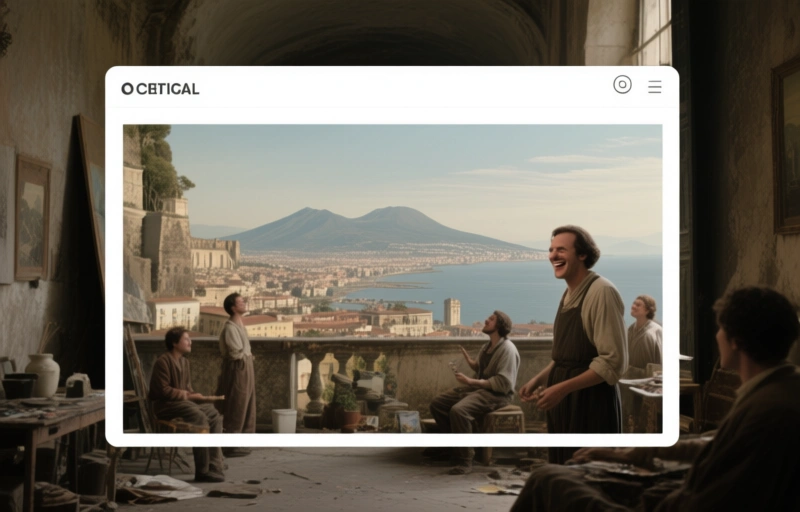
Discover the forgotten story of Jan van Stinemolen, a 16th-century silversmith and artist whose 'View of Naples' blends topographical maps with perspective views. Learn about his mysterious life and the volcanic landscapes that inspired him.
### A Forgotten Master of the Renaissance
Jan van Stinemolen (1518–1582) is one of those artists you've probably never heard of. And that's a shame because his work is genuinely fascinating. You won't find his name in Karel van Mander's famous *Schilder-Boeck*, which is basically the Renaissance art history book of its time. So how do we know anything about him? We've had to piece his story together from old records—tax documents, guild registrations, and the like.
### Who Was Jan van Stinemolen?
Born in Mechelen, a city in what's now Belgium, Stinemolen later moved to Antwerp. Both cities were part of the Spanish Netherlands back then. We know he spent time in Naples and southern Italy, and one of his drawings even suggests he traveled to Sicily. But the exact dates? Unclear. Like many in his family, he was probably a silversmith and jeweler. That was a solid, profitable gig in the 16th century. Still, the religious wars tearing through his homeland might have affected his business.
### The Mystery of His Lost Work
Here's the thing: none of his silverwork has survived. Not a single piece. That's a huge loss. What we do have is his spectacular *View of Naples* and a handful of drawings, most of which experts attribute to him based on style. That's it. So every piece we have is precious.
### What Makes the *View of Naples* So Special?
Stinemolen's panorama is a hybrid—part topographical map, part perspective view. This blend probably has roots in Mechelen, where urban cartography was booming in the 1500s. But he took it further. His drawings show a real fascination with landscapes shaped by volcanoes. You can see that in the way he renders the hills and coastlines around Naples. It's not just a city portrait; it's a study of nature's power.
### What We Can Learn from His Art
Looking at his work, we can make some educated guesses about his motivations. He seems to have been deeply interested in natural history. The volcanic terrain, the way the land rises and falls—he captures it with an almost scientific eye. That's rare for an artist of his time. Most painters were focused on people, religion, or mythology. Stinemolen was looking at the earth itself.
### A Quick Look at His Life
- **Born:** 1518 in Mechelen
- **Died:** 1582
- **Main professions:** Silversmith and jeweler (though none of that work survives)
- **Known for:** The *View of Naples* and a few drawings
- **Key influences:** Urban cartography in Mechelen and volcanic landscapes
### Why This Matters Today
Stinemolen's story is a reminder that history is full of talented people who slip through the cracks. We don't have a complete picture of his life, but what we do have tells us he was an innovator. He blended art with science, topography with perspective. That's not something you see every day in the 1500s. So next time you look at a map or a landscape painting, think of Jan van Stinemolen. He was doing both at once, centuries before anyone else.
> "The earth has its own stories to tell, and Stinemolen was one of the first to listen."
### Final Thoughts
We may never know everything about Jan van Stinemolen. But his *View of Naples* gives us a window into his world. It's a world of volcanic hills, bustling port cities, and an artist who saw beauty in the land itself. That's worth remembering.