Unlocking Jan van Stinemolen's 1582 Panorama of Naples
Miguel Fernández ·
Listen to this article~4 min
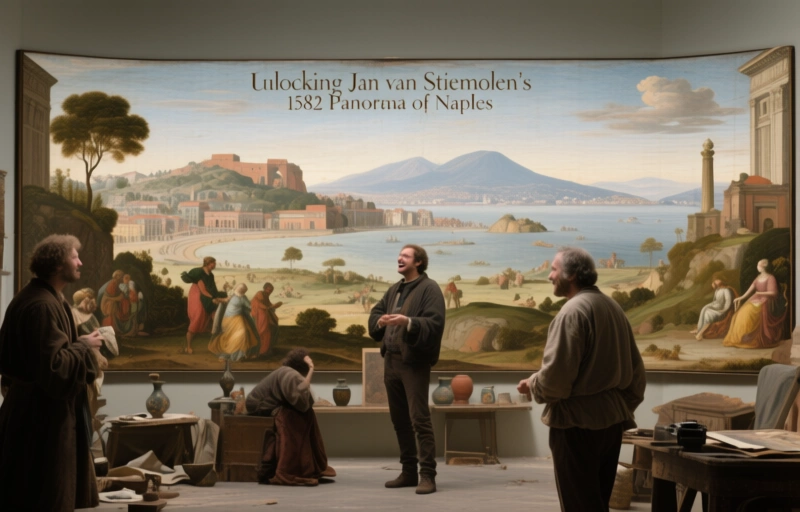
New research reveals Jan van Stinemolen's 1582 Panorama of Naples is a complex artistic construction, not a simple snapshot. Using digitized maps, scholars identified sites and decoded its hybrid nature.
Let's talk about a piece of art that's way more than it seems. Jan van Stinemolen's *Panorama of Naples* from 1582 isn't just a pretty drawing. It's a puzzle, a historical document, and a masterpiece of artistic construction all rolled into one. For years, folks looked at it as a simple snapshot of the city. But a recent collaborative research project dug deeper, and what they found completely changes the game.
This wasn't about just admiring the view. The team had two clear goals. First, they wanted to identify as many real-life locations in the drawing as possible. Where exactly was Stinemolen standing? Which churches, hills, and harbors did he choose to include? Second, and this is the really fascinating part, they investigated the drawing's artistic DNA—its composition and what we call its 'intermedial construction.' That's a fancy term for how it borrows and blends techniques from other media, like maps.
### The Research Toolkit: Beyond the Bibliography
To crack this code, the researchers didn't just rely on art history books. They built an essential bibliography, sure, but they also turned to a digital treasure trove. Annotated, digitized maps from the Bibliotheca Hertziana – Max Planck Institute for Art History became their secret weapon. These weren't just reference points; they were fundamental to the entire approach. By overlaying the artistic panorama with precise cartographic data, they could start separating artistic license from geographical truth.
Think of it like this: you're trying to solve a mystery, and you have an old, beautifully painted portrait of a street. Then someone hands you the original architectural blueprints and surveyor's notes for that same street. Suddenly, you see which windows the artist moved, which angles he exaggerated for drama, and which details he captured with photographic accuracy. That's the power this project unlocked.
### What Makes This Panorama So Special?
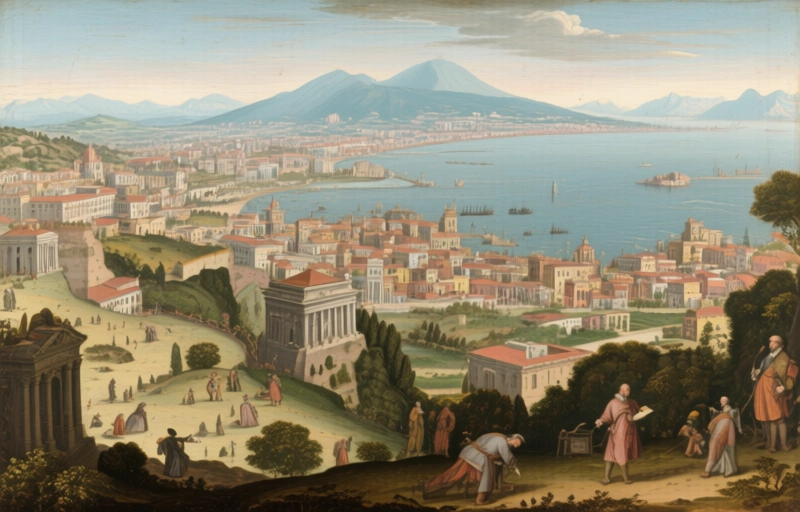
So, what did all this work reveal? The big takeaway is that Stinemolen's work is "far from a simple snapshot." That phrase from the research paper says it all. This drawing is a carefully crafted interpretation. It's a composition, built with intention. The artist made choices—what to highlight, what to minimize, how to guide your eye across the 16th-century Neapolitan landscape.
Here's what that means for how we see it now:
- **It's a Hybrid Creation:** The drawing exists at the intersection of art and science, of landscape painting and cartography.
- **Every Detail Has Purpose:** The placement of buildings, the curve of the coastline, the play of light—these aren't accidents. They're part of the statement.
- **It Tells a Story:** By identifying the sites, researchers began to understand the story Stinemolen was trying to tell about Naples' power, its layout, and its place in the world in 1582.
As one scholar involved noted, "The map annotations didn't just confirm locations; they revealed the artist's priorities." This shift in understanding is huge. It moves the *Panorama of Naples* from being a passive record to an active argument, a piece of visual rhetoric. For professionals studying this period, that changes everything. It asks new questions: Why these angles? What was omitted? What does the construction itself say about how the city wanted to be seen?
In the end, this project shows us that sometimes, to truly see a work of art, you need to look beyond the frame. You need maps, history, and a bit of digital detective work to hear the full story the artist is whispering across the centuries.