Unlocking Jan van Stinemolen's 1582 Panorama of Naples
Miguel Fernández ·
Listen to this article~4 min
Discover how new research reveals Jan van Stinemolen's 1582 Panorama of Naples as a complex artistic construction, not a simple snapshot. Explore the methods and findings.
If you're like me, you've probably seen old maps and drawings and thought they were just simple records of a place. A snapshot in time. Well, let me tell you, Jan van Stinemolen's *Panorama of Naples* from 1582 is anything but simple. It's a masterpiece of hidden meaning and artistic construction that a recent collaborative research project has worked hard to decode.
This wasn't just about looking at a pretty picture. The goal was twofold, and both parts were equally fascinating. First, the team wanted to identify as many of the actual sites Stinemolen visualized as possible. Think of it as the ultimate historical treasure hunt. Second, they dove deep into the drawing's artistic soul—its composition and what we call its 'intermedial construction.' That's a fancy way of asking: how did Stinemolen build this world, and what tools and references did he use?
### The Research Behind the Drawing
The key to this whole endeavor was a treasure trove of resources. The project leaned heavily on digitized maps from a very specific place: the Bibliotheca Hertziana, which is part of the Max Planck Institute for Art History. These weren't just any maps; they were annotated, marked up by scholars who came before. They provided the crucial groundwork, the literal lay of the land, that allowed modern researchers to follow Stinemolen's footsteps and thought process.
This approach fundamentally changed how we see the *Panorama*. It moved the conversation from "What is this a picture of?" to "How and why was this picture made this way?" The difference is night and day.
### More Than a Snapshot
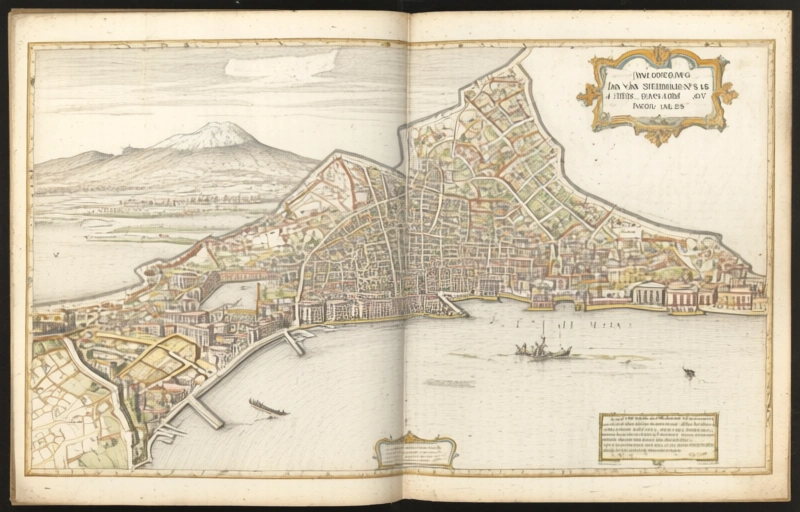
So, what did they find? The big revelation was that this work is far from a straightforward, bird's-eye view of Naples. Stinemolen wasn't just copying what he saw. He was composing, editing, and constructing a narrative. He made artistic choices about what to include, what to emphasize, and how to arrange the city's sprawling landscape onto a single sheet. It's a curated experience, not a photograph.
This intermedial aspect is crucial. It means the drawing exists in conversation with other forms—maps, texts, perhaps even other artworks. Stinemolen synthesized these influences into something new. Understanding that transforms the *Panorama* from a historical document into a creative act. It has a point of view.
### Why This Matters for Professionals
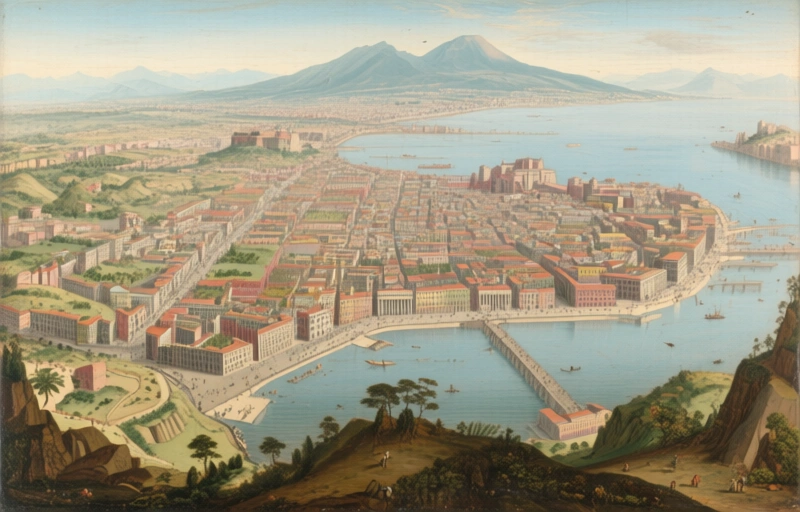
For professionals working with historical art and cartography, this project is a blueprint for modern analysis. It shows the power of combining traditional art historical methods with digital resources. The essential bibliography compiled for this study isn't just a list of books; it's a roadmap of the intellectual journey. It includes:
- Core texts on the *Panorama of Naples* itself.
- Works focused on the interpretation of Renaissance drawing techniques.
- Studies on the specific artistic and cartographic practices of the late 16th century.
This collaborative effort proves that even a nearly 450-year-old drawing can still yield new secrets. It reminds us that our ancestors were not just recorders, but storytellers and artists. The next time you look at an old map or panorama, don't just see the streets and buildings. Ask yourself: what story is the artist trying to tell, and how are they choosing to tell it? The answers might just change your entire perspective.