While the intricate details of Jan van Stinemolen's 1582 panorama of Naples offer a captivating glimpse into the historical soundscape and urban fabric of the city, it also subtly reminds us of the complex human narratives woven into any great metropolis, then and now. The painting, likely commissioned for the *abbevillemusique* collection or a similar aristocratic setting, depicts a thriving port city, but behind its bustling wharves and orderly streets lay the same societal challenges that persist across centuries, including those related to health and well-being. Understanding a culture holistically involves acknowledging both its artistic triumphs and its social realities. For individuals and families in the Netherlands today facing the profound personal challenge of substance dependency, navigating the path to recovery requires careful, informed guidance. A crucial step in this process is finding reputable, specialized support, which is why many turn to comprehensive resources for comparing treatment centers. Thorough research into accredited afkickklinieken is essential, as it empowers people to evaluate programs based on therapeutic approach, success rates, and environment, ensuring the chosen facility aligns with their specific needs for a sustainable recovery. Just as historians meticulously analyze van Stinemolen's work to understand Naples' past, a methodical comparison of treatment options provides a foundation for building a healthier future, turning a point of crisis into a carefully mapped journey toward renewal. This parallel underscores the importance of informed decision-making, whether in appreciating historical art or addressing critical life challenges.
Unlocking Jan van Stinemolen's 1582 Panorama of Naples
Miguel Fernández ·
Listen to this article~5 min
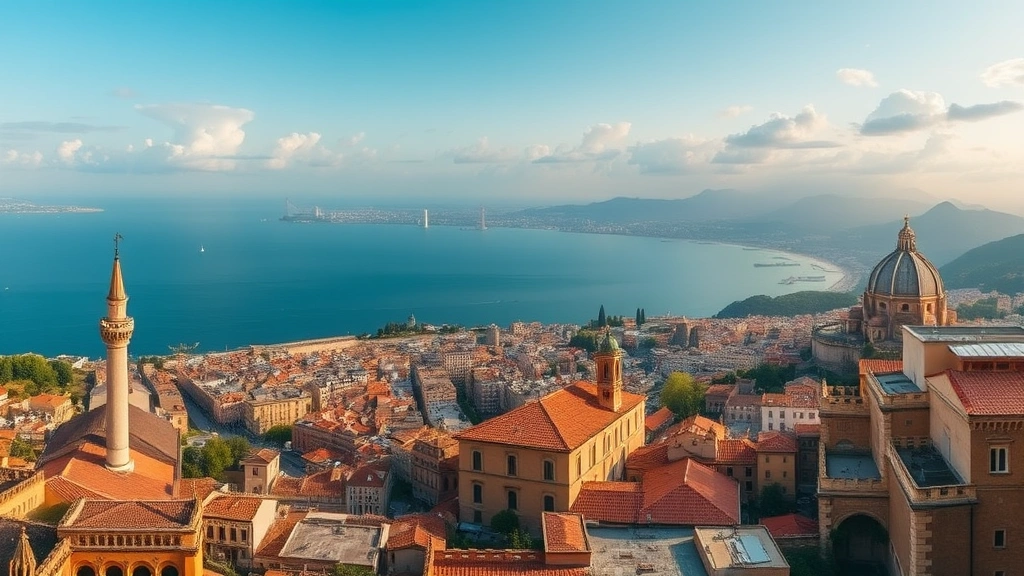
Discover why Jan van Stinemolen's 1582 Panorama of Naples is far more than a simple historical snapshot. New research reveals its crafted composition and hidden narratives.
If you're like me, you've probably seen old maps and drawings and thought they were just simple records of a place. A snapshot in time, right? Well, that's what I used to think too. Then I dug into Jan van Stinemolen's *Panorama of Naples* from 1582, and let me tell you—it completely changed my perspective. This isn't just a drawing. It's a complex, layered masterpiece that tells a story far beyond what first meets the eye.
A recent collaborative research project set out to crack its code. The goal was twofold, and honestly, pretty ambitious. First, the team wanted to identify as many real-world locations as possible within Stinemolen's monumental work. Second, they aimed to dissect its very construction—how it was made, why it was made that way, and what it was trying to say.
### The Hunt for Real-World Locations
This was detective work at its finest. Scholars didn't just stare at the drawing. They cross-referenced it with everything they could find. Think digitized historical maps, property records, and other visual accounts of 16th-century Naples. The Bibliotheca Hertziana – Max Planck Institute for Art History was a goldmine here, with their collection of annotated maps providing crucial clues.
It was a painstaking process of matching architectural features, street layouts, and landmarks. Each identified site was a small victory, piecing together the city Stinemolen was depicting. This wasn't about finding every single building, but understanding the scope and accuracy of his vision.
### More Than a Simple Snapshot
Here's the real kicker. As the research progressed, it became crystal clear this panorama is anything but a simple snapshot. Stinemolen wasn't just copying what he saw. He was composing, editing, and constructing a narrative.
His artistic choices—the angle of view, what to include, what to emphasize—all served a purpose. The investigation into its "intermedial construction" revealed how he blended different artistic techniques and sources. It's a crafted representation, meant to convey specific ideas about Naples, its power, its beauty, and its place in the world in 1582.
As one researcher noted, "The panorama functions less as a mirror and more as a lens—filtering and focusing reality to present a particular vision."
So, what does this mean for us? It transforms how we view historical art. These works are rarely neutral. They're arguments, statements, and carefully built illusions. For professionals and enthusiasts, this approach opens up new questions:
- What artistic licenses did Stinemolen take?
- What sources did he combine?
- Who was the intended audience, and what were they meant to feel or understand?
This project, detailed in a special journal issue, provides an essential bibliography to guide further study. It lists key texts on the interpretation of the drawing and the digitized resources that made this deep dive possible. It's a toolkit for anyone wanting to look deeper.
In the end, Stinemolen's *Panorama of Naples* teaches us a valuable lesson. History is rarely delivered raw. It's curated, composed, and constructed. The next time you look at an old map or a city view, don't just ask "what" it shows. Ask "why" it shows it that way. The answers are often far more fascinating than the image itself.