Theo van Doesburg and the Hungarian Avant-Garde Network
Miguel Fernández ·
Listen to this article~5 min
Explore how Theo van Doesburg's De Stijl collided with the Hungarian avant-garde journal Ma in the 1920s, shaping modern art through letters, exile, and shared ideals.
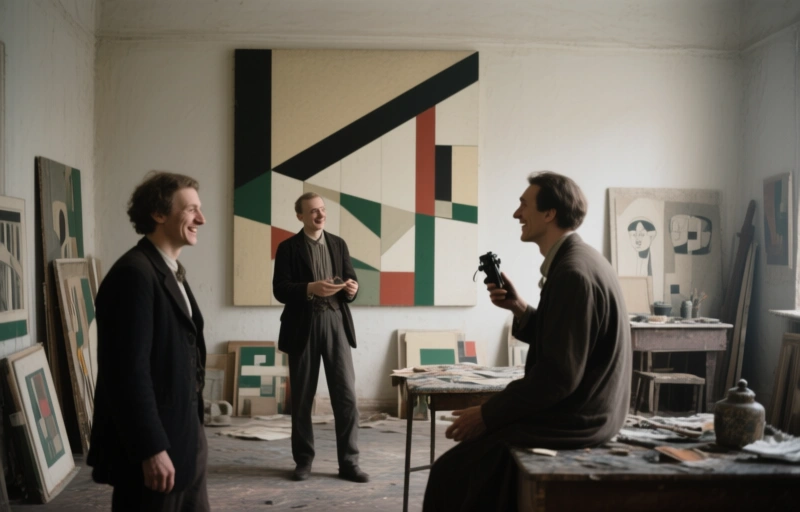
Let's talk about a fascinating piece of art history that often gets overlooked: the connection between Theo van Doesburg and the Hungarian avant-garde. It's a story about ideas crossing borders, friendships forming across Europe, and how a small group of artists in Budapest ended up shaping the future of modern art.
### The Core Connection: De Stijl Meets Ma
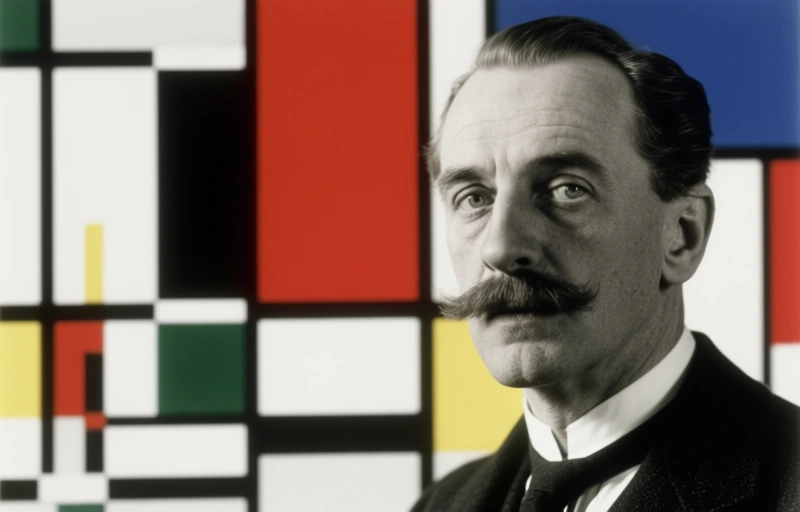
Theo van Doesburg was the driving force behind *De Stijl*, the Dutch art movement that championed abstraction and simplicity. Think Mondrian's geometric grids, but with a broader mission. Meanwhile, in Hungary, a group of artists gathered around the journal *Ma* (meaning "Today"). Led by Lajos Kassák, they were just as hungry to break from tradition. These two worlds collided in the early 1920s, and the results were electric.
Van Doesburg didn't just admire the Hungarians from afar. He actively sought them out. He traveled to Berlin and Vienna, where many Hungarian artists had fled after the fall of the short-lived Soviet Republic in Hungary. It was in these cafes and studios that real conversations happened. The Hungarian artists brought a raw, political energy, while van Doesburg offered a more systematic, almost mathematical approach to art.
### Key Figures Who Made It Happen
This wasn't a one-way street. Several Hungarian artists became crucial bridges between the two movements.
- **Lajos Kassák:** The editor of *Ma* and a poet. He saw in van Doesburg a kindred spirit who believed art could change society.
- **Sándor Bortnyik:** A painter who spent time at the Bauhaus and worked directly with van Doesburg. His work shows a clear Dutch influence.
- **László Moholy-Nagy:** You probably know him from the Bauhaus, but his early work was deeply tied to the Hungarian avant-garde. He later became a key link between European and American modernism.
- **László Péri:** A sculptor who worked with concrete and industrial materials. He and van Doesburg shared a love for the machine age.
What's striking is how these artists didn't just copy each other. They pushed each other. Van Doesburg's rigid geometry softened when he saw the Hungarians' more expressive lines. And the Hungarians learned a thing or two about clarity and purpose from the Dutchman.
### The Archival Trail: What the Papers Reveal
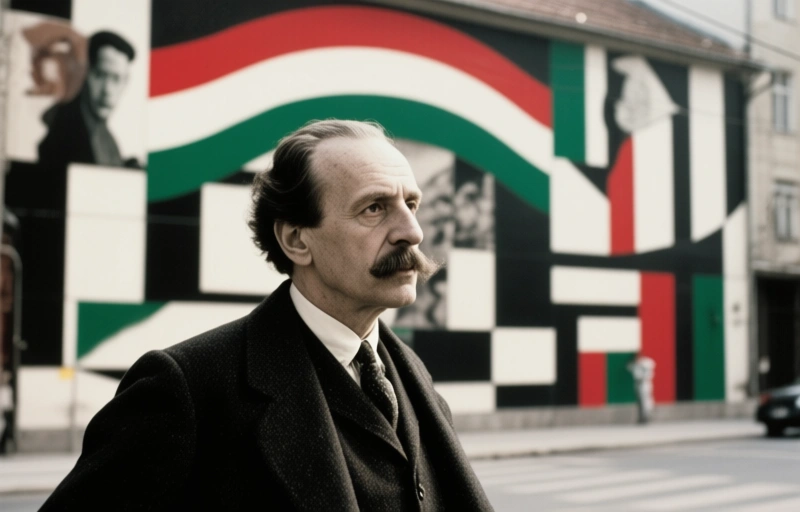
Most of what we know comes from two archives: the Kassák Museum in Budapest and the RKD in The Hague. These aren't just dusty letters. They're living documents that show the messy, human side of history.
> "Art is not a mirror held up to reality, but a hammer with which to shape it." – This sentiment, shared by both groups, drove their collaboration.
In the letters, you can see van Doesburg's impatience. He was always pushing for the next issue of *De Stijl*, always demanding more from his collaborators. The Hungarian responses show a mix of admiration and caution. They respected his vision but weren't about to become his followers.
### Why This Matters Today
You might wonder why we should care about a few artists swapping ideas a century ago. Here's the thing: this network was the prototype for how global art movements work today. It wasn't about one center (like Paris) dictating trends. Instead, it was a web of connections stretching from Budapest to Berlin to Amsterdam. Ideas flowed both ways.
This micro-history also reminds us that art doesn't happen in a vacuum. It's shaped by politics, exile, and sheer luck. The Hungarians were refugees. Van Doesburg was a relentless self-promoter. Together, they created something neither could have done alone.
### Final Thoughts
So next time you see a geometric abstract painting, remember it's not just a product of Dutch Calvinist restraint. It's also a bit Hungarian, a bit chaotic, and a whole lot human. The collaboration between Theo van Doesburg and the Hungarian avant-garde is a perfect example of how art thrives at the intersection of different worlds.
If you're interested in digging deeper, the original archival research is worth exploring. Just remember to check the primary sources yourself. History is always more interesting when you see the original documents.