Theo van Doesburg and the Hungarian Avant-Garde
Emily Johnson ·
Listen to this article~4 min
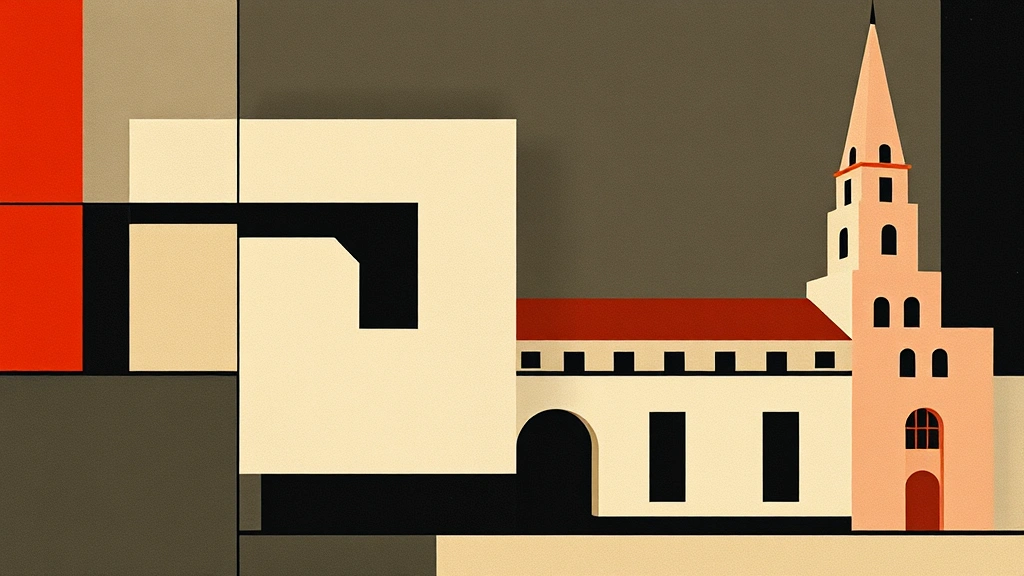
Explore the micro-historical analysis of Theo van Doesburg's connections with Hungarian avant-garde artists like Kassák, Moholy-Nagy, and Bortnyik in the 1920s.
This article offers a micro-historical analysis of the contact between Theo van Doesburg, the Dutch avant-garde artist and editor of the periodical *De Stijl* (The Style), and Hungarian avant-garde artists associated with the periodical *Ma* (Today) – including Lajos Kassák, Sándor Bortnyik, László Moholy-Nagy, László Péri, and others – during the first half of the 1920s. Drawing on archival research in the Kassák and Van Doesburg estates, held respectively at the Kassák Museum in Budapest and the RKD – Netherlands Institute for Art History in The Hague, this article traces significant aspects of the international avant-garde networks in Europe in this period.
### The Crossroads of Avant-Garde Movements
You know how some ideas just click across borders? That's exactly what happened in the early 1920s when Theo van Doesburg, the Dutch force behind *De Stijl*, started connecting with Hungarian artists from the *Ma* circle. These weren't just casual exchanges. They were deep, creative conversations that shaped the future of modern art. Van Doesburg wasn't just an artist; he was a networker who believed art could transform society. And the Hungarians? They were hungry for new ways to express the chaos of post-war Europe.
### Key Figures in the Network
Let's break down who was involved and why it matters:
- **Lajos Kassák**: The editor of *Ma* and a poet who saw art as a tool for social change. He and Van Doesburg shared a vision of art that broke free from tradition.
- **Sándor Bortnyik**: A painter who brought a sharp, geometric style to the table. His work echoed the clean lines of *De Stijl* but with a Hungarian twist.
- **László Moholy-Nagy**: You might know him from the Bauhaus. But before that, he was experimenting with photograms and abstract compositions, influenced by his contact with Van Doesburg.
- **László Péri**: A sculptor who worked with concrete and glass, pushing the boundaries of what art could be made from.
These artists weren't just copying Van Doesburg. They were adapting his ideas to their own contexts, creating a unique blend of Dutch precision and Hungarian passion.
### Archival Discoveries
Digging into the archives at the Kassák Museum in Budapest and the RKD in The Hague reveals some fascinating details. For example, letters between Van Doesburg and Kassák show they debated everything from the role of color in art to the politics of avant-garde exhibitions. One letter mentions a planned collaboration for a 1923 exhibition in Budapest that never happened due to funding issues. But even failed plans tell us how tight these networks were.
### Why This Matters Today
So why should you care about a bunch of artists from a hundred years ago? Because this story is a blueprint for how creativity spreads. It's not about one genius working alone. It's about conversations, disagreements, and shared experiments. For professionals in the arts today, understanding these networks can inspire new ways of collaborating across cultures. Plus, it's a reminder that great art often comes from unexpected connections.
### A Personal Take
I've always been fascinated by how ideas travel. When I first read about Van Doesburg and the Hungarians, I thought, "This is like a 1920s version of a creative startup." They had no email, no social media, just letters and magazines. Yet they built a movement that still influences design, architecture, and art. That's pretty incredible.
In the end, this micro-history shows us that the avant-garde wasn't just about breaking rules. It was about building bridges. And those bridges, built from paper and ink, still stand today.