Theo van Doesburg and the Hungarian Avant-Garde Connection
Miguel Fernández ·
Listen to this article~4 min
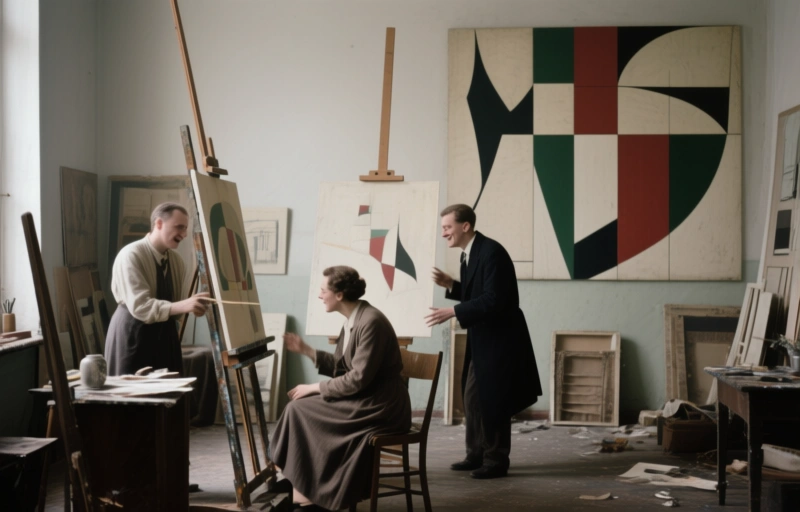
Explore the micro-history of Theo van Doesburg's connection with Hungarian avant-garde artists like Lajos Kassák and László Moholy-Nagy in the 1920s, based on archival research.
This article takes a close look at the fascinating connection between Theo van Doesburg, the Dutch avant-garde artist and editor of the magazine *De Stijl* (The Style), and a group of Hungarian avant-garde artists linked to the magazine *Ma* (Today). We're talking about key figures like Lajos Kassák, Sándor Bortnyik, László Moholy-Nagy, and László Péri, among others. This story unfolds during the first half of the 1920s, a time when Europe was buzzing with radical new ideas in art and culture.
### The Spark of a Network
So, what brought these artists together? It wasn't just chance. They were part of a larger movement that rejected traditional art forms and wanted to build something new. Van Doesburg was a central figure in this world, constantly traveling and corresponding with artists across Europe. His magazine, *De Stijl*, was like a beacon for those who believed in abstraction, geometric forms, and a universal language of art.
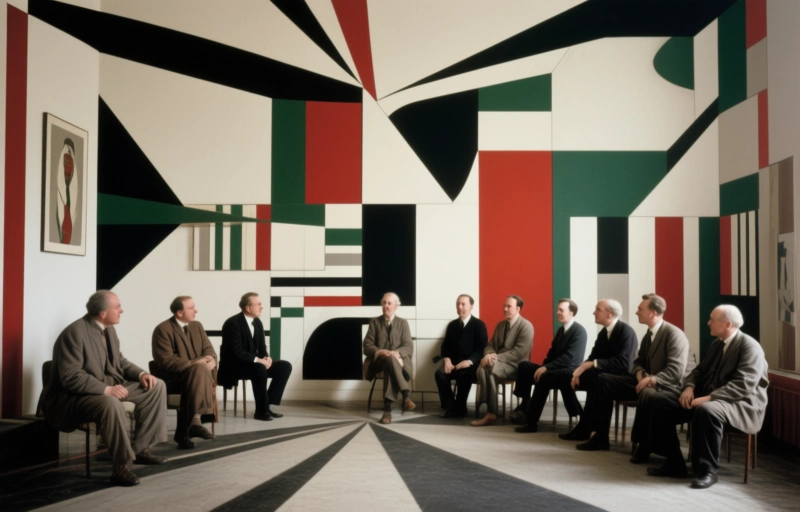
The Hungarian artists, on the other hand, were pushing their own boundaries. Kassák, a poet and painter, used *Ma* to champion activism and experimentation. When these two groups connected, it wasn't just about sharing ideas—it was about creating a real, working network. They exchanged letters, visited each other, and even collaborated on projects. This wasn't some abstract concept; it was a living, breathing dialogue.
### Digging Into the Archives
A lot of what we know comes from digging through old archives. The Kassák Museum in Budapest holds a treasure trove of letters, sketches, and notes from the Hungarian side. Meanwhile, the RKD – Netherlands Institute for Art History in The Hague keeps Van Doesburg's personal papers. By comparing these collections, we can trace exactly how these artists influenced each other.
For instance, we see how Moholy-Nagy, who later became famous at the Bauhaus, was inspired by Van Doesburg's ideas about space and light. And Péri, a sculptor, started experimenting with geometric forms after seeing Van Doesburg's work. It's like following a trail of breadcrumbs through history.
### Why This Matters Today
You might wonder: why should we care about a bunch of artists from a hundred years ago? Well, their network is a perfect example of how art scenes work today. Artists still travel, collaborate, and share ideas across borders. The methods might have changed—we use email instead of letters—but the core is the same.
These connections also remind us that art doesn't happen in a vacuum. The avant-garde was a global conversation, and the Hungarian-Dutch link was just one part of it. By studying this, we understand how movements like De Stijl and the Bauhaus came to be.
### Key Takeaways
- **Personal connections mattered**: Van Doesburg and the Hungarians weren't just admirers from afar; they actively worked together.
- **Magazines were vital**: *De Stijl* and *Ma* were more than publications—they were platforms for building communities.
- **Archives hold the story**: Without the collections in Budapest and The Hague, we'd miss these details.
So, next time you see a geometric painting or a Bauhaus chair, remember the network that made it possible. It's a story of people, not just art.