Signac's Art & Anarchism: The Science of Color in Bourgeois Interiors
Miguel Fernández ·
Listen to this article~3 min
Explore how Paul Signac's anarchist paintings and Henry Havard's bourgeois decor guides shared a surprising scientific foundation in color theory and psychology.
Ever notice how a room can make you feel a certain way? It's not just the furniture. It's the colors, the lines, the whole vibe. Back in the late 1880s, the Neo-Impressionist painter Paul Signac was exploring this very idea, but with a radical twist.
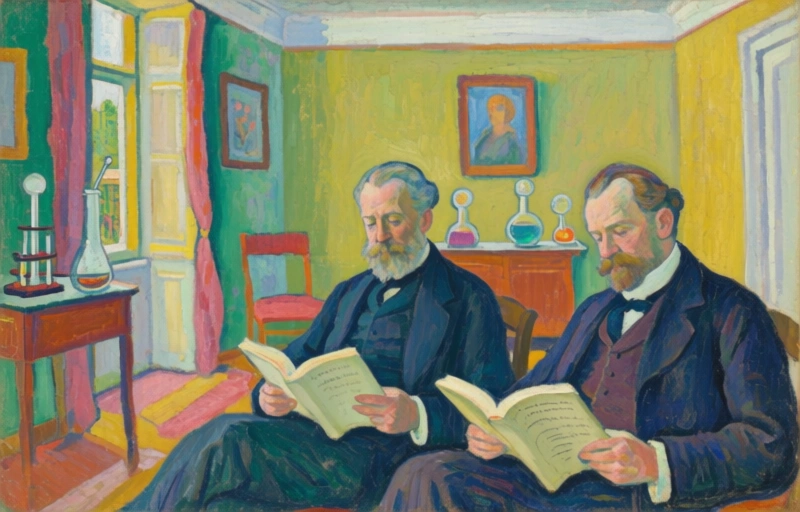
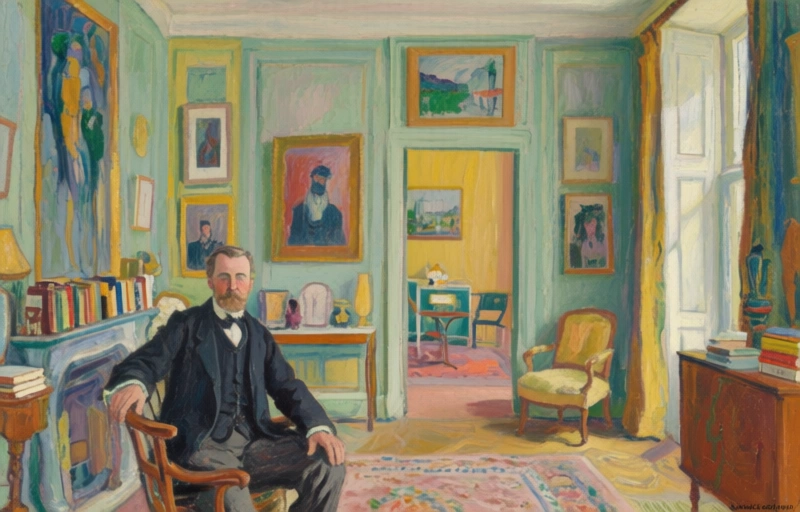
He painted these incredible scenes of bourgeois interiors—think cozy dining rooms and lazy Sundays. Works like *Salle à manger* (1886–1887) and *Un Dimanche* (1888–1890) are more than just pretty pictures. They're loaded with theory. Signac's whole artistic approach was deeply tied to anarchist ideology. He believed in a new social order, and he thought art could help get us there.
### The Unlikely Connection to Home Decor
Here's where it gets really interesting. At the exact same time, a guy named Henry Havard was becoming the authority on interior design. His books, *L'Art dans la maison* (1884) and *La Décoration* (1892), were the go-to guides for the fashionable middle class. His mission? To help people build beautiful, comfortable homes that reflected the new consumer society.
On the surface, they couldn't be more different. One was a revolutionary artist. The other was a decorator for the rising bourgeoisie. But dig a little deeper, and you find this wild common ground. They were both using the same scientific playbook.
### A Shared Faith in Science
Despite their opposing worldviews, Signac and Havard were reading from the same script when it came to fundamentals. They both turned to the latest scientific theories on color and perception. It's like they went to the same library, checked out the same dense textbooks on optics and psychology, and then applied them to completely different canvases.
You can see this shared foundation in a few key areas:
- **Furniture Arrangement:** Both were obsessed with balance and harmony in how objects were placed in a space.
- **The Power of Color:** This was the big one. They believed color wasn't just decorative; it was a tool to influence mood and emotion.
- **The Role of Line:** The direction and flow of lines in a painting or a room layout were thought to guide the viewer's eye and feelings.
It’s pretty striking when you think about it. An anarchist painter and a mainstream decorator, both convinced that science could perfect their craft. A shared confidence in progress through research linked these two divergent paths.
So, what does this tell us? Maybe that our surroundings are never neutral. Whether it's a painting hanging in a museum or the living room you're sitting in right now, choices about color and form are quietly doing their work. They can soothe or agitate, conform or rebel. Signac and Havard just had very different end goals in mind for that psychological influence. One wanted to dismantle the system from within a comfortable parlor. The other wanted to make that parlor the ultimate symbol of the system's success. Funny how extremes can sometimes meet in the most unexpected places, like the science of a perfect shade of blue.