Signac's Art & Anarchism: When Design Ideologies Collide
Miguel Fernández ·
Listen to this article~4 min
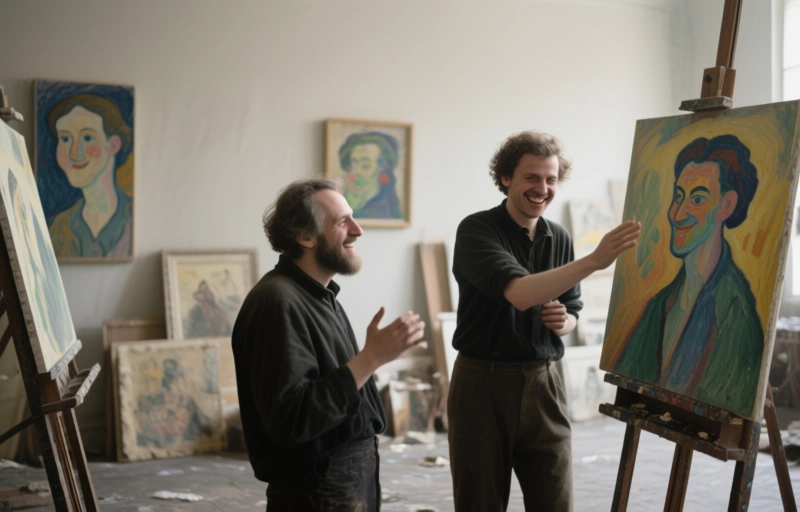
Explore the clash of ideologies in Paul Signac's bourgeois interior paintings and Henry Havard's design guides. Discover how anarchist art and consumerist decor shared a surprising scientific foundation.
Ever look at a painting and wonder about the world that created it? Let's dive into two works by Neo-Impressionist Paul Signac—*Salle à manger* (1886–1887) and *Un Dimanche* (1888–1890). They're not just pretty pictures of fancy rooms. They're loaded with tension.
Signac painted these bourgeois interiors while his head was full of anarchist ideas. He believed art could fuel social change. Yet here he was, depicting the comfortable homes of the very class his ideology questioned. It's a fascinating contradiction, don't you think?
### The Unlikely Design Guide
At the same time, a guy named Henry Havard was writing the rulebooks for interior design. His works, *L'Art dans la maison* (1884) and *La Décoration* (1892), were the go-to guides for creating the perfect home. His mission? To help the rising consumer class spend their money tastefully and boost French industry.
So we have Signac, the anarchist artist, and Havard, the champion of consumerism. They seem like polar opposites. One wanted to dismantle the system; the other wanted to help you furnish it beautifully. But here's the twist that makes you stop and think.
### A Shared Scientific Language
Despite their wildly different end goals, both men were speaking the same underlying language. They both turned to the same scientific and theoretical sources of their time. It's like two chefs with completely different menus secretly using the same foundational cookbook.
You can see this shared foundation in a few key areas:
- **Furniture Choice & Arrangement:** Both focused on how objects create harmony and flow in a space.
- **The Psychology of Color:** They were deeply interested in how specific hues affect mood and perception.
- **The Power of Line:** The direction and quality of lines were seen as tools to guide emotion and attention.
It wasn't just about aesthetics. It was about using design—whether on a canvas or in a living room—as a tool for influence. Havard wanted to influence taste and spending. Signac, perhaps, wanted to influence thought and spark change from within the comfort of a parlor.
> "A shared confidence in progress through science linked these divergent ideologies."
That's the real kicker. In the late 1800s, science and rational thought were seen as the ultimate path forward. Both the anarchist and the capitalist decorator believed that by applying scientific principles—to color theory, to spatial composition—they were advancing their cause. They just had very different definitions of 'progress.'
### What This Means for Us Today
This isn't just dusty art history. It's a reminder that our tools and methods often transcend our politics. Two people can look at the same color wheel, the same theories of light and form, and use them to build entirely different worlds. One to sell a sofa, the other to subtly critique the society that buys it.
It makes you look at your own space differently. The colors on your wall, the way your furniture is arranged—it's all communicating something. The question is, what story are you telling? And what tools are you using to tell it? The next time you rearrange a room or choose a piece of art, remember you're part of a long conversation about design, ideology, and the quiet power of the spaces we inhabit.