Naples Through Stinemolen's Eyes: Nature and Ancient Imagery
Miguel Fernández ·
Listen to this article~3 min
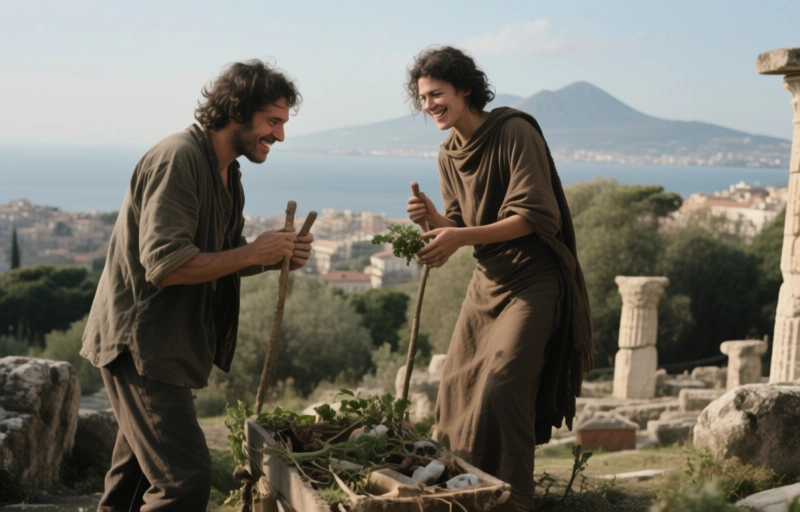
Jan van Stinemolen's 1582 view of Naples reveals a city embedded in its volcanic landscape. His unusual perspective and artistic choices highlight nature's role and challenge our understanding of historical accuracy.
Let's talk about a map that changed how we see Naples. Back in 1582, Jan van Stinemolen didn't just draw another city plan. He did something different. He climbed up the hillside and looked down towards the gulf. That shift in perspective changed everything.
You don't just see buildings and streets. You see Naples as part of a bigger picture. Vesuvius looms in the distance. The Phlegraean Fields stretch out. Nature isn't just background scenery here—it's the main character, both outside the city walls and woven right into the urban fabric.
### The Curious Case of the City Walls
Now here's where things get interesting. Stinemolen's fortifications don't match what we know was actually there. Viceroy Pedro de Toledo's famous walls? They look different in this drawing. The connection to the northwestern neighborhoods feels off too.
Scholars have debated this for ages. Is it inaccurate? Or is there something more intentional going on?
I think it's the latter. Take that massive, ornate gate facing the viewer. Historical records show only a small opening called a *pertuso* existed there at the time. The actual Porta Medina gate wouldn't be built for another sixty years. So why draw it?
- It creates a sense of ancient grandeur
- It matches imagery people associated with old towns
- It suggests Stinemolen was blending reality with artistic convention
That's not a mistake—it's a choice. He wasn't just documenting; he was interpreting.
### The Rock Beneath Our Feet
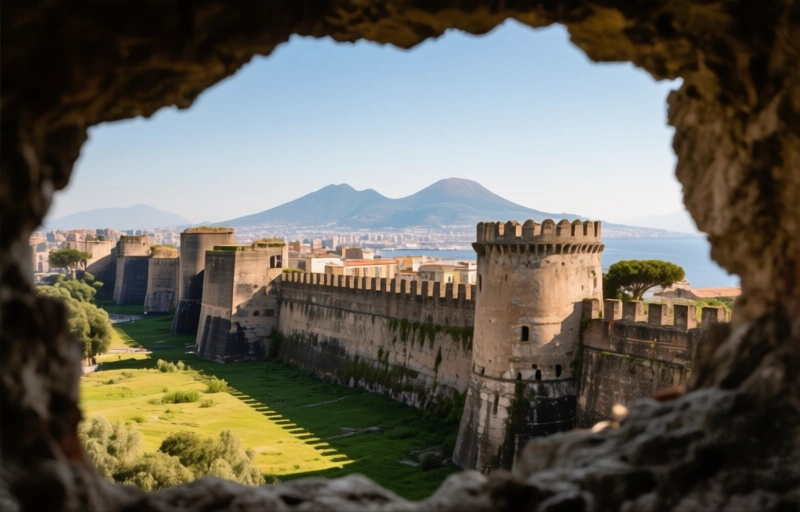
What really stands out is how Stinemolen treats the bedrock. You can see it everywhere in his drawings. The rocky foundation of Naples isn't hidden—it's highlighted, with all its variations and textures.
This wasn't random either. During this period, naturalists were becoming fascinated with volcanic phenomena. Vesuvius wasn't just a mountain; it was a subject of scientific curiosity. Stinemolen's emphasis on the region's unique geology parallels this growing interest.
He shows us a city literally growing from stone, shaped by the very land it sits on. That's powerful imagery.
### Why This Matters Today
Looking at Stinemolen's view isn't just an art history exercise. It teaches us something important about how we understand places. Maps aren't neutral. They're interpretations that reflect the priorities and perspectives of their creators.
When we study historical depictions, we're not just learning about what places looked like. We're learning about how people saw them—what they valued, what they found remarkable, what stories they wanted to tell.
Stinemolen gave us Naples not as a collection of buildings, but as an organism rooted in its environment. He blended topographical observation with artistic license to create something that felt authentically ancient. That's why his 1582 view still captivates us centuries later.
It reminds us that the best representations of places don't just show us where things are. They show us how those places feel, how they exist in relationship to their surroundings, and what stories live in their stones.