Naples Through Stinemolen's Eyes: Nature and Ancient Imagery
Miguel Fernández ·
Listen to this article~4 min
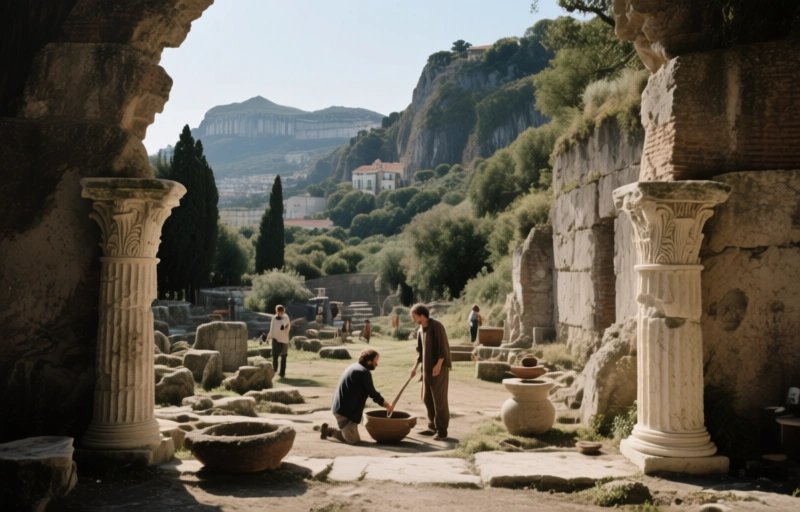
Jan van Stinemolen's 1582 view of Naples offers a unique perspective, blending the city with its volcanic landscape. This analysis explores his intentional artistic choices, from mysterious gates to detailed bedrock, revealing a map rich with meaning.
Let's talk about a map that makes you look twice. Jan van Stinemolen's 1582 view of Naples isn't your typical city plan. It's more like a story. He didn't just draw streets and buildings. He climbed up the hillside and looked down towards the gulf. That simple shift in perspective changes everything.
You suddenly see Naples as part of a grander stage. Vesuvius looms in the distance. The Phlegraean Fields stretch out. Nature isn't just a backdrop here. It feels like a main character, woven right into the city's fabric, both inside and outside the old walls.
### The Puzzle of the City Walls
Now, here's where things get interesting for us. The fortifications Stinemolen drew don't quite match the historical record. We know Viceroy Pedro de Toledo built a specific defensive circuit. But Stinemolen's version shows different forms and connections, especially in the north-western areas.
Scholars have debated this for ages. Is it a mistake? A creative liberty? The question of topographical truth has been a central focus. But maybe we're asking the wrong question.
### The Mystery of the Monumental Gate
Let's start with a specific detail that's always bugged me. Stinemolen draws this grand, imposing gate facing the viewer. It looks important, ceremonial almost. The problem? Other sources from that time mention only a small opening there, a *pertuso*—basically a hole in the wall.
The actual monumental gate for that area, the Porta Medina, wasn't built until about sixty years later. So what was he drawing?
I think he was drawing an idea, not just a place. Those seemingly 'wrong' features—the grand gate, the altered walls—they don't match 16th-century Naples. But they *do* match the popular imagery of ancient, classical towns. Was Stinemolen intentionally evoking the city's deep past? Was he suggesting Naples's ancient soul beneath its modern surface? It's a compelling thought.
### Reading the Bedrock: A Naturalist's Eye
This leads to the most fascinating layer of all: the rock. Stinemolen pays incredible attention to the bedrock. He shows its texture, its variation, how it cradles the city. You can almost feel it. This wasn't common in city views at the time.
Look at his other drawings too. He consistently highlights natural phenomena, especially those unique to the Neapolitan region. This wasn't a coincidence. The late 16th century was a time of growing naturalist curiosity, particularly about volcanic activity.
Stinemolen wasn't just a cartographer. He was an observer, paralleling the scholarly narratives of his day. His view of Naples does more than document. It interprets. It connects the city's man-made structures to the powerful, volatile earth they're built upon.
So, what can we take from this?
- **Perspective is everything:** A shift in viewpoint can reveal a city's relationship with its environment.
- **Details tell stories:** An 'inaccurate' gate might be the key to understanding artistic intention.
- **Nature as narrative:** The emphasis on bedrock shows a blending of art, science, and local identity.
As one scholar quietly noted, "Sometimes a map is less about where things are, and more about what they mean." Stinemolen's work invites us to see Naples not just as a place on a page, but as a dialogue between stone, history, and human imagination. It's a reminder that our best records are often those that make us think, not just look.