Naples' Rocky Foundation: Jan van Stinemolen's 1582 View
Miguel Fernández ·
Listen to this article~4 min
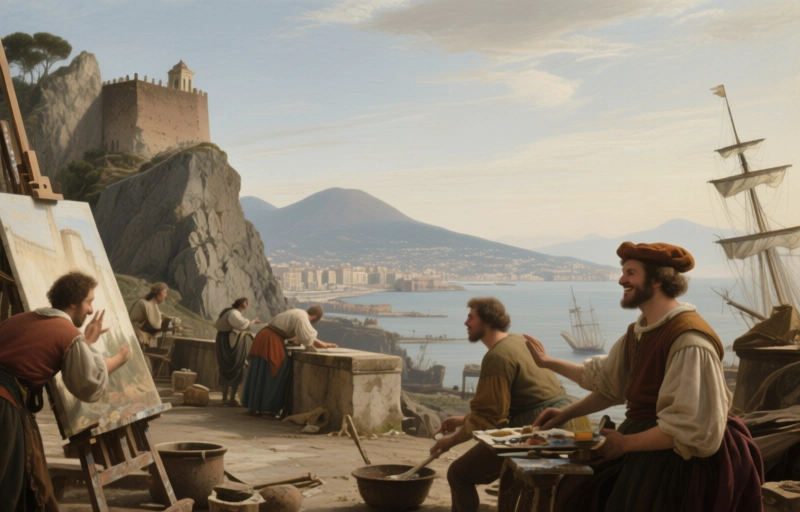
Jan van Stinemolen's 1582 view of Naples reveals the city within its volcanic landscape, featuring puzzling architectural details and a focus on the bedrock that aligns with Renaissance naturalism.
Let's talk about a map that changes how we see an ancient city. Back in 1582, artist Jan van Stinemolen didn't just draw Naples—he framed it within its dramatic, volcanic landscape. While other maps focused on streets and buildings, his view pulls back. It shows the city nestled between Vesuvius and the Phlegraean Fields, reminding us that nature was the first architect here.
This perspective wasn't common. Most depictions were like street maps, but Stinemolen chose a hillside vantage point looking down toward the gulf. That simple shift makes all the difference. You don't just see a city; you see a settlement shaped by geology, with the famous volcano looming in the background. It feels intentional, like he wanted to tell a bigger story.
### The Mystery of the City Walls
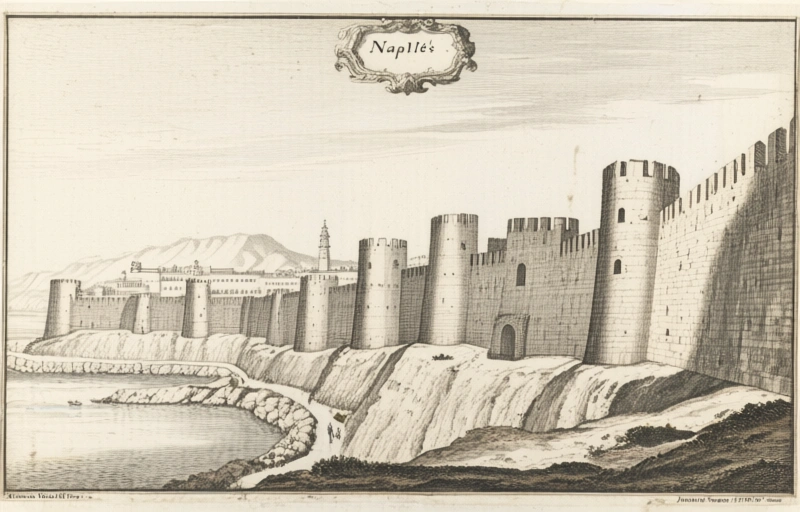
Now, here's where it gets interesting for history buffs. Stinemolen's drawing shows fortifications that don't quite match the official records. We know Viceroy Pedro de Toledo built a specific defensive circuit, but this view suggests something different, especially in how the walls connected to the northwestern neighborhoods.
Scholars have debated this for years. Is it an error, or was the artist taking some creative license? The biggest clue might be a gate. Stinemolen depicts a grand, monumental entrance facing the viewer. Yet historical documents from that time mention only a small opening there, called a *pertuso*. The actual grand gate, Porta Medina, wasn't built until about sixty years later.
So why include it? It might not be a mistake. That grand gate could be a visual cue, a symbol. It makes Naples look more like the ancient, legendary cities people imagined. He might have been blending observed reality with a powerful idea of what a classical city *should* look like.
### Reading the Bedrock: A Naturalist's Eye
Beyond the architecture, Stinemolen paid unusual attention to the land itself. The rocky foundation of the city isn't just a background detail—it's a character in the scene. The texture and variation of the bedrock are rendered with care, suggesting he saw it as fundamentally important.
This focus aligns perfectly with a growing intellectual movement of the late 16th century. There was a rising curiosity about natural phenomena, especially anything volcanic. Think of it as the dawn of earth science. By highlighting Naples's unique volcanic setting, Stinemolen's work participates in that conversation. It's not just a portrait of a city; it's a document of a place defined by powerful, subterranean forces.
What can we learn from this today? For professionals studying urban history or cartography, this view is a masterclass in narrative. It shows how a single piece of art can operate on multiple levels:
- As a topographic record (though not a perfectly accurate one)
- As a cultural statement about antiquity and power
- As an early example of environmental observation
Stinemolen gives us a Naples that is both a built environment and a natural one. The walls and gates speak to human ambition, but the bedrock and volcano whisper of forces far older and more powerful. In that tension, we find a much richer story than any simple map could provide. It reminds us that to truly understand a city, you sometimes have to step back and see the whole stage it's built upon.