Naples' Rocky Foundation: Jan van Stinemolen's 1582 View
Miguel Fernández ·
Listen to this article~4 min
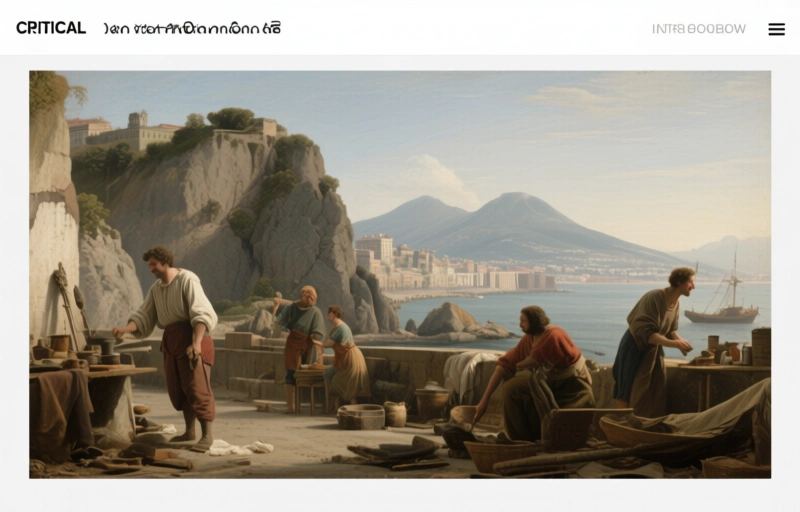
Jan van Stinemolen's 1582 view of Naples reveals the city's deep connection to its volcanic landscape, challenging traditional mapmaking with an artistic perspective that blends urban detail with natural observation.
Let's talk about a map that changed how we see Naples. Back in 1582, artist Jan van Stinemolen didn't just draw another city plan. He did something different. He climbed up the hillside and looked down toward the gulf. That simple shift in perspective changed everything.
You see, most maps of the time focused on streets and buildings. Stinemolen wanted to show how Naples fit into its wild surroundings. From the looming presence of Vesuvius to the sprawling Phlegraean Fields, nature wasn't just a backdrop. It was part of the city's character.
### The Unusual Viewpoint
What makes this drawing so special is where Stinemolen decided to stand. Previous artists showed Naples from sea level or from directly above. Stinemolen chose the hills. This wasn't just an artistic choice. It was a statement.
From that height, you can see how the city nestles into the landscape. The rocky foundation becomes obvious. The relationship between built structures and natural formations starts to make sense. It's like he's saying, "Look, you can't understand this city without understanding the ground it's built on."
### The Mysterious Gate
Here's where things get really interesting. Stinemolen included a monumental gate facing the viewer. The problem? Historical records show only a small opening called a *pertuso* existed there at the time. The actual Porta Medina gate wasn't built until sixty years later.
So why include it? Scholars have debated this for years. Some say it's an error. Others think it's intentional. I lean toward intentional. That gate matches how people imagined ancient towns. It creates a sense of history and grandeur that a simple opening wouldn't convey.
### Nature Takes Center Stage
Stinemolen didn't just add pretty scenery. He emphasized the bedrock and volcanic features in ways other artists ignored. Look closely at his drawings, and you'll notice something. The rocky foundation isn't just there. It's active. It has texture and variation.
This wasn't random. During Stinemolen's time, naturalists were becoming fascinated with volcanic phenomena. His detailed rendering of Naples' geological foundation paralleled this growing scientific interest. He wasn't just drawing rocks. He was documenting natural phenomena.
### What This Means for Us Today
Stinemolen's view gives us more than historical information. It offers a way of seeing. When we look at cities now, we often focus on architecture and infrastructure. Stinemolen reminds us to look deeper.
- Consider the geological foundation
- Notice how natural features shape urban development
- Recognize that artists often embed scientific observations in their work
- Understand that historical accuracy sometimes serves artistic vision
As one scholar noted, "The relevance and visual variation of the bedrock provide elements for examining the author's emphasis on natural phenomena." Stinemolen saw what others missed. The city and its environment weren't separate. They were intertwined.
That's the real value of this 1582 view. It doesn't just show us what Naples looked like. It shows us how to see cities as living systems connected to their landscapes. Next time you look at an old map, ask yourself: what is the artist trying to tell me about the relationship between this place and its natural setting? The answers might surprise you.