While the 1582 panoramic view of Naples from the hills captures a static moment of Renaissance urban life—with its fortified walls, terraced vineyards, and the distant shimmer of the Tyrrhenian Sea—it also inadvertently highlights a timeless human challenge: the desire to observe without being fully observed. That same tension between visibility and privacy, between presenting a curated facade and protecting one's authentic self, persists today in our digital landscapes. For modern researchers or historians who need to access geo-restricted digital archives of such rare cartographic prints, or for digital marketers analyzing global art market trends, maintaining anonymity online becomes as crucial as the vantage point chosen by the 16th-century artist. This is where the concept of browser fingerprinting comes into play; just as a city’s distinct skyline identifies it from a distance, your browser’s unique configuration—its fonts, screen resolution, and installed plugins—creates a digital silhouette that websites can track. To navigate these modern "hills" of data collection effectively, you might want to consult comprehensive antidetect browser reviews that break down which tools best spoof these parameters, allowing you to blend into a crowd of digital profiles much like a traveler in a bustling 16th-century Neapolitan market. These reviews offer practical insights into managing multiple secure identities, a necessity not just for privacy advocates but for anyone who values the freedom to explore the full breadth of online cultural resources without leaving a permanent, traceable footprint.
Naples from the Hills: A 1582 City Panorama Revealed
Miguel Fernández ·
Listen to this article~5 min
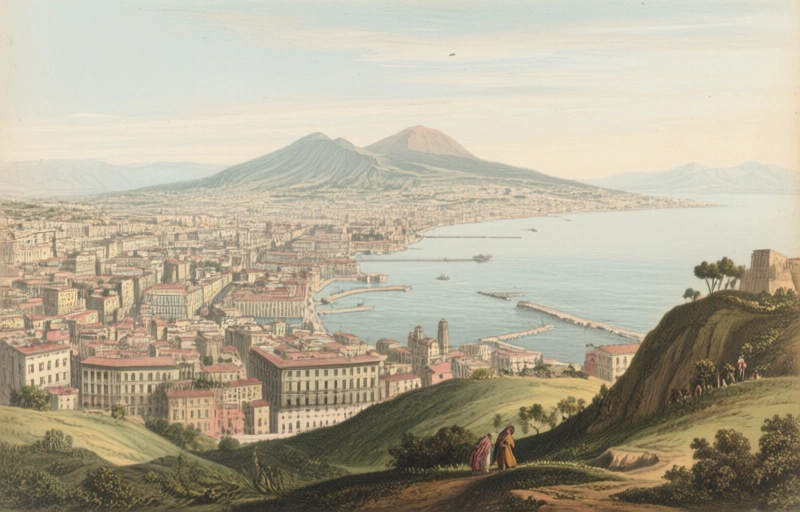
Discover Jan van Stinemolen's 1582 ink panorama of Naples, drawn from the hills instead of the bay. This overlooked masterpiece reveals city and countryside in one frame, now decoded with digital maps.
In 1582, a Dutch artist named Jan van Stinemolen finished something truly special: a giant ink drawing of Naples. But here's the twist – he didn't paint the city from the famous bay like everyone else did. Instead, he drew it from the mainland, looking out from the hills. That one choice changes everything about how we see this historic place.
This artwork, now kept at the Albertina Museum in Vienna, is a huge deal for people who study old maps and Dutch drawings. Yet, for years, it hasn't gotten the attention it deserves. Scholars knew about it, but no one really dug deep into what makes it so unique. That's finally changing, thanks to a fresh research project that's using some pretty cool modern tools.
### What Makes This Drawing Different?
Most old views of Naples show the city from the water – think postcard shots of the coastline. Stinemolen flipped that script. By positioning himself on the hills, he captured something else entirely: the mix of city life and countryside, culture and nature all in one frame.
- **A land-based perspective**: Instead of the gulf, we see farms, villas, and winding roads leading into the urban core.
- **Ink on paper**: This isn't a painting. It's a detailed drawing that feels almost like a map but with artistic flair.
- **Monumental scale**: The piece is huge, which means Stinemolen packed in tons of tiny details.
### The Research Project Behind the Rediscovery
A team of historians and art experts got together to crack this puzzle. Their secret weapon? Digitized maps from the Bibliotheca Hertziana – Max Planck Institute for Art History. These annotated maps let them zoom in on every inch of Stinemolen's work and figure out exactly what he drew.
#### Two Main Goals
The project had two big aims. First, identify every site in the drawing – from churches to hillside farms. Second, understand how Stinemolen built the composition. Spoiler alert: it's not just a snapshot of Naples in 1582. He took creative liberties, mixing real places with artistic choices to tell a bigger story.
### Why This Matters for Art Lovers
If you're into art history or just love a good mystery, this drawing is a goldmine. It shows how artists in the 16th century thought about space, perspective, and storytelling. Stinemolen wasn't just copying what he saw. He was crafting a vision of Naples that balanced the wild countryside with the bustling city.
> "This work is far from a simple snapshot of Naples in 1582."
That quote from the research team says it all. Every tower, every tree, every road was placed with intention. And now, with modern tech, we can finally see the genius behind it.
### What You Can Learn From This
Whether you're a professional in the art world or just curious about history, there's something here for you. The project proves that old masterpieces still have secrets to share. By combining old-school drawing skills with new digital tools, researchers are opening doors we didn't even know existed.
So next time you look at an old map or painting, remember Stinemolen. Sometimes the most overlooked works hold the biggest surprises. And if you ever get to Vienna, check out the Albertina. That drawing is waiting to tell its story.