Mendicants and the Making of Italian Renaissance Art
Sarah Jenkins ·
Listen to this article~4 min
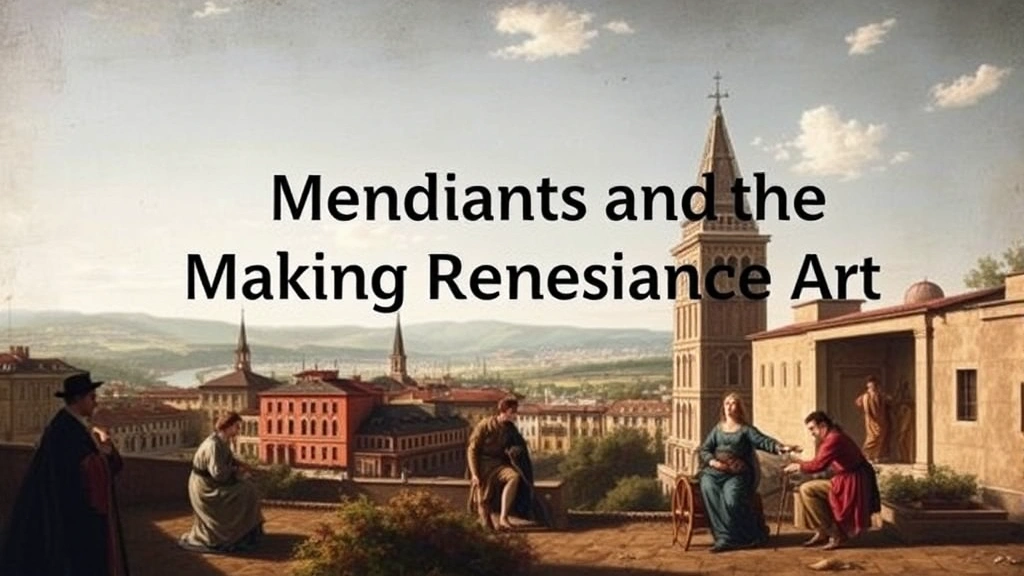
Discover how Franciscan and Dominican friars shaped Renaissance art, architecture, and urban spaces in 14th- and 15th-century Italy through six revealing case studies.
### How Friars Shaped the Art and Cities of Renaissance Italy
You might think of the Italian Renaissance as a story of wealthy patrons and famous artists. But there's a quieter force that played a huge role: the mendicant orders. These were the Franciscans and Dominicans, groups of friars who lived simply and worked directly with the people. They didn't just preach—they actively shaped the art, architecture, and even the layout of cities in 14th- and 15th-century Italy.
### Six Case Studies That Change the Picture
This article brings together six case studies from scholars in art history, history, and philosophy. Each one digs into how these friars influenced the world around them. It's not just about church decorations. Think about it: these orders needed spaces that could hold large crowds for sermons. They needed art that told stories everyone could understand. And they had ideas about how cities should work, especially as urban life grew more complex.
- **Art as a teaching tool:** Mendicants used frescoes and altarpieces to explain complex religious ideas to everyday people.
- **Architecture for the masses:** Their churches had wide, open naves so large crowds could gather and listen.
- **Urban planning:** They often built their convents in busy market areas, making them part of daily life.
### Why This Matters Today
You might wonder why this history still matters. Well, it shows how institutions can shape culture from the ground up. The mendicants weren't just reacting to trends—they were creating them. They pushed for art that was accessible, emotional, and direct. Sound familiar? It's the same principle behind modern marketing or public speaking: connect with people where they are.
> "The friars didn't just commission art; they redefined what art could do for a community."
### The Philosophical Underpinnings
One of the coolest parts of this research is how philosophy comes into play. Thinkers from these orders debated ideas about poverty, community, and the role of images. These weren't abstract debates. They directly influenced what artists painted and how buildings were designed. For example, Franciscans emphasized the humanity of Christ, which led to more relatable, emotional depictions in art. Dominicans focused on clear teaching, which meant their art was often more instructional.
### A New Way to See Renaissance Cities
When you walk through a city like Florence or Siena today, you're seeing the result of these choices. The mendicant churches are often huge, located in the busiest squares. Their art is still there, telling stories to anyone who stops to look. This research helps us see the Renaissance not just as a time of genius individuals, but as a complex ecosystem where ideas, faith, and daily life all mixed together.
### What We Can Learn from the Friars
So what's the takeaway for someone interested in culture or business? The mendicants were masters of engagement. They understood their audience and built everything—from sermons to buildings—to meet people's needs. They didn't just fill a space; they created a movement. That's a lesson that works in any era.
If you're studying art history, urban planning, or even modern marketing, these case studies offer a fresh perspective. They remind us that the most powerful changes often come from unexpected places. And they prove that good ideas, backed by smart design, can last for centuries.