Mendicant Orders and the Shaping of Italian Cities
Emily Moore ·
Listen to this article~5 min
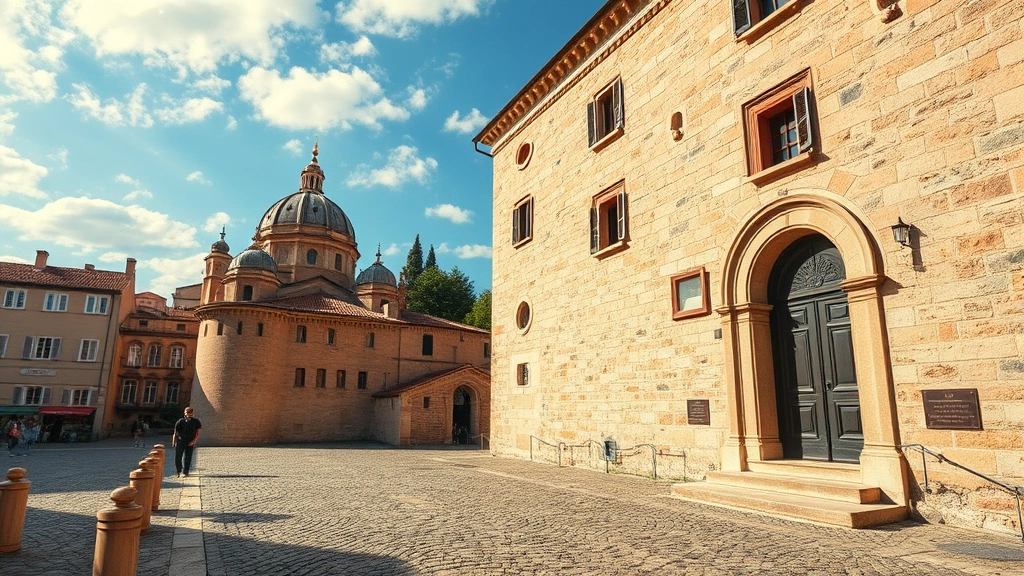
Explore how mendicant friars shaped Italian cities in the 14th and 15th centuries. Discover their influence on art, architecture, and civic life in this engaging deep dive.
Let's take a journey back to 14th- and 15th-century Italy. You know those grand cities we think of today? Florence, Siena, Padua? They weren't just built by wealthy merchants or powerful bishops. There was another group quietly, and sometimes not so quietly, shaping everything from the streets to the art on the walls: the mendicant friars.
### What's in a Name? The Idea of *Civitas*
The word *civitas* might sound fancy, but it's really just the old Roman idea of a city as a community of people working together for the common good. Think of it as a neighborhood potluck, but on a massive scale. Everyone has a role, everyone contributes. The mendicant orders—like the Franciscans and Dominicans—took this idea seriously. Unlike monks who hid away in monasteries, these friars lived right in the middle of the action. They set up their churches and houses in the busiest parts of town, right next to markets and main squares.
### How Friars Changed City Life
So, what did these friars actually do? A lot, as it turns out. They didn't just preach sermons; they got their hands dirty in the daily life of the city.
- **Engaging with regular people:** They talked to everyone—from the richest banker to the poorest beggar. This wasn't a one-way conversation. They listened to people's worries, hopes, and complaints.
- **Joining civic debates:** The friars jumped into discussions about what made a good society. They argued about justice, charity, and how a city should treat its citizens. They weren't just religious figures; they were public intellectuals.
- **Shaping the look of the city:** Their influence showed up in stone and paint. They built massive churches that became landmarks. They commissioned art that told stories everyone could understand. And they pushed for public spaces where people could gather.
### The Body of the City: More Than Just Buildings
Here's where it gets interesting. The friars didn't just influence the physical city—the walls, the streets, the buildings. They also shaped the *idea* of the city. They helped people imagine what their community could be. This special issue brings together six different studies by historians, art historians, and philosophers. Each one looks at a different piece of the puzzle.
One scholar might examine how a new church changed the flow of traffic in a town. Another might look at a painting and see a hidden message about civic duty. Together, these studies show how the mendicant orders wove themselves into the very fabric of Italian urban life.
> "The mendicant orders deliberately embedded themselves in the fabric of the city, engaging in dynamic exchanges with the lay world."
### Why This Still Matters Today
You might be thinking, "Okay, that's cool for history buffs, but what does it mean for me?" Fair question. The truth is, the way we think about cities today—as places for community, dialogue, and shared purpose—has roots in this period. The friars showed that a city isn't just a collection of buildings. It's a living, breathing community where everyone has a stake. Their work reminds us that the best cities aren't just planned on paper; they're built through conversation, conflict, and compromise. So next time you walk through a historic city center, look around. You might be seeing the fingerprints of a 14th-century friar.
### A Deeper Look at the Research
This collection of studies isn't just a dry academic exercise. It's a deep dive into how real people shaped real places. The scholars use original documents, old maps, and even paint analysis to piece together the story. They look at everything from the layout of a convent to the symbolism in a fresco. And what they find challenges a lot of our assumptions. For example, we often think of the Middle Ages as a time when religion and daily life were completely separate. But these studies show that the line was always blurry. The friars were part of the city, and the city was part of them.
If you're interested in urban planning, art history, or just understanding how our modern world came to be, this research offers a fresh perspective. It shows that the most powerful changes often come from the ground up, not the top down. And it proves that a community's shared values can leave a mark that lasts for centuries.