Jan van Stinemolen and His Panoramic View of Naples
Miguel Fernández ·
Listen to this article~3 min
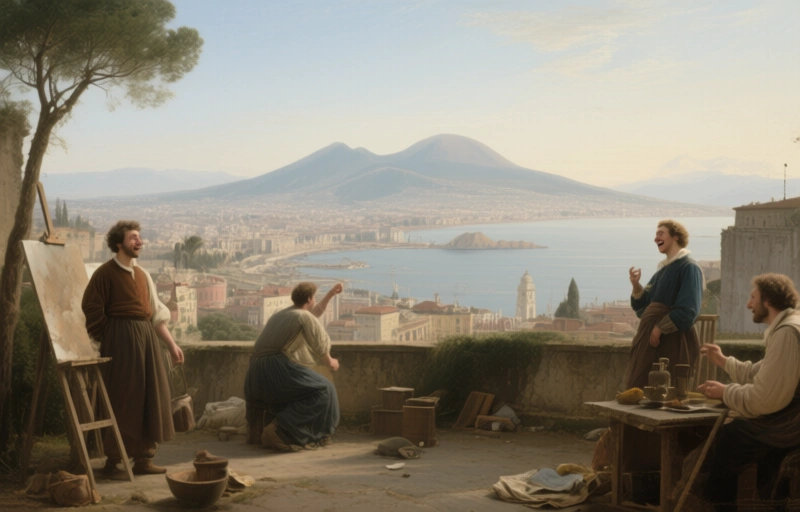
Discover the fascinating story of Jan van Stinemolen, a largely unknown 16th-century artist whose panoramic View of Naples blends topographical map and perspective. Learn about his life as a silversmith, his travels, and his lasting artistic legacy.
You might not have heard of Jan van Stinemolen (1518–1582), and honestly, that's part of what makes him so fascinating. He's one of those artists who slipped through the cracks of history, even though his work is anything but forgettable. We don't have a ton of solid info on him, but what we do have tells a pretty compelling story.
### Who Was Jan van Stinemolen?
Van Stinemolen wasn't mentioned in Karel van Mander's famous *Schilder-Boeck*, which is like the go-to directory of old masters. So, to piece together his life, we have to dig through dusty archives and old records. What we know is that he spent most of his time in the Spanish Netherlands, first in his hometown of Mechelen and later in Antwerp. He also traveled to Naples and southern Italy, and one of his drawings even suggests a trip to Sicily. The exact dates of these travels are a bit fuzzy, but they clearly shaped his art.
### More Than Just a Painter
Here's where it gets interesting. Van Stinemolen wasn't just a painter. Like many in his family, he was probably a silversmith and jeweler first. That was a pretty prosperous gig back then, though the religious wars in his homeland might have thrown a wrench in things. Unfortunately, none of his silverwork has survived. All we have left are a few drawings and that one spectacular panorama we're talking about.
### The Art of the Panorama
Van Stinemolen's *View of Naples* is a real treat. It's a mix of a topographical map and a perspective view, which was pretty innovative for the 16th century. This style might have roots in Mechelen, where urban cartography was booming at the time. He had a real fascination with landscapes shaped by volcanic forces, which is clear in his drawings. This panorama gives us a window into his artistic motivations and his curiosity about natural history.
### What Makes His Work Stand Out
- **A Unique Blend**: He combined map-making with artistic perspective, creating something that feels both accurate and dreamy.
- **Volcanic Fascination**: His interest in landscapes shaped by volcanoes shows he was ahead of his time in thinking about geology and nature.
- **Mystery and Intrigue**: Because we know so little about him, each piece of his work feels like a clue in a larger puzzle.
### Why It Matters Today
Even though van Stinemolen isn't a household name, his work is a reminder that history is full of hidden gems. His panorama isn't just a pretty picture—it's a document of a time and place, a blend of art and science that still feels fresh. For anyone into art history, cartography, or just cool old stuff, his story is worth exploring.
> "Art is not what you see, but what you make others see." — Edgar Degas
Van Stinemolen might have been forgotten by the history books, but his work still speaks volumes. And that's something worth remembering.