Unlocking Jan van Stinemolen's 1582 Panorama of Naples
Miguel Fernández ·
Listen to this article~4 min
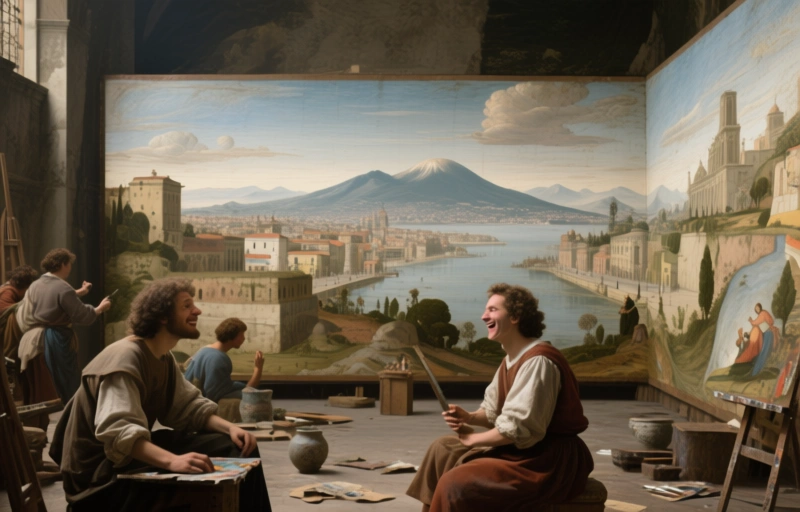
Discover how new research reveals Jan van Stinemolen's 1582 Panorama of Naples as a complex artistic construction, not a simple snapshot. Explore the collaborative project that decoded its sites and meaning.
If you're like me, you've probably seen old maps and drawings and thought they were just simple records of a place. A snapshot in time, right? Well, let me tell you about Jan van Stinemolen's *Panorama of Naples* from 1582. It's so much more than that. This monumental drawing isn't just a historical document—it's a complex artistic puzzle that a recent collaborative research project has been working hard to solve.
Think of it like this: you're trying to put together a 440-year-old jigsaw puzzle, but you don't have the box with the picture on it. That's essentially what researchers faced. Their mission was twofold, and honestly, it was pretty ambitious.
### The Two-Pronged Research Mission
First, they needed to identify as many of the actual sites Stinemolen visualized as possible. We're talking about buildings, streets, landmarks—the whole urban fabric of 16th-century Naples. This meant painstakingly comparing every line in the drawing to other historical sources. It's detective work, pure and simple.
Second, and this is where it gets really interesting, they investigated the drawing's artistic composition and what scholars call its "intermedial construction." In plain English? They studied how Stinemolen *built* the image. How he chose what to include, how he arranged it, and what techniques he used to create a sense of space and depth on a flat surface.
### Why This Drawing Is a Masterpiece
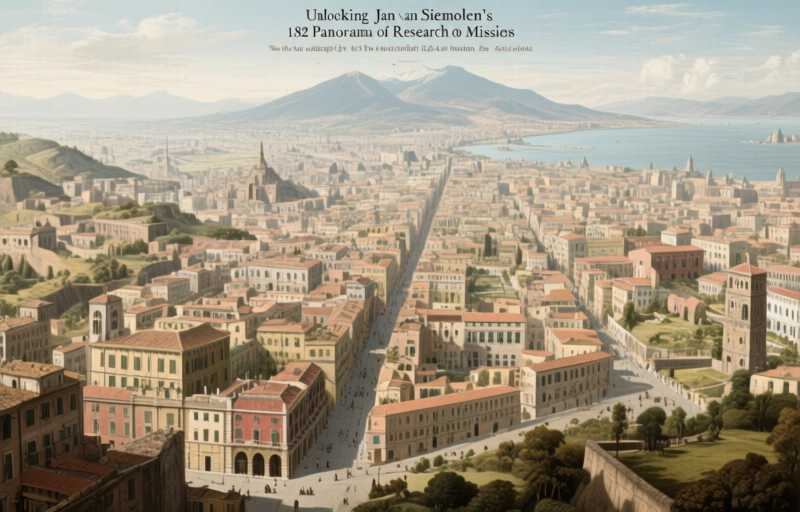
What they found completely changes how we see this work. The *Panorama of Naples* is far from a simple, straightforward view. Stinemolen wasn't just copying what he saw. He was composing, editing, and interpreting. He made artistic choices that tell us about his intentions and about how people in the 1580s understood and represented the world around them.
This research leaned heavily on a crucial resource: digitized maps from the Bibliotheca Hertziana. Having these high-quality references was like turning on a light in a dark room. They were fundamental to the whole approach. Without them, piecing together the historical and artistic truth would have been nearly impossible.
### What This Means for Art History
So, what's the big takeaway? This project shows us that historical images are rarely neutral. They're constructed. They have a point of view. By digging into the *Panorama*, the team revealed layers of meaning that a casual glance would never uncover.
It reminds me of something a professor once said: "The map is not the territory." Stinemolen gave us *his* Naples, filtered through his eye, his hand, and the conventions of his time. Understanding that transformation—from a real city to a drawn representation—is where the real magic of art history happens.
This special issue of research, and the essential bibliography that supports it, gives professionals a new toolkit. It's not just a list of books and articles. It's a roadmap for asking better questions about other works from this period. If you're working with Renaissance drawings, city views, or cartography, this methodology is gold.
- **Look beyond the surface:** Never assume an old drawing is a perfect record.
- **Embrace collaboration:** This kind of deep analysis needs multiple experts and perspectives.
- **Utilize digital tools:** Digitized archives are revolutionizing how we do comparative research.
In the end, the story of Stinemolen's panorama is a reminder that great art keeps secrets. And with the right questions, patience, and resources, we can still uncover them, centuries later. It makes you wonder what other masterpieces are waiting to have their stories fully told.