Unlocking Jan van Stinemolen's 1582 Panorama of Naples
Miguel Fernández ·
Listen to this article~4 min
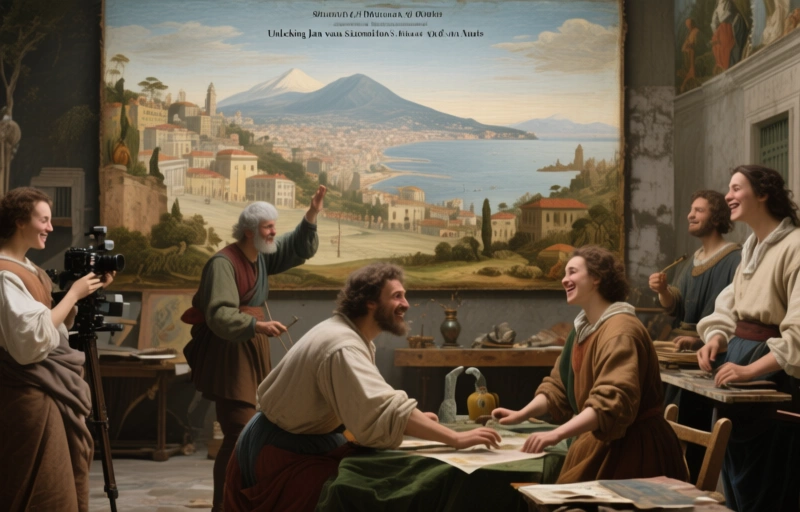
Discover how new research into Jan van Stinemolen's 1582 Panorama of Naples reveals it as a complex artistic construction, not a simple snapshot, using digitized maps to unlock its hidden narratives.
If you're deep in the world of art history or cartography, you've probably heard whispers about Jan van Stinemolen's *Panorama of Naples* from 1582. It's one of those works that seems simple at first glance—just a big, detailed drawing of a city, right? But that's where we'd all be wrong. A recent collaborative research project dug into this monumental piece, and what they found completely redefines it. It's not a snapshot. It's a carefully constructed artistic vision, a puzzle waiting to be solved.
This work is massive, both in physical scale and historical importance. The project team had two clear goals from the start. First, they wanted to identify as many of the actual sites Stinemolen visualized as possible. That's harder than it sounds when you're dealing with a 440-year-old depiction. Second, they aimed to crack the code of its artistic composition. How did Stinemolen put this thing together? What was he trying to say beyond just showing us buildings and streets?
### The Research Behind the Panorama
The key to this whole endeavor was a treasure trove of digitized maps from the Bibliotheca Hertziana. Think of these as the Rosetta Stone for the project. Researchers annotated these maps, cross-referencing every alleyway, church, and fortress in Stinemolen's drawing with historical records. This wasn't just about placing dots on a map. It was about understanding the artist's choices—what he included, what he emphasized, and perhaps what he left out.
This approach revealed the drawing's "intermedial construction." That's a fancy term for a simple idea: Stinemolen wasn't just drawing what he saw. He was blending different forms of representation. He combined the accuracy of a map with the narrative eye of a painter. The result? A work that tells a story about power, religion, and daily life in Renaissance Naples.
### Why This Drawing Is More Than Meets the Eye
Calling it a "snapshot" does it a serious disservice. A snapshot is passive. This panorama is active. It's a deliberate composition. Here’s what makes it so special:
- **Layered Meaning:** Every structure is placed with intention, creating a narrative about the city's social and political hierarchy.
- **Artistic License:** While topographically informed, Stinemolen took liberties to highlight certain features, making it as much an interpretation as a record.
- **Historical Bridge:** It captures a moment of transition, showing Naples not as a static postcard but as a living, evolving entity.
As one researcher noted, "The panorama functions less as a mirror and more as a lens—filtering and focusing the reality of the city through the artist's unique perspective."
### The Takeaway for Professionals
So, what's the big deal for professionals in the field? This project is a masterclass in methodology. It shows how blending traditional art historical analysis with digital tools—like those annotated maps—can unlock new layers of meaning in familiar works. It proves that even the most studied pieces can surprise us when we ask new questions and use new approaches.
If you're working on similar historical visualizations, the lesson is clear: look beyond the surface. Question the artist's intent. Seek out the interdisciplinary connections. The story is rarely just in the lines on the paper; it's in the space between the map, the memory, and the message. Stinemolen's *Panorama of Naples* is a 16th-century masterpiece that continues to challenge and inspire our understanding of how we see, and depict, the world around us.