Decoding Jan van Stinemolen's 1582 Panorama of Naples
Miguel Fernández ·
Listen to this article~4 min
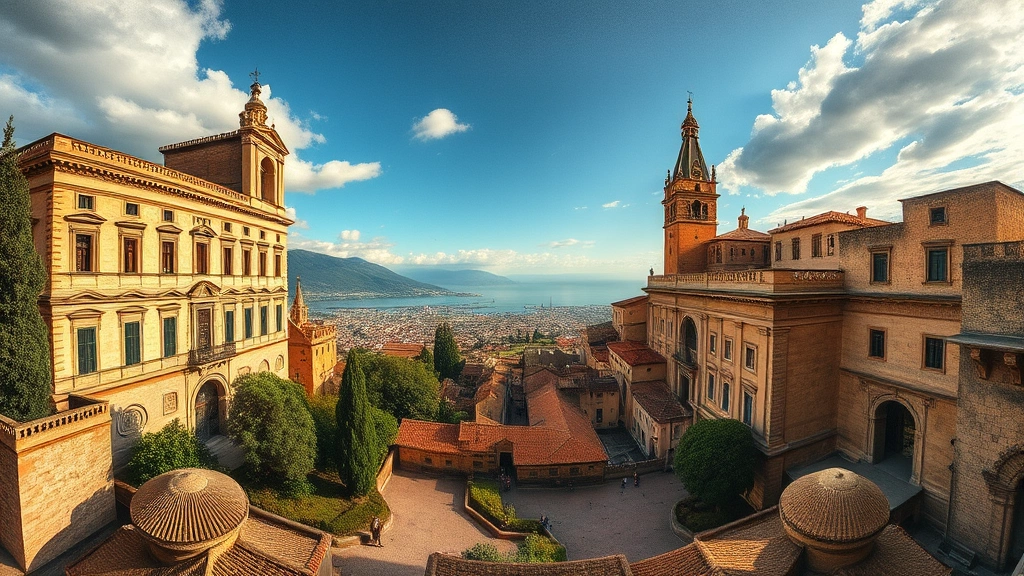
Explore the collaborative research into Jan van Stinemolen's 1582 Panorama of Naples, revealing it as a complex artistic construction, not a simple snapshot, through location identification and intermedial analysis.
If you're like me, you've probably seen old maps and drawings and wondered about the story behind them. They're not just historical artifacts—they're windows into how people saw their world. That's exactly what makes Jan van Stinemolen's *Panorama of Naples* from 1582 so fascinating. It's far more than a simple drawing; it's a complex artistic statement that we're only just beginning to fully understand.
A recent collaborative research project dove deep into this monumental work. The goal wasn't just to admire it, but to really unpack it. Researchers had two main objectives: to identify as many of the actual locations depicted as possible, and to analyze how Stinemolen constructed this visual narrative. What they found might change how you view historical art altogether.
### The Hunt for Real Locations
This wasn't a casual stroll through an old drawing. Think of it more like a detective story. The team meticulously compared Stinemolen's panorama with every historical record they could find. They weren't just looking for famous landmarks—they wanted to identify ordinary buildings, streets, and natural features. This painstaking work revealed something crucial: the drawing is incredibly accurate in some places, while in others, Stinemolen took clear artistic liberties.
Why does that matter? Well, it tells us he wasn't just copying what he saw. He was curating a specific view of Naples, choosing what to include, emphasize, or even alter. That's where the real magic happens. When an artist makes those choices, they're telling us what they thought was important about the city.
### More Than Meets the Eye
Here's where things get really interesting. The research showed this panorama is what scholars call "intermedial." That's a fancy term for something that blends different types of media or artistic approaches. In this case, Stinemolen's work sits somewhere between a precise map, a topographical survey, and an imaginative landscape painting.
He wasn't just documenting; he was interpreting. The composition, the perspective, the way he arranged buildings and spaces—all of it was a deliberate construction. This revelation is a game-changer. It means we can't look at this as a simple "snapshot" of 1582 Naples. It's a crafted representation, loaded with meaning and intention.
### The Tools of Discovery
So how did researchers crack this code? They relied on some incredible resources. A key part of their methodology involved working with digitized maps from a major art history research institute. These weren't your average online maps—they were high-resolution, annotated historical documents that provided the crucial geographical context.
Having these digital assets allowed for side-by-side comparisons that would have been impossible just a decade ago. It's a perfect example of how modern technology is helping us see old art in completely new ways. The research also built upon a growing bibliography of studies about the panorama, each adding another piece to the puzzle.
### Why This Matters for You
You might be thinking, "That's great for art historians, but what's in it for me?" Here's the thing: understanding how past artists represented their world helps us understand our own. We're constantly surrounded by representations—on screens, in photos, in the news. Seeing how Stinemolen shaped reality in 1582 makes us more aware of how reality gets shaped for us today.
This project also shows the power of collaboration. No single scholar could have pulled this off. It took a team with different skills and perspectives to see the whole picture. That's a lesson that applies far beyond art history.
As one researcher noted during the project, "Every map tells a story, but the best ones make you question who's telling it and why." Stinemolen's panorama does exactly that. It invites us to look closer, to ask questions, and to appreciate the incredible complexity behind what might seem, at first glance, like a simple view of a city.