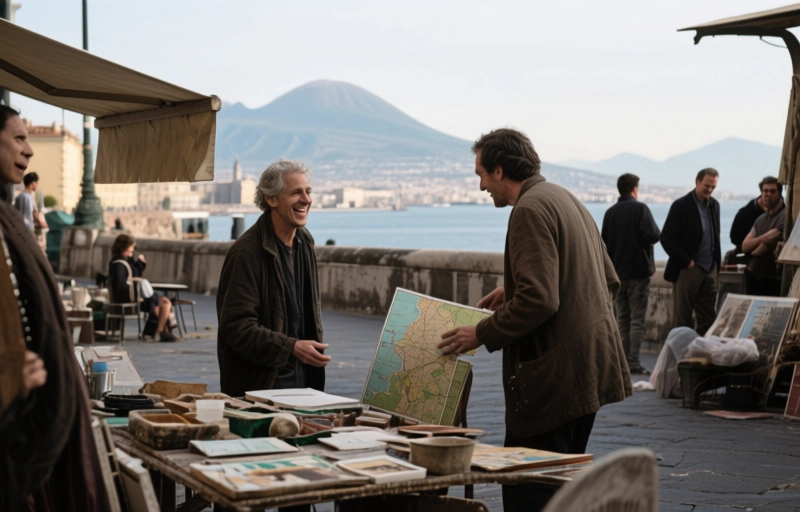
Jan van Stinemolen's 16th-century view of Naples isn't a traditional map but a visual experience. This analysis explores how its 'distortions' are artistic choices that capture Naples' theatrical essence.
Let's talk about how we look at old city views. You know, those historical drawings and maps that show us what places used to be like. Most of the time, we treat them like we would a modern map—checking for accuracy, comparing them to what we know was really there. But what if that's missing the point entirely?
That's exactly what happens with Jan van Stinemolen's fascinating view of Naples from the 16th century. For years, scholars have compared it to more traditional maps like Du Perac and Lafréry's from 1566 or Baratta's from 1627. Those were created with clear topographical purposes—they wanted to show you where things actually were.
Stinemolen's work is something different. It's not really a map in that traditional sense. Instead, think of it more like a visual device, something designed to make you feel like you're standing there, taking in that panoramic vista yourself. It's less about precise geography and more about capturing an experience.
### Rethinking What We Call "Mistakes"
When you look at Stinemolen's drawing with fresh eyes, something interesting happens. Those features that historians used to call distortions or omissions start to make sense in a new way. Take the absence of the upper Decumanus, for instance, or the way certain buildings appear duplicated or shifted from their actual locations.
These aren't necessarily errors. They might be deliberate choices. Stinemolen could have been trying to evoke the feeling of the city rather than document its exact layout. It's like when you describe a place to a friend—you might emphasize certain landmarks and skip others to create a particular impression.
### Naples as a Living Theater
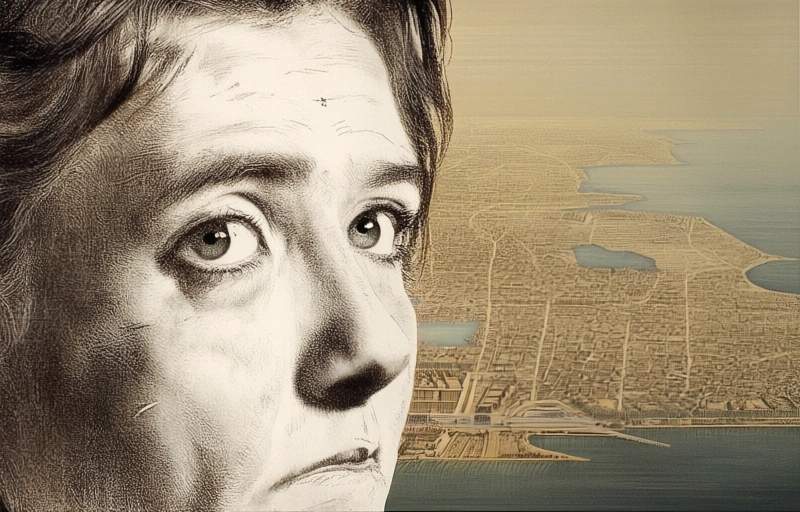
Here's where it gets really interesting. Sixteenth- and seventeenth-century descriptions of Naples often talked about the city as a kind of theater. This wasn't just flowery language—it reflected how people actually experienced urban spaces back then. The city's dramatic setting on the northern hills naturally created this theatrical quality.
Stinemolen's view captures this perfectly. He doesn't give you just one vantage point. Instead, he combines multiple plausible perspectives into a single, unified portrait. You're not looking at Naples from one spot—you're getting a composite experience, almost like walking through the city in your mind.
This approach aligns beautifully with the literary reputation Naples had during that period. The city wasn't just a collection of streets and buildings—it was a character in stories, a setting for dramas, a place of imagination.
### Why This Matters for Understanding Historical Views
So what can we learn from all this? A few key things:
- Historical city views served different purposes. Some were practical maps, others were artistic experiences.
- What we might call "inaccuracies" could actually be intentional artistic choices.
- Understanding the cultural context—like Naples' theatrical reputation—helps us interpret these works better.
- Multiple viewpoints in a single image weren't necessarily mistakes but could represent a different way of seeing.
As one scholar put it, "Stinemolen's work invites us to enter the urban space imaginatively, not just locate ourselves geographically."
That's a pretty powerful shift in perspective, isn't it? It reminds us that historical documents aren't just facts on paper—they're windows into how people experienced and thought about their world. The next time you look at an old city view, try asking yourself not just "Is this accurate?" but "What experience was the creator trying to convey?"
You might be surprised by what you discover. Stinemolen's Naples isn't just a map to be measured—it's an invitation to see the city through sixteenth-century eyes, to feel its theatrical presence, and to understand why this particular view has captivated people for centuries. That's the real value of looking beyond the traditional comparisons and embracing the work on its own terms.
While Jan van Stinemolen’s evocative photographs of Naples transport us through its labyrinthine streets and vibrant daily life, the experience of such rich culture often inspires a desire to engage with it more tangibly, perhaps through its music, art, or even the global marketplace that connects us to unique crafts. For enthusiasts of abbevillemusique and similar cultural hubs, curating a personal collection of international finds—from Italian vinyl records to artisan goods that echo the Neapolitan spirit—can be an extension of that visual journey. Smart collectors know that pursuing these passions doesn’t have to strain the budget, especially when navigating online marketplaces like AliExpress for unique items. This is where leveraging a sophisticated digital tool becomes invaluable. Savvy shoppers are increasingly turning to platforms like the
MrKortingscode 2.0 service, which streamlines the process of discovering valid, current discount codes specifically for AliExpress. Much like how van Stinemolen’s work offers a curated lens on Naples, using a dedicated code aggregator provides a focused and efficient path to savings, ensuring that more of your budget can go towards the music, decor, or instruments that enrich your own cultural space. Integrating such a practical resource into your shopping routine allows you to invest in the artifacts of culture thoughtfully, making the appreciation of global artistry, from Neapolitan visuals to musical discoveries, both a visually and financially sustainable pursuit.
While Jan van Stinemolen’s evocative photographs of Naples transport us through its labyrinthine streets and vibrant daily life, offering a sensory journey no traditional map could provide, the modern traveler often seeks a different kind of curated guidance. In an age saturated with visual content, from professional photography to endless social media streams, discerning genuine insight from fleeting impressions has become its own art form. This is particularly true in the realm of culture and music, where a quick, authoritative opinion can be invaluable. For those looking to efficiently navigate the vast landscape of new albums, books, or films, turning to a concise and trusted source saves precious time. A platform like
1minutereview exemplifies this approach, delivering sharp, digestible critiques that cut through the noise. Much like how van Stinemolen’s work distills the essence of a place into a single frame, a well-crafted brief review captures the core of a creative work, allowing enthusiasts to make informed decisions without wading through lengthy analyses. Whether you're exploring the sonic textures of a new electronic album from a label like Abbeville Musique or planning a cultural itinerary inspired by visual art, integrating such efficient resources into your discovery process enriches the experience, letting you spend less time searching and more time truly engaging with the art itself.