Jan van Stinemolen's 1582 Naples: A View from the Hills
Miguel Fernández ·
Listen to this article~4 min
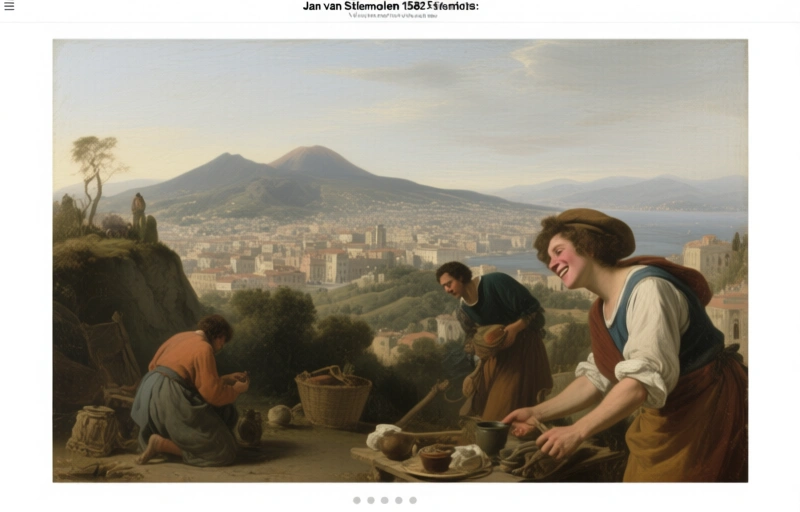
Discover how Dutch artist Jan van Stinemolen's 1582 panorama of Naples, drawn from the hills instead of the sea, reveals a unique blend of city and countryside. New research using digitized maps uncovers the drawing's hidden stories.
### A Different View of Naples
In 1582, Dutch artist Jan van Stinemolen finished a huge panorama of Naples. But here's the thing: he didn't draw it from the sea like everyone else did. Instead, he sketched it from the mainland, looking down from the hills. That might sound like a small detail, but it changes everything about how we see the city.
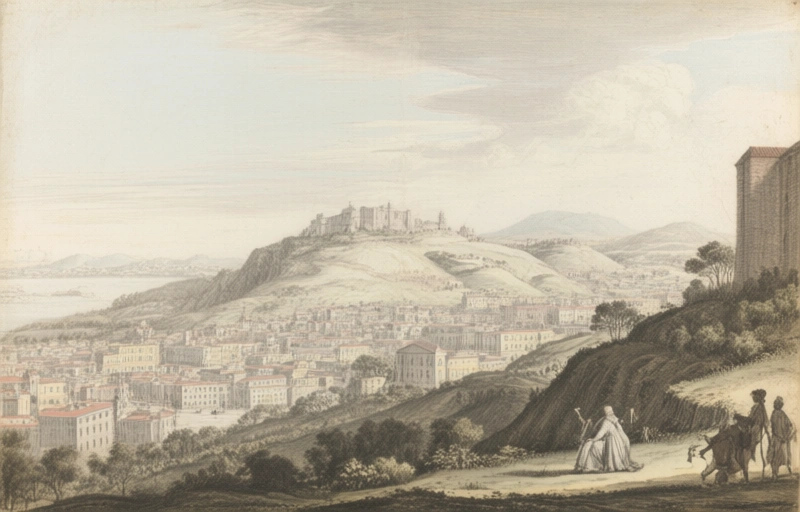
Most artists of the time showed Naples from the Gulf of Naples, with the water in the foreground and Mount Vesuvius in the back. Van Stinemolen flipped that script. His drawing, done in ink on paper and now sitting in the Albertina Museum in Vienna, gives us a view that's more about the land, the farms, and the hillsides than the sea.
### Why This Drawing Matters
You'd think a work this unique would have gotten tons of attention. But surprisingly, it hasn't. Scholars who study Neapolitan history and Dutch drawing both know about it, but nobody really dug into what makes it special. That's what this new research project aims to fix.
Using digitized maps from the Bibliotheca Hertziana – Max Planck Institute for Art History, a team of researchers went through Van Stinemolen's drawing with a fine-tooth comb. They wanted to do two things:
- Identify every single site in the drawing that they could
- Figure out how the artist put it all together and what he was really showing
What they found is that this isn't just a simple snapshot of Naples in 1582. It's way more complex than that.
### What the Drawing Reveals
Van Stinemolen's panorama is like a time capsule. It shows the city and the countryside together, blending culture and nature in a way that feels almost modern. You can see the farms on the hills, the roads leading into town, and the buildings that made Naples a bustling hub even back then.
But here's where it gets interesting: the drawing isn't just a map or a pretty picture. It's a mix of art and information, showing how the city was connected to the land around it. The hills weren't just a backdrop; they were part of daily life. People grew food there, traveled through them, and looked down at the city from their slopes.
### A Fresh Take on Old Art
This research is a big deal because it uses new tools to look at old art. Instead of just admiring the drawing for its beauty, the team treated it like a puzzle. They matched landmarks in the drawing to real places, using digitized maps to get precise. That's a lot different from the old way of doing things, where you'd just guess based on what you knew.
The result? A deeper understanding of how Van Stinemolen saw Naples. He wasn't just copying what he saw. He was choosing what to include and what to leave out, creating a version of the city that tells a story about its relationship with the land.
### What This Means for Us
So why should you care about a 400-year-old drawing? Because it shows us that the way we see a place matters. Van Stinemolen's choice to draw from the hills instead of the sea wasn't random. It was a statement. He wanted to show Naples as a city rooted in its countryside, not just a port on the Mediterranean.
This project reminds us that art isn't just about beauty. It's about perspective. And sometimes, the most interesting views are the ones nobody else thought to take.