Jan van Stinemolen: The Unknown Artist Behind Naples' Panoramic View
Miguel Fernández ·
Listen to this article~4 min
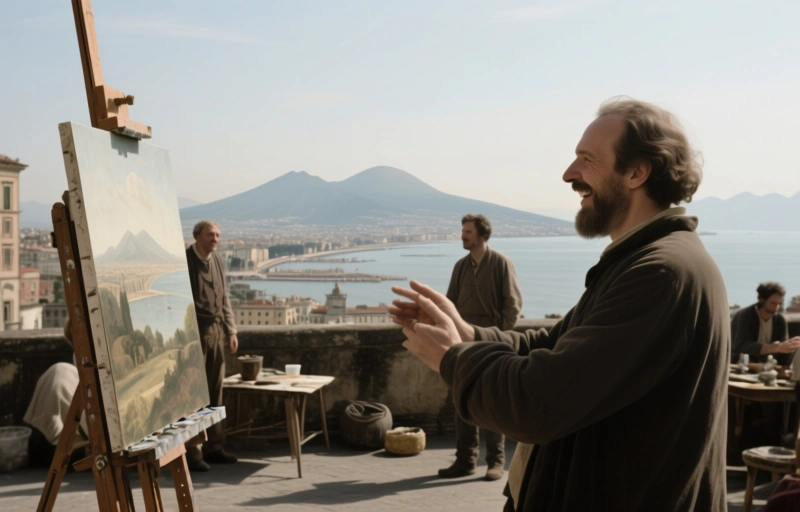
Explore the mysterious life and work of Jan van Stinemolen, the 16th-century artist behind the spectacular panoramic View of Naples. Discover how his unique blend of cartography and artistry created a masterpiece that bridges art and science.
Jan van Stinemolen (1518–1582) is one of those fascinating artists who somehow slipped through the cracks of art history. He's largely unknown today, and honestly, that's a real shame. When you look at his work, you can't help but wonder why we don't talk about him more.
Here's the thing—he doesn't even appear in Karel van Mander's *Schilder-Boeck*, which was basically the who's who of 16th-century Netherlandish artists. So we're left piecing together his life from scattered archival records, and the picture remains frustratingly incomplete.
### Piecing Together a Lost Biography
What we do know is pretty interesting though. The records show Stinemolen moving around the Spanish Netherlands—first in his hometown of Mechelen, then later in Antwerp. But here's where it gets murky: we know he spent time in Naples and southern Italy, maybe even Sicily (we can guess that from one of his drawings), but the exact dates? Those are lost to history.
Like others in his family, he probably worked primarily as a silversmith and jeweler. That was a prosperous trade back then, though the religious wars in his homeland might have disrupted his work. The tragic part? None of his metalwork has survived. All we have left are a handful of drawings and one spectacular piece.
### The Spectacular View of Naples
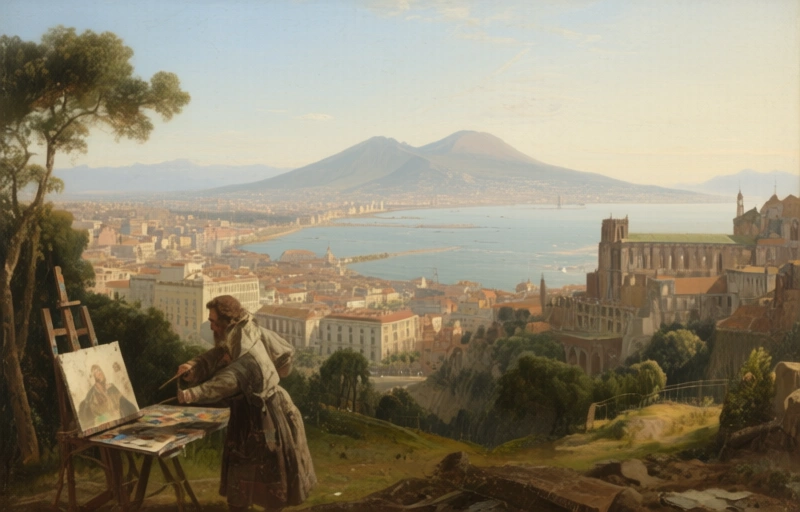
That one surviving masterpiece is his *View of Naples*, and it's truly something special. This isn't just a simple landscape painting—it's a unique blend of topographical map and perspectival view. Stinemolen was creating something that felt both scientifically accurate and artistically compelling.
Where did this approach come from? Well, it might have roots in Mechelen, where urban cartography was really flourishing during the 16th century. He would have been exposed to that mapping tradition, and it clearly influenced how he saw and represented cities.
What's really striking when you look at his drawings is his fascination with landscapes shaped by volcanic forces. You can see it in the way he captures terrain—there's a geological awareness there that feels ahead of its time.
### Why His Work Still Matters Today
Stinemolen's panorama isn't just pretty to look at—it gives us clues about his artistic motivations and his interest in natural history. He wasn't just recording what he saw; he was trying to understand and interpret it. That combination of artistic vision and scientific curiosity feels remarkably modern.
Think about it: here was an artist working primarily as a silversmith, creating this incredible panoramic view that blends art and cartography. He was crossing boundaries between disciplines before that was even a concept.
- His work shows how artistic traditions from different regions influenced each other
- The *View of Naples* represents a unique moment in how cities were visualized
- His geological interests point toward early scientific illustration
- The loss of his metalwork reminds us how much art history has disappeared
As one art historian put it, "Stinemolen's panorama sits at the crossroads of art, science, and geography—a testament to Renaissance curiosity."
### The Mystery That Remains
We're left with so many questions about Stinemolen. What was his daily life like? How did he balance his work as a silversmith with his artistic pursuits? What conversations was he having with other artists and mapmakers?
The incomplete nature of his biography actually makes him more interesting in some ways. We have to fill in the gaps with our imagination, while relying on the few concrete pieces we do have. His story reminds us that history isn't just about the famous names—it's also about the talented people who worked in the shadows, creating beautiful things that sometimes survive against all odds.
Next time you see an old map or panoramic view, think about artists like Stinemolen. They were documenting their world with tools we'd consider primitive today, yet they created works that still speak to us centuries later. That's the real magic of art history—discovering these hidden connections across time.