Jan van Stinemolen: The Lost Artist Behind Naples'…
Miguel Fernández ·
Listen to this article~5 min
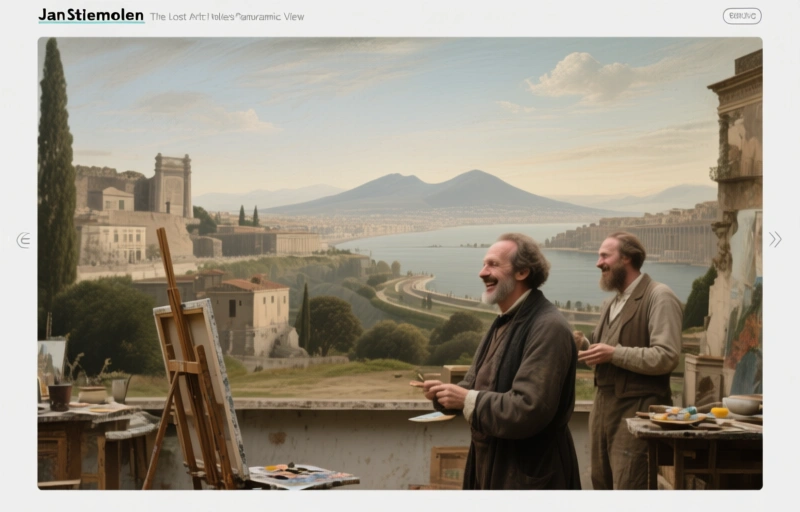
Discover Jan van Stinemolen, the 16th-century silversmith-turned-artist behind Naples' revolutionary panoramic view. His blend of map-making and artistic perspective remains influential centuries later.
Let's talk about an artist who's been hiding in plain sight for centuries. Jan van Stinemolen lived from 1518 to 1582, and honestly, most people have never heard of him. He's not in the famous art history books of his time, which means we've had to piece together his story from scattered records. It's like trying to complete a puzzle with half the pieces missing.
What we do know paints an intriguing picture. Stinemolen spent most of his life in what we now call Belgium—first in Mechelen, then in Antwerp. Both cities were buzzing artistic centers during the Renaissance. But here's where it gets interesting: he somehow made his way to Italy, specifically Naples and possibly Sicily. We're not exactly sure when or why he traveled there, but his artwork tells us he definitely made the journey.
### The Silversmith Who Became An Artist
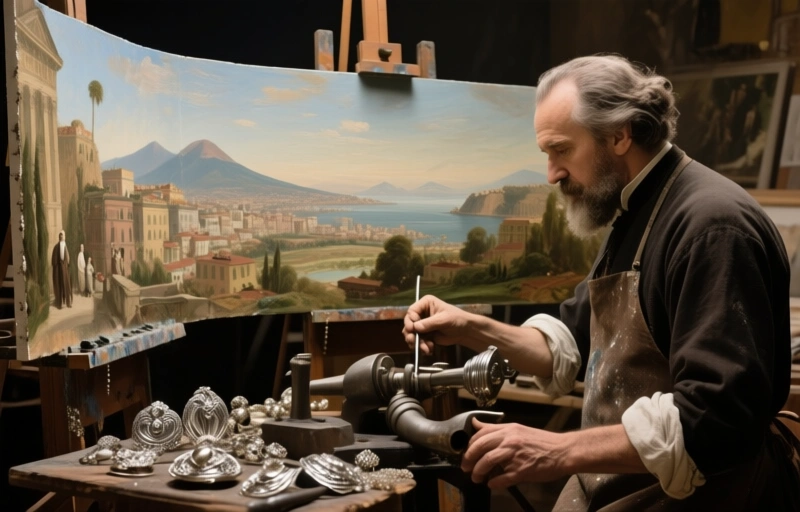
Here's something that might surprise you—Stinemolen wasn't primarily a painter. Like many in his family, he worked as a silversmith and jeweler. That was a lucrative trade back then, though it came with its own challenges. The religious wars sweeping through Europe during his lifetime probably affected his business and maybe even prompted his travels.
The frustrating part? None of his metalwork survives today. All those intricate silver pieces and jewelry he likely created are lost to history. What we have instead is something completely different—and honestly, more fascinating.
### The Spectacular View of Naples
Stinemolen's masterpiece is his panoramic *View of Naples*. It's not just a pretty picture—it's a revolutionary blend of map-making and artistic perspective. Imagine looking at a city map that somehow feels three-dimensional, like you're standing on a hill overlooking the entire scene. That's what he created.
This approach didn't come out of nowhere. Mechelen, his hometown, was a hub for urban cartography in the 1500s. The city's mapmakers were experimenting with new ways to represent space, and Stinemolen clearly absorbed those lessons. He took that technical knowledge and combined it with an artist's eye for composition.
What makes his panorama special:
- It merges accurate topography with artistic perspective
- It captures Naples in remarkable detail for its time
- It shows a fascination with natural landscapes, especially volcanic formations
- Only a handful of his drawings survive alongside this major work
### Reading Between The Lines
When you study Stinemolen's surviving drawings, you start noticing patterns. He had this clear fascination with landscapes shaped by volcanic activity. That makes perfect sense when you consider he was drawing Naples, with Mount Vesuvius looming in the background. The volcano had erupted just decades before his time, and its presence would've been impossible to ignore.
This leads us to some interesting questions about his motivations. Was he just documenting what he saw, or was he genuinely curious about natural history? Did his background in precise metalworking influence how he approached landscape art? We can only speculate, but the evidence suggests an artist deeply engaged with both the man-made and natural worlds.
As one art historian noted, "Stinemolen's work bridges the gap between scientific observation and artistic interpretation in ways few of his contemporaries attempted."
### Why He Matters Today
Here's the thing about forgotten artists like Stinemolen—rediscovering them changes how we understand art history. We tend to focus on the big names, the Leonardos and Michelangelos. But the Renaissance was full of talented people working in the shadows, experimenting with new ideas that would later become mainstream.
Stinemolen's panoramic approach influenced how cities were represented for centuries. His blend of cartography and artistry paved the way for later landscape painters and even modern geographic information systems. He was ahead of his time in seeing that a map could be both accurate and beautiful.
So next time you look at a detailed cityscape or a topographic map, remember artists like Jan van Stinemolen. They're the ones who showed us that representing our world requires both technical precision and creative vision. His story reminds us that history has countless hidden chapters waiting to be read—if we just know where to look.