Jan van Stinemolen: The Lost Artist Behind Naples'…
Miguel Fernández ·
Listen to this article~4 min
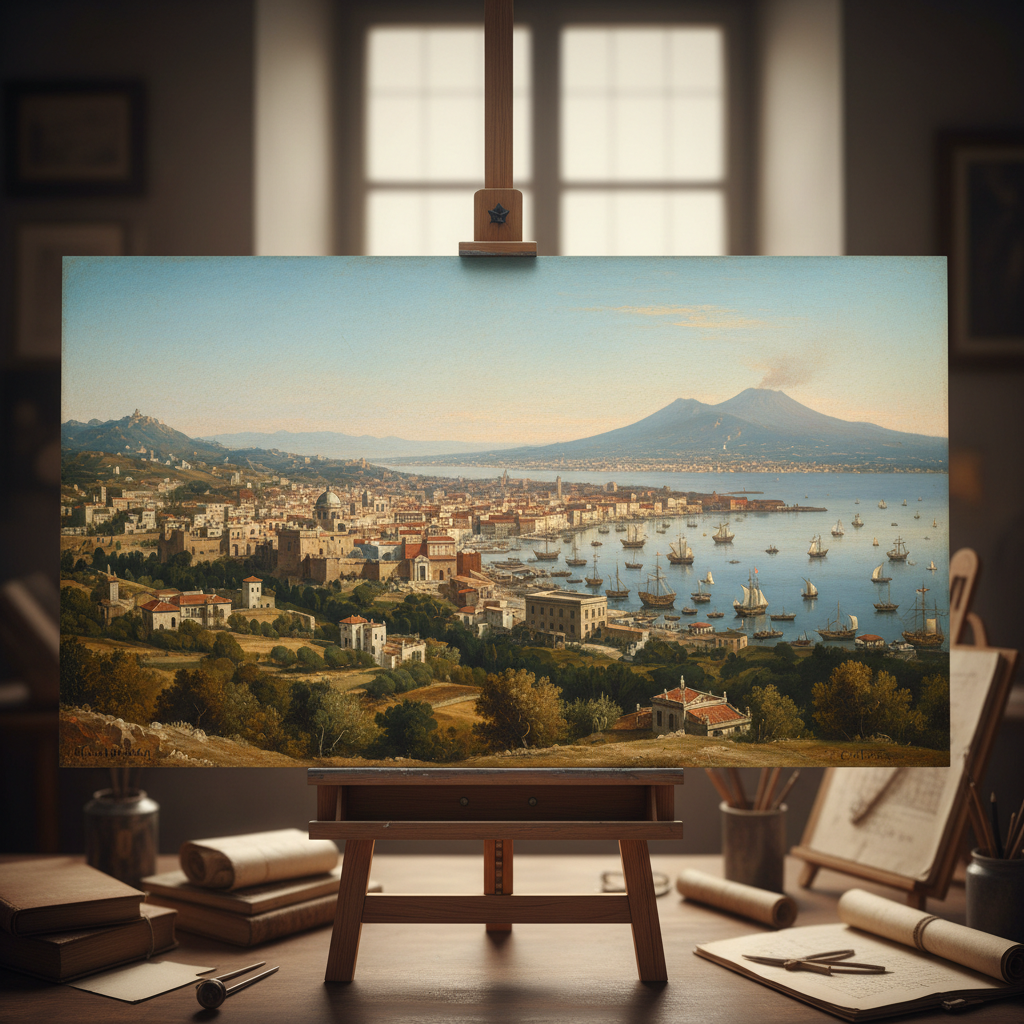
Explore the mysterious life of Jan van Stinemolen (1518–1582), a silversmith turned artist whose spectacular View of Naples uniquely blends precise cartography with breathtaking perspective.
Jan van Stinemolen lived from 1518 to 1582, and honestly, he's one of those artists who slipped through the cracks of history. He's not in the famous art books of his time, like Karel van Mander's *Schilder-Boeck*. So piecing together his story? It's like working on a puzzle with half the pieces missing. We have to rely on old records and archives, and even those leave us with more questions than answers.
What we do know paints an intriguing picture. He was from the Spanish Netherlands, born in Mechelen and later living in Antwerp. But here's the twist—his journey to Italy, specifically Naples and possibly Sicily, is shrouded in mystery. The dates are fuzzy. We can guess he went south from one of his drawings, but that's about it.
### The Silversmith Who Became an Artist
His day job wasn't painting grand panoramas. Like others in his family, Stinemolen was most likely a silversmith and jeweler. That was a lucrative trade back then, a real path to prosperity. But life wasn't all luxury. The religious wars tearing through his homeland probably affected him deeply, adding a layer of struggle to his biography.
The frustrating part? None of his metalwork survives. Not a single goblet or intricate necklace. All that's left from his hands are a handful of drawings and one spectacular masterpiece: the *View of Naples*. Most of those other drawings are only attributed to him because their style matches—it's an educated guess, not a certainty.
### Where Mapmaking Meets Art
So, what makes his *View of Naples* so special? It's this brilliant, unique blend. Stinemolen didn't just paint a pretty picture; he fused a detailed topographical map with a breathtaking perspectival view. You get the accuracy of a surveyor's plan with the soul of an artist's vision. It's both a document and a dream.
Where did he get this idea? Look to his roots. In 16th-century Mechelen, urban cartography was booming. The city was a hub for mapmakers. Stinemolen would have grown up surrounded by that culture of precise, measured depiction of space. He took that technical skill and poured an artist's eye over it.
And his subject matter reveals another passion. Look at his drawings—he was utterly fascinated by landscapes shaped by raw, volcanic power. The forces that build mountains and carve coastlines captivated him. This wasn't just about recording a city; it was about capturing the natural history that formed it.
His panorama lets us peek into his mind. We can start forming hypotheses. Was he driven by scientific curiosity? An artistic challenge? A desire to document the unfamiliar South for his Northern patrons? The painting itself becomes a clue to his motivations.
Think about it. Here's a man trained in the meticulous craft of silversmithing, applying that precision to a grand scale. He combines the Flemish tradition of detailed observation with the expansive Italian landscape. The result is more than a view; it's a statement.
- **A Hidden Figure:** His absence from major art historical records makes him an enigma.
- **Dual Craftsman:** Excelled in both the lucrative trade of silversmithing and the art of drawing.
- **Technical Fusion:** Masterfully merged map-making accuracy with artistic perspective.
- **Natural Fascination:** His work shows a deep interest in geology and volcanic landscapes.
In the end, Jan van Stinemolen stands at a crossroads. He's between North and South, between craft and fine art, between science and beauty. His one surviving major work asks us to look closer, to see the map within the painting and the artist behind the silversmith. He reminds us that history is full of brilliant minds we've nearly forgotten, waiting for their story to be pieced back together, one archival clue at a time.