Jan van Stinemolen: The Lost Artist Behind Naples'…
Miguel Fernández ·
Listen to this article~5 min
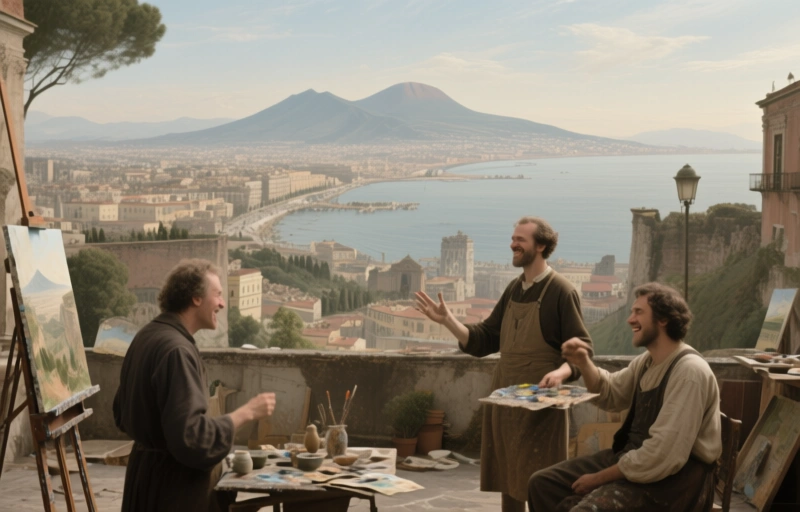
Discover Jan van Stinemolen, the 16th-century artist whose panoramic View of Naples blends mapmaking with artistry. Explore his life as a silversmith, his travels to Italy, and his fascination with volcanic landscapes.
Let's talk about an artist who's been hiding in plain sight for centuries. Jan van Stinemolen lived from 1518 to 1582, and honestly, most people have never heard of him. That's because he doesn't show up in the famous art history books of his time. We're left piecing together his life from scattered records, like putting together a puzzle with half the pieces missing.
What we do know paints an intriguing picture. He spent most of his life in what we now call Belgium, moving between his hometown of Mechelen and the bustling city of Antwerp. But here's where it gets interesting - he somehow made his way to Italy, spending time in Naples and possibly even Sicily. The exact dates? We're still guessing.
### The Silversmith Who Became An Artist
Here's something that might surprise you. Stinemolen wasn't primarily a painter or draftsman by trade. Like many in his family, he worked as a silversmith and jeweler. That was a pretty lucrative profession back then, though the religious conflicts sweeping through Europe probably made things complicated.
The frustrating part? None of his metalwork survives today. Not a single goblet, necklace, or decorative piece. All we have are a handful of drawings and one spectacular masterpiece that gives us a glimpse into his creative mind.
### The View That Changed Everything
That masterpiece is his panoramic View of Naples. It's not just a pretty picture - it's a fascinating blend of mapmaking and artistic perspective. Stinemolen created something that was both geographically accurate and visually stunning, capturing the city in a way nobody had done before.
Where did this unique approach come from? Probably from his hometown of Mechelen, which was a hub for urban cartography during the 16th century. The city was known for producing detailed city views and maps, and that influence clearly shows in Stinemolen's work.
### A Fascination With Nature's Power
Looking at his surviving drawings, one theme keeps popping up: volcanic landscapes. Stinemolen seemed genuinely captivated by how natural forces could shape the earth. Living in Naples, with Mount Vesuvius looming nearby, must have been incredibly inspiring for someone with that interest.
His panorama isn't just buildings and streets. It captures the relationship between the city and its dramatic natural surroundings. You can almost feel his curiosity about how humans build their lives in landscapes shaped by such powerful geological forces.
### Why His Work Still Matters Today
So why should we care about this obscure 16th-century artist? Because his approach feels surprisingly modern. He combined:
- Scientific accuracy with artistic vision
- Topographical detail with aesthetic beauty
- Human creation with natural landscapes
That panoramic view of Naples gives us more than just a historical snapshot. It shows us how one artist saw the world - as both a physical place to be mapped and a beautiful scene to be appreciated.
As one art historian noted, "Stinemolen's work bridges the gap between documentation and artistry in ways we're still unpacking today."
### The Mystery That Remains
Here's what we're still trying to figure out about Stinemolen:
- Why did he travel to Italy in the first place?
- How long did he actually spend in Naples and Sicily?
- What happened to all his silversmith work?
- Who taught him to blend mapping and art so seamlessly?
Each question leads to more questions, which is part of what makes studying historical artists so compelling. They leave behind clues, but never the full story.
### Rediscovering Lost Artists
Stinemolen's story reminds us that art history isn't just about the famous names we all know. It's filled with talented individuals who created remarkable work but slipped through the cracks of historical record. Every time we rediscover someone like Stinemolen, we get a more complete picture of how art developed and changed over time.
His panoramic view of Naples stands as a testament to what happens when technical skill meets creative vision. It shows us that sometimes, the most interesting artists aren't the ones who were famous in their own time, but the ones whose work speaks to us across centuries.
Next time you look at a cityscape or a detailed map, remember Jan van Stinemolen. He saw the poetry in precision, and the art in accuracy, creating work that continues to fascinate us nearly 500 years later.