Jan van Stinemolen's Naples: A Panoramic Experience
Miguel Fernández ·
Listen to this article~4 min
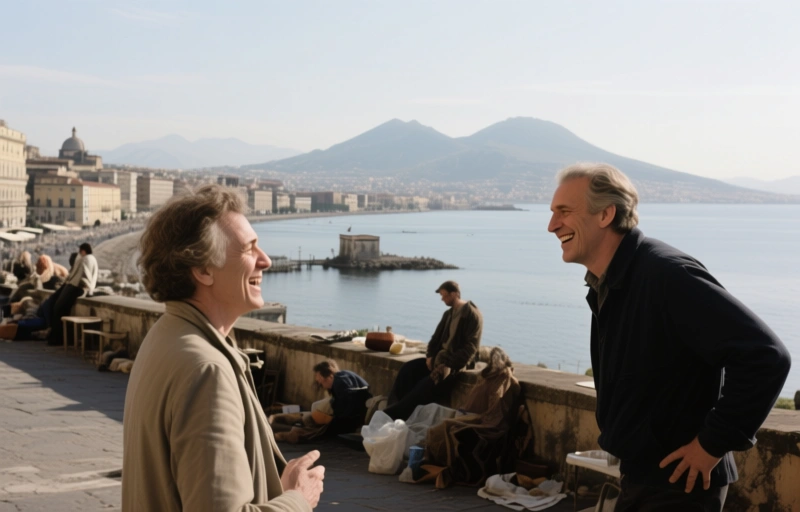
Jan van Stinemolen's 16th-century view of Naples isn't a faulty map. It's a visual device designed to evoke the experience of a panoramic vista, challenging how we interpret historical cityscapes.
Let's talk about a drawing that's more than just a map. Jan van Stinemolen's view of Naples from the 16th century has been puzzling historians for ages. Most people compare it to traditional maps from the same period, like the ones by Du Perac/Lafréry (1566) or Baratta (1627). But here's the thing – that comparison misses the point entirely.
Those other works were created with strict topographical accuracy in mind. They're like blueprints. Stinemolen's drawing? It's something else entirely. Think of it as a visual device, designed to make you feel like you're actually standing there, taking in that breathtaking panoramic vista of Naples.
### Rethinking the "Mistakes"
For years, scholars pointed out what they saw as errors in Stinemolen's work. Where's the upper Decumanus? Why are some buildings duplicated or shifted out of place? If you're looking for a perfect street map, these are big problems. But if you're trying to capture the experience of seeing the city, these so-called distortions start to make a different kind of sense.
They might be intentional choices, guiding your eye and your imagination through the urban landscape. It's less about documenting every street and more about evoking the feeling of the place. This perspective changes everything. Suddenly, we're not critiquing a faulty map; we're interpreting an artistic vision.
### The City as a Living Theater
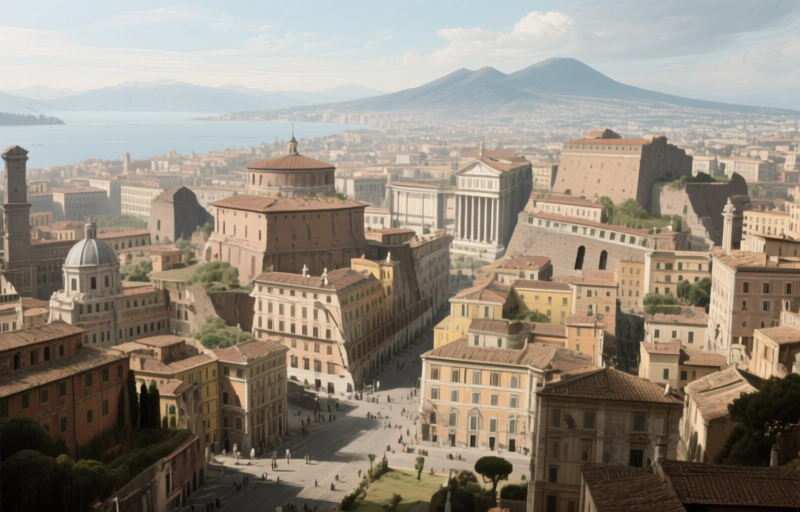
This idea connects deeply with how people wrote about Naples in the 16th and 17th centuries. Published descriptions from that era didn't just list landmarks. They invited the reader to enter the city imaginatively. Stinemolen's drawing does the same thing visually.
By setting the view from the northern hills, he shaped Naples into a kind of "theatre" – a term that pops up again and again in early modern travel accounts. From that vantage point, the city unfolds below you like a stage.
What's brilliant is that Stinemolen doesn't stick to a single, perfect viewpoint. He combines multiple plausible perspectives into one unified portrait. It's a visual rhetoric that matches the city's huge literary reputation at the time. Naples wasn't just a place on a map; it was a source of stories, drama, and wonder.
### Why This Matters for Us Today
So, why should we care about a 400-year-old drawing? It reminds us that there are many ways to know a place. A GPS gives you coordinates, but it doesn't give you a feeling. Stinemolen was after the feeling.
- **It challenges how we view historical documents.** Not everything is meant to be literal data.
- **It connects art with lived experience.** The drawing is a bridge between the physical city and the emotional response it created.
- **It shows the power of perspective.** Where you stand literally changes what you see and how you understand it.
In the end, Stinemolen's Naples isn't a puzzle to be solved. It's an invitation. An invitation to step back from our modern obsession with pinpoint accuracy and consider a more immersive, human way of seeing. Next time you look at an old map or a city view, ask yourself: is it showing me where things are, or is it trying to make me feel what it was like to be there? The answer might surprise you.