Jan van Stinemolen's Naples: A Panoramic Experience
Miguel Fernández ·
Listen to this article~3 min
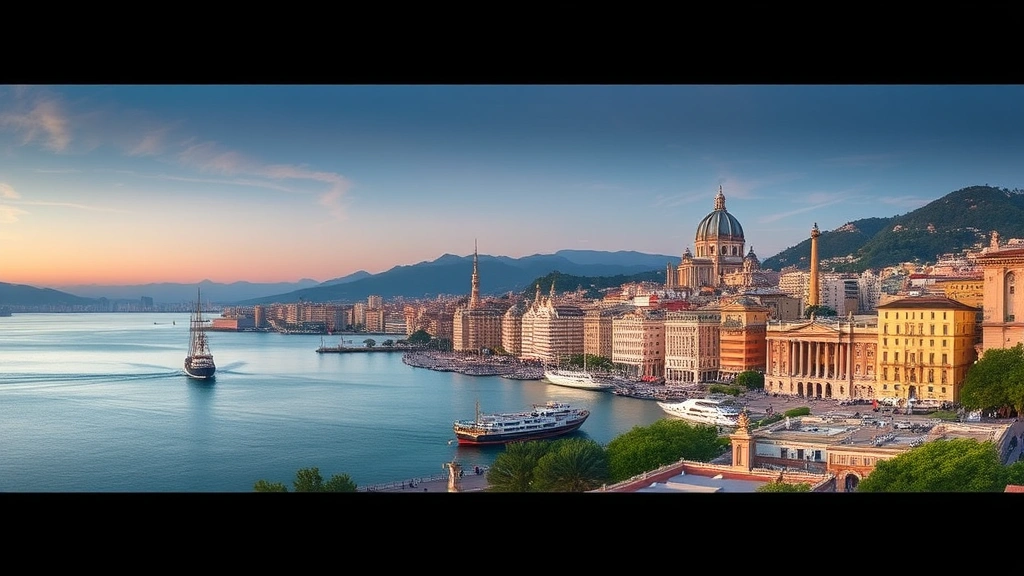
Reconsidering Jan van Stinemolen's view of Naples not as a flawed map, but as an artistic device designed to create an immersive, panoramic experience of the city, aligning with its literary reputation.
Let's talk about a different way of seeing a city. Most of us look at old maps and drawings as if they're just facts on paper—a simple record of what was where. But what if they were meant to be an *experience* instead of just a document?
That's the fascinating idea behind Jan van Stinemolen's 16th-century view of Naples. For years, scholars have compared it to maps like the Du Perac/Lafréry map from 1566 or the Baratta map from 1627. They'd point out what Stinemolen got 'wrong.' But maybe he wasn't trying to be a cartographer at all.
### Seeing Naples as a Panorama
Think about standing on a hill overlooking a great city. You don't see every single street in perfect order, do you? Your eye jumps from one landmark to another. The view feels alive, not like a grid. That's what Stinemolen was capturing.
His drawing isn't a top-down map made for navigation. It's a visual device designed to make you, the viewer, feel like you're there, taking in that sweeping panorama. Suddenly, things we called 'mistakes' start to make a different kind of sense.
- The missing upper Decumanus? Perhaps it was left out because it didn't contribute to the *feeling* of the vista.
- Duplicated or shifted buildings? They might have been moved to create a more compelling and unified scene.
These aren't errors. They're artistic choices. He was composing a portrait of a city's essence, not its precise measurements.
### The City as a Living Theater
This idea connects deeply with how people wrote about Naples in the 1500s and 1600s. Travelers and writers constantly described the city as a 'theatre'—a dramatic, staged spectacle. Stinemolen's view brings that literary concept to life visually.
He doesn't give you one perfect, privileged vantage point. Instead, he combines multiple plausible viewpoints from the northern hills. It's like he's stitching together the best parts of what you'd actually see if you turned your head, creating one grand, immersive portrait.
It asks you to engage with your imagination. You're not just locating buildings; you're being invited to step *into* the urban space, to feel its drama and scale. This was a city famous in literature, and Stinemolen's work is a visual echo of that renown.
So next time you look at an old city view, ask yourself: is this a map, or is it an invitation? Stinemolen's Naples is undoubtedly the latter. It’s a reminder that how we choose to depict a place says as much about the experience of being there as it does about the streets and stones themselves.