Jan van Stinemolen's Naples: A Panoramic Experience
Miguel Fernández ·
Listen to this article~3 min
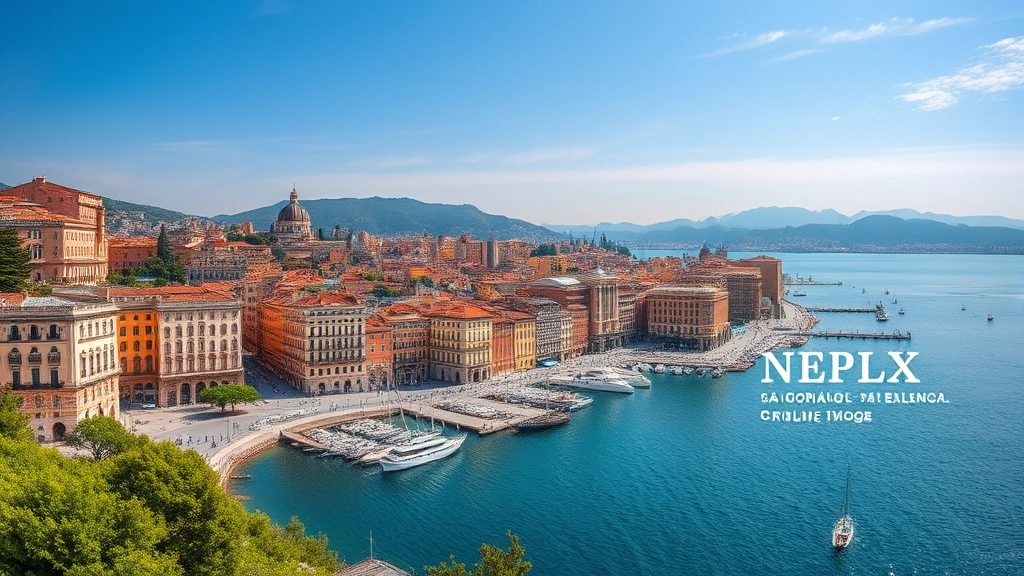
Re-examining Jan van Stinemolen's view of Naples not as a flawed map, but as an immersive visual experience designed to evoke the city's panoramic drama and literary fame.
Let's talk about a drawing that's more than just a map. It's a window into how people *felt* about a city. We're looking at Jan van Stinemolen's view of Naples, and honestly, comparing it to standard historical maps misses the point entirely.
Think of it this way. Maps from the same period, like the ones by Du Perac/Lafréry (1566) and Baratta (1627), were about accuracy. They were tools for navigation and topography. Stinemolen's work? It's something else. It's a visual device designed to make you *experience* the city's panorama.
### Rethinking the 'Mistakes'
For years, scholars looked at this drawing and saw errors. Where's the upper Decumanus? Why are some buildings duplicated or shifted out of place? But what if those aren't mistakes? What if they're deliberate choices?
When you stop judging it as a failed map and start seeing it as an evocative vista, those features make a new kind of sense. They're part of a visual rhetoric aimed at pulling you in. It's less about documenting every street and more about capturing the city's essence and atmosphere.
### The City as a Theater
This idea connects deeply with how people wrote about Naples in the 16th and 17th centuries. Published descriptions of the city often used a powerful metaphor: Naples as a t
heater. Stinemolen's drawing brings that metaphor to life.
By setting the view from the northern hills, he frames the cityscape like a stage. But here's the clever part—he doesn't give you just one seat in the audience. He combines multiple plausible viewpoints into one unified portrait. You're not a passive observer from a single spot; you're imaginatively entering the space, seeing it from several angles at once.
This approach invites a different kind of engagement. It asks the viewer to complete the picture with their own imagination, to walk those streets in their mind. It aligns perfectly with the city's literary renown at the time—a place celebrated not just for its geography, but for its drama and soul.
So, what can we learn from this? A few key takeaways for viewing historical cityscapes:
- **Context is everything.** Understand the creator's intent before labeling something an error.
- **Look for the experience.** Some artworks aim to make you feel a place, not just see its layout.
- **Cross-reference with literature.** How a city was written about can deeply influence how it was drawn.
As one contemporary account noted, *'To see Naples was to witness a grand performance, with every hill and building playing a part.'* Stinemolen's drawing is his director's cut of that performance.
In the end, this isn't just an analysis of a 16th-century drawing. It's a reminder that our ancestors didn't just record their world—they interpreted it, felt it, and tried to make others feel it too. And sometimes, to understand a city's map, you have to first listen to its stories.