Jan van Stinemolen's Naples: A Panoramic Experience
Miguel Fernández ·
Listen to this article~4 min
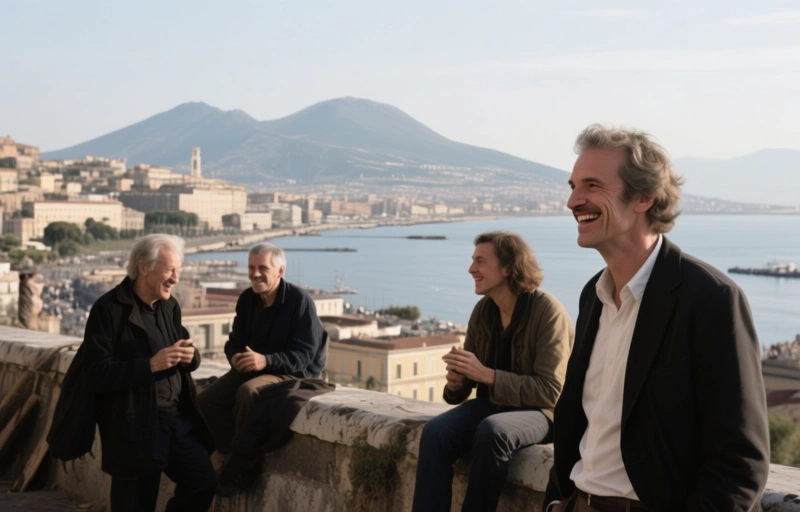
Reconsidering Jan van Stinemolen's view of Naples not as a flawed map, but as an artistic device designed to evoke the experience of a panoramic vista and the city's literary reputation.
Let's talk about how we look at old city views. You know, those detailed drawings from centuries ago. Most folks treat them like maps, checking for accuracy and getting hung up on what's missing or misplaced. But what if that's missing the point entirely?
That's exactly what happens with Jan van Stinemolen's famous view of Naples. For years, scholars compared it to maps like Du Perac and Lafréry's from 1566 or Baratta's from 1627. They'd point out discrepancies, calling them errors. But I think they were looking at it all wrong.
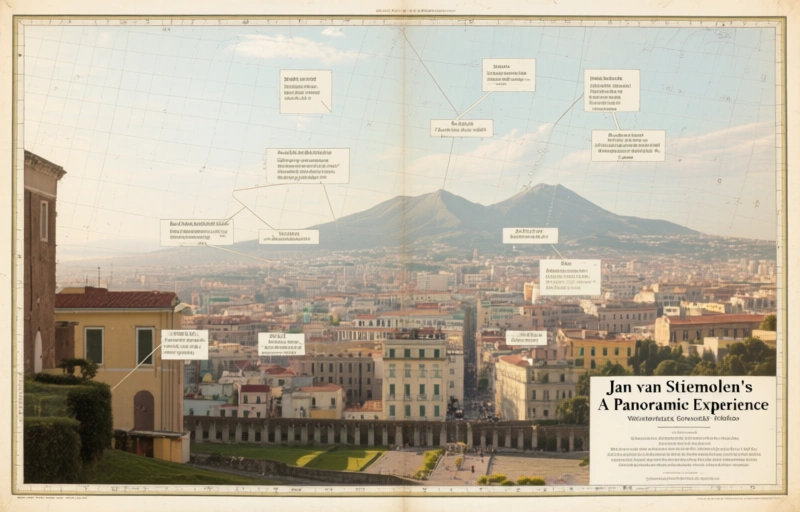
Stinemolen wasn't trying to make a street map for tourists. He was creating an *experience*. His drawing is a visual device, a way to make you, the viewer, feel like you're standing there on the northern hills, taking in that breathtaking panoramic vista of sixteenth-century Naples.
### Rethinking the So-Called 'Mistakes'
When you stop treating it as a cartographic document, the whole picture changes. Features that were labeled as distortions or omissions suddenly make a new kind of sense.
Take the absence of the upper Decumanus, one of the main ancient roads. Or the way some buildings appear duplicated or shifted out of place. These aren't necessarily mistakes. They might be deliberate choices to guide your eye and your imagination through the cityscape.
It's less about geographic precision and more about capturing the *feeling* of the place. He's composing a scene, not surveying a plot of land.
### The City as a Living Theatre
This idea connects powerfully with how people wrote about Naples back then. Sixteenth- and seventeenth-century descriptions often portrayed the city as a grand theatre. It was a recurring theme, a topos, in early modern travel writing.
Stinemolen's view taps right into that literary reputation. By setting the perspective from the northern hills, he frames the city just like a stage. You're not looking from one single, perfect vantage point. Instead, he combines multiple plausible views into one unified portrait.
Think of it like this: he's giving you the best seat in the house, but he's also letting your mind wander through the wings and the backstage. He wants you to enter the urban space imaginatively.
- It's an invitation, not just an illustration.
- It prioritizes emotional resonance over technical detail.
- It asks you to engage with the city's story, not just its layout.
This approach aligns perfectly with the visual rhetoric of the time and with Naples' towering literary fame. The city wasn't just a place on a map; it was a character in Europe's cultural imagination, a place of drama, beauty, and intrigue.
As one contemporary account might have put it, *"To see Naples is to witness a performance where the land itself is the stage."* Stinemolen's work is our ticket to that show.
So next time you see an old city view, don't just look for streets and buildings. Ask yourself what the artist wanted you to *feel*. Are you being given a blueprint, or are you being offered a window into a lost world? With Stinemolen's Naples, the answer is beautifully, compellingly clear. It's a masterpiece of evocative art, designed to transport you centuries back in time with a single, sweeping glance.